

Cuba, Compensation, and the Caribbean Memory of Property

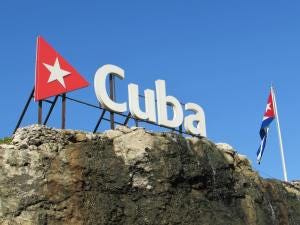
Cuba has done something few thought possible: it has signaled a willingness to compensate Americans for property seized after the 1959 revolution.
The proposal, still conditional and politically fraught, is being framed as a diplomatic opening — a potential thaw in one of the Western Hemisphere’s longest-running standoffs. But from a Jamaican perspective, it raises a deeper and more uncomfortable question: when history takes everything, who gets remembered — and who does not?
For decades, the issue of property seized after the Cuban Revolution has sat at the center of U.S.–Cuba relations. Nearly 6,000 claims, filed by American individuals and corporations, have been formally certified and are now valued at roughly $9 billion with interest. These claims are precise, documented, and legally recognized — the kind that governments can negotiate over.
Now, Cuba appears willing to discuss a “lump sum” settlement, one that would see Havana pay Washington, which would then distribute compensation to claimants. But the offer comes with conditions: easing U.S. sanctions, expanding investment, and reaching a broader political understanding between two countries that have spent more than sixty years in mutual suspicion.
At one level, this is pragmatism. Cuba’s economy is under pressure, strained by shortages, energy instability, and the enduring effects of the U.S. embargo. Opening the door to investment — and resolving long-standing legal obstacles — is a logical step toward economic survival. Recent signals from Havana, including expanded opportunities for Cubans abroad to invest, suggest a government recalibrating its economic model.
But compensation, in this context, is not just a financial instrument. It is a form of historical recognition. And that is where the story becomes more complicated — particularly in the Caribbean.
Long before the revolution, Cuba was home to thousands of migrants from across the region, including Jamaicans who arrived in the late 19th and early 20th centuries to work in sugar, rail, and agriculture. Many of them stayed. They built lives, raised families, and, in some cases, acquired land or established small businesses. Their presence is still visible today in eastern Cuba, where Afro-Caribbean communities trace their roots back generations.
When the revolution came, the sweeping nationalization of property did not distinguish between large foreign corporations and smaller private owners. Land, businesses, and homes were absorbed into the state. For American companies, this produced claims that would later be documented, certified, and pursued through formal channels. For many Caribbean migrants, including Jamaicans, it produced something else: loss without record.
There is no widely recognized registry of Jamaican property claims in Cuba. No internationally backed compensation process. No headline figure. What exists instead are fragments — family stories, oral histories, and the quiet knowledge that something once owned was never returned.
Dean Jones, founder of Jamaica Homes, describes this gap with clarity:
“In the Caribbean, property is not just an asset — it’s identity. When it’s taken, the loss doesn’t always show up in a legal claim. It shows up in families, in stories, in what people can no longer pass down.”
This is not to diminish the legitimacy of American claims. They are real, and their resolution is long overdue. But they are also selective, reflecting a system in which only certain forms of ownership — those documented, formalized, and backed by state power — can be translated into compensation.
The result is a hierarchy of loss.
Those with titles, legal structures, and government recognition become claimants. Those without become history.
From Jamaica’s vantage point, this distinction carries particular weight. Unlike Cuba, Jamaica did not experience a sweeping rupture of property rights after independence in 1962. Land reform and state intervention did occur, especially during the 1970s, but they were generally accompanied by negotiation and compensation. The country retained a legal framework rooted in British property law, one that emphasized continuity and enforceability.
That decision has shaped Jamaica’s modern economy. Property rights are relatively stable. Titles are recorded. Foreign ownership is permitted. These are not abstract advantages; they are the foundation of investor confidence and the basis of a functioning real estate market.
But stability has also meant that Jamaica has not had to confront, in the same way, the question Cuba now faces: how to reconcile a revolutionary past with the demands of a globalized present.
Dean Jones puts it bluntly:
“Jamaica’s strength is that people trust the system. They believe if they buy land, it will still be theirs tomorrow. But the lesson from Cuba is what happens when that trust is broken. You can try to fix it decades later, but you won’t fix it for everyone.”
The current negotiations between Cuba and the United States are, in many ways, an attempt to rebuild that trust. By placing compensation on the table, Havana is signaling that it understands the importance of property rights in attracting investment and normalizing relations. It is also attempting to address legal barriers, such as those created by U.S. legislation, that have long discouraged foreign involvement in the Cuban economy.
Yet the effort is inherently constrained.
Cuba has made clear that any compensation must be part of a broader settlement, one that also accounts for its own claims against the United States — including the economic damage caused by decades of sanctions and hostility. The negotiation, therefore, is not simply about settling debts, but about balancing competing narratives of harm.
Who owes whom? And for what?
These are not questions that lend themselves to neat answers. They are shaped by politics, history, and power — by whose losses are recognized and whose are not.
In this sense, the emerging discussions between Havana and Washington are not just a bilateral matter. They are part of a broader reckoning with the legacy of disruption in the Caribbean, a region where land has long been contested, transferred, and redefined under shifting regimes of authority.
For Jamaica, the moment offers both a warning and an opportunity.
The warning is that property rights, once destabilized, are extraordinarily difficult to restore. The opportunity is that, in a world increasingly attentive to questions of ownership and restitution, countries that can demonstrate consistency and clarity in their legal systems will stand out.
But even as Jamaica benefits from that stability, the Cuban story serves as a reminder of something less comfortable: that not all losses are visible, and not all are recoverable.
If a compensation agreement is eventually reached, it will likely be hailed as a historic breakthrough. It may unlock investment, ease tensions, and bring a measure of closure to a dispute that has lingered for generations.
But closure, in this context, will always be partial.
For those whose claims were never documented, whose ownership was never formalized, and whose losses were never recorded in a way that governments recognize, there will be no settlement. No payment. No official acknowledgment.
Only memory.
And that, perhaps, is the quiet truth at the heart of this moment: in the global system of property rights, justice is not only about what was lost. It is also about who has the power to prove it — and to be heard when they do.