

Jamaica at the Edge: Standing Tallawah in a Fractured World
As global tensions rise and old alliances shift, Jamaica faces a defining moment—one that will test its independence, resilience, and vision for the future.


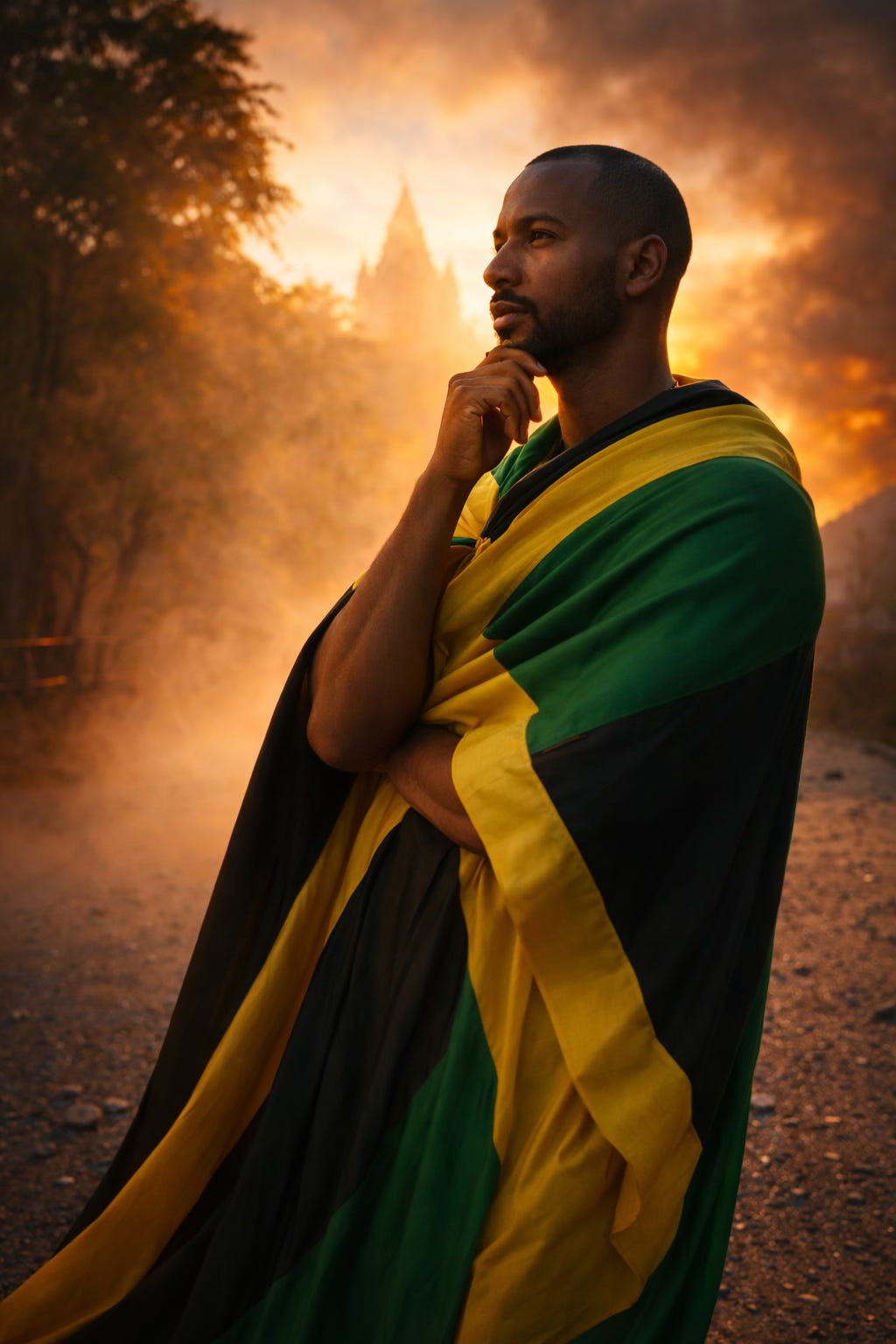
There is a quiet anxiety settling across Jamaica.
It is not always spoken directly, but it shows up—in rising grocery bills, in conversations about healthcare, in debates over foreign policy, and in the uneasy awareness that decisions made thousands of miles away are shaping everyday life at home.
The world is shifting again. And Jamaica, as always, must find its place within it.
A World No Longer Predictable
What many Jamaicans are sensing today is not imagined. It reflects a deeper reality: the global order that once provided a measure of stability is fragmenting.
The system built after World War II—anchored by institutions like the IMF, World Bank, and United Nations—created a framework where even small nations had a voice. It was not perfect, but it offered predictability.
That framework is now under strain.
Wars are no longer distant abstractions. The conflict in Ukraine continues to disrupt global supply chains. Tensions involving Iran and the United States threaten energy markets. Sanctions are being used more aggressively, reshaping trade and alliances in real time.
For Jamaica, this is not theoretical.
It shows up at the pump.
It shows up in the cost of food.
It shows up in the vulnerability of a small, import-dependent economy.
As one recent reflection noted, Jamaicans feel the weight of global instability despite having no role in creating it—a sense of exposure that is both economic and psychological.
The Burden and Power of Small States
Jamaica has been here before.
At independence, the country entered a world defined by the Cold War, a bipolar system dominated by two superpowers: the United States and the Soviet Union.
Newly independent nations like Jamaica were given something important: a voice and a vote. But not power.
That distinction mattered then, and it matters now.
Under Alexander Bustamante, Jamaica aligned with the West, setting a pragmatic course that prioritized stability and development. Later, under Michael Manley, the country experimented with democratic socialism and deeper engagement with the Non-Aligned Movement and countries like Cuba.
Each era reflected the same underlying truth: Jamaica must navigate power, not wield it.
The Cuba Question and a Deeper Issue
Today, that navigation is once again under scrutiny.
The decision to end the Cuban medical program has triggered strong reactions, ranging from support to deep concern. For many Jamaicans, Cuba represents more than just a partner; it symbolizes solidarity, especially during times when Jamaica needed support.
Others see the move as necessary, part of a broader recalibration of national interest in a more transactional world.
But beneath the debate lies a more fundamental question:
What does self-reliance look like in a fragile global system?
Healthcare is not just a sector, it is a signal. If Jamaica can build a resilient, high-quality healthcare system, it strengthens national confidence. If it cannot, the consequences ripple far beyond hospitals.
Returning residents are watching. Investors are watching. Citizens are watching.
And the question remains: what replaces what has been lost?
A More Transactional World
One of the defining features of today’s global environment is its shift toward transactional relationships.
Where once diplomacy emphasized long-term cooperation, it now often centers on immediate advantage.
Sanctions are deployed quickly. Trade agreements are reinterpreted. Alliances shift based on strategic needs rather than shared values.
For small states like Jamaica, this creates both risk and opportunity.
Risk, because protections are weaker.
Opportunity, because agility matters more than size.
This is where leadership becomes critical.
Andrew Holness has framed Jamaica’s foreign policy around three core ideas: national interest, independence of thought, and principled engagement.
In theory, it is exactly the approach required in a fragmented world.
In practice, it demands difficult choices, choices that will not always satisfy everyone.
The CARICOM Dream—Still Unfinished
In moments like this, the call for regional unity grows louder.
Many Jamaicans instinctively look toward CARICOM and ask: why not deepen integration? Why not build something stronger—something closer to the European Union model?
It is a compelling vision.
A unified Caribbean could negotiate better trade deals. It could build shared infrastructure. It could create a larger internal market.
But unity has always been easier to call for than to execute.
Differences in size, economic structure, political priorities, and national identity have slowed progress. And yet, in a world where power is consolidating, fragmentation is a luxury small states can no longer afford.
The question is no longer whether deeper integration is desirable.
It is whether it is necessary.
The Psychology of Powerlessness
Perhaps the most overlooked aspect of this moment is not economic or political—but psychological.
There is a growing sense among ordinary Jamaicans that events are happening to them, not with them.
Prices rise without explanation. Policies shift without clarity. Global conflicts feel distant but have immediate consequences.
This creates frustration. And sometimes, division.
Political debates become polarized. Historical narratives are contested—Was it external forces like the Central Intelligence Agency that destabilized Jamaica in the past? Did internal policies play a greater role? Did leaders make the best choices available to them at the time?
These questions matter—but they can also distract from a more urgent need:
What do we do now?
Learning from the Past, Without Being Trapped by It
History offers lessons, but it should not become a prison.
Jamaica’s journey—from colonial rule to independence, from Cold War alignment to modern diplomacy—has always required adaptation.
The most successful periods were not defined by ideology alone, but by balance:
Pragmatism without surrender
Independence without isolation
Partnership without dependency
That balance is needed again.
Building What Comes Next
If Jamaica is at a turning point, then the focus must shift from reaction to construction.
What must be built?
1. A Resilient Healthcare System
Not just as a replacement for external programs, but as a foundation for national confidence and returning residents.
2. Economic Flexibility
Diversifying trade partners, strengthening local production, and reducing vulnerability to global shocks.
3. Strategic Diplomacy
Engaging multiple powers without becoming dependent on any single one.
4. Regional Collaboration
Not just rhetoric—but tangible steps toward deeper Caribbean integration.
5. Public Trust
Clear communication, transparency, and a shared understanding of national direction.
Tallawah in a Time of Uncertainty
There is an old Jamaican spirit—captured in a simple phrase:
“Wi likkle but wi tallawah.”
We are small, but we are strong.
It is more than a saying. It is a strategy.
Jamaica does not need to be the biggest player to be a smart one. It does not need to control global forces to navigate them effectively.
But strength, in this context, is not just resilience. It is clarity.
Clarity about who we are.
Clarity about what we stand for.
Clarity about where we are going.
The Choice Ahead
This moment will pass. Global tensions will evolve. New alignments will emerge.
But the decisions made now—on healthcare, foreign policy, regional cooperation, and national development—will shape Jamaica for decades.
The question is not whether the world is changing.
It is whether Jamaica will adapt with intention—or react out of necessity.
A Final Word
Jamaica has never had the luxury of power.
But it has always had something else: perspective.
Born out of struggle, shaped by resistance, and refined through experience, that perspective is its greatest asset.
The world may be uncertain. The rules may be shifting.
But if Jamaica holds firm to its independence of thought, acts with clarity, and builds with purpose, it will not just survive this moment.
It will define it.
Because even in a fractured world—Jamaica is still tallawah.