

When Oil Shocks the World, Real Estate Listens

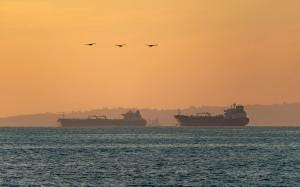
Global conflict has a way of travelling far beyond the battlefield.
The recent escalation involving Iran and the disruption of oil flows through the Strait of Hormuz has triggered a familiar reaction across global markets: rising energy prices, renewed recession fears, and a wave of economic uncertainty. Economists are debating whether this moment will pass quickly or evolve into something deeper.
But one lesson is already clear.
When energy prices surge, the entire global economy feels it.
And real estate — whether in Kingston, London, New York, or Dubai — always pays attention.
Oil is not just an energy commodity. It sits quietly underneath almost every economic activity: transport, shipping, manufacturing, agriculture, aviation, and construction. When its price rises sharply, the ripple spreads across markets, businesses, households, and ultimately property.
That is why moments like this matter far beyond geopolitics.
They test the resilience of economies — and the long-term thinking of investors.
Dean Jones, Founder of Jamaica Homes and Realtor Associate at Coldwell Banker Jamaica Realty, puts it bluntly.
“Real estate investors often think they are buying land, buildings, or square footage,” Jones says. “In reality, they are buying into the stability of an economic system. When energy markets shake, that system feels it.”
The Global Economy’s Hidden Pressure Point
The current tension centres on the Strait of Hormuz, one of the most strategically important shipping corridors in the world. Roughly 20% of global oil supply passes through that narrow channel between the Persian Gulf and the open ocean.
Any disruption — even temporary — can tighten global supply and push energy prices higher.
Some analysts warn oil prices could spike dramatically if the disruption persists. Others believe markets will stabilise quickly once shipping resumes.
Both scenarios remain possible.
But history tells us something important.
Energy shocks have a habit of triggering economic slowdowns.
The oil crises of the 1970s reshaped global inflation. The price spikes following geopolitical conflicts in later decades repeatedly tested economies and financial markets.
Oil has always been more than fuel. It is an economic accelerant.
And when its price rises sharply, the cost of nearly everything begins to follow.
Shipping becomes more expensive. Airline fuel costs climb. Food production becomes costlier. Freight charges increase.
Eventually, consumers feel the difference.
Why Real Estate Always Feels the Shock
For the property sector, energy price spikes influence several critical layers of the market.
Construction costs may rise as transportation and manufacturing expenses increase. Financing environments can tighten if central banks respond to inflation by keeping interest rates higher. Consumer spending may soften if households face higher living costs.
In short, oil shocks can move quietly through the economic system until they reach the housing market.
But that does not necessarily mean property markets collapse.
In fact, the opposite often happens over the long term.
Real estate historically acts as a store of value during inflationary periods. When the cost of goods and services rises, tangible assets like land and property tend to retain or grow their relative value.
This is why property often attracts long-term investors during uncertain economic cycles.
Dean Jones believes this moment reinforces a deeper truth about real estate.
“Energy shocks remind investors of something fundamental,” Jones says. “The world may change overnight, but land does not disappear. Property remains one of the few assets anchored in physical reality.”
Global Supply Chains Are Already Feeling It
Another immediate effect of geopolitical conflict is rising risk in global shipping routes.
Insurance costs for vessels operating near conflict zones increase quickly. Freight companies adjust routes or delay shipments. Supply chains tighten.
Even countries far removed from the conflict zone begin to feel the consequences through higher shipping costs and longer delivery times.
This matters more than most people realise.
Construction materials, industrial components, and consumer goods travel through complex global supply networks. When shipping costs increase, the price of development projects, building materials, and imported goods can slowly rise as well.
This is not always dramatic. Often it is gradual.
But the effect is real.
And markets notice.
Markets Often Overreact — Then Adapt
Financial markets have already reacted cautiously to the unfolding situation.
Stock prices in some markets have pulled back slightly. Investors are reassessing risk. Economists are recalculating recession probabilities.
Yet history offers some reassurance.
Research examining decades of geopolitical events shows that financial markets often stabilise surprisingly quickly once the initial shock passes.
In many cases, markets recover within weeks.
The real economic damage tends to occur only when energy price spikes persist long enough to weaken consumer spending or force central banks to tighten monetary policy.
In other words, the duration of the crisis matters more than the initial shock.
Dean Jones argues that investors should focus less on headlines and more on fundamentals.
“The biggest mistake investors make during geopolitical crises is confusing noise with direction,” Jones says. “Markets move emotionally in the short term. Real estate moves structurally over time.”
A Moment for Strategic Thinking
Global crises tend to divide investors into two camps.
Those who panic.
And those who pause.
History suggests the latter group usually fares better.
Periods of uncertainty often create opportunities for patient investors who focus on long-term fundamentals rather than short-term volatility.
Real estate markets, particularly those connected to growing populations and strong tourism or urban development sectors, tend to remain resilient over long periods.
The key question is rarely whether uncertainty will appear.
It is whether investors are positioned to navigate it.
The Deeper Lesson
Every generation experiences its own version of global disruption.
Wars, energy shocks, financial crises, pandemics — each arrives with predictions that the economic system may fundamentally change.
Yet markets adapt.
People continue to build homes, invest in property, and plan for the future.
Because ultimately, property represents something deeper than an asset class.
It represents stability.
Dean Jones sums it up this way:
“Real estate is not just about buying property. It is about buying time — the ability to hold an asset while the world goes through its cycles.”
That principle applies whether you are investing in Kingston, Miami, Toronto, or London.
Global uncertainty may shift markets temporarily.
But the long arc of property has always followed human resilience.
Read the full analysis here:
https://jamaica-homes.com/2026/03/13/what-the-iran-oil-shock-could-mean-for-jamaica/