

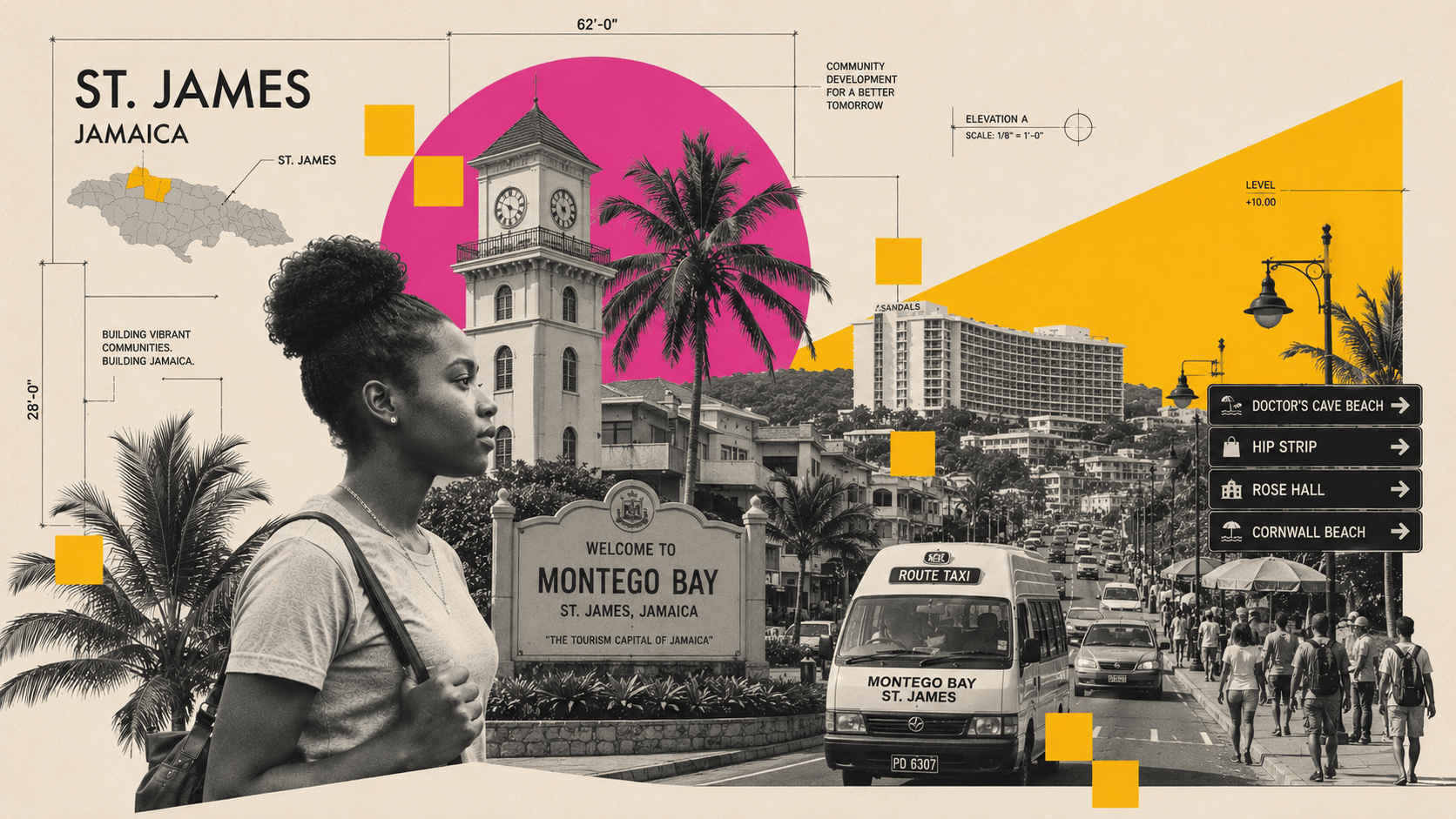
Something unusual happens when you tell people around the world that you are from Jamaica. In most cases, you do not need to explain further. A recognition appears. Sometimes it is a smile. Sometimes it is an immediate association — a song, a name, a race, a flavour. Sometimes it is something harder to define: a quality of warmth, a shift in the conversation, an elevation of interest that was not there a moment before.
Few places in the world produce this effect. Even fewer places of Jamaica’s size. The island carries something that travels with its people wherever they go — an emotional weight, a cultural gravity, a spirit that the world keeps turning toward even when it cannot fully explain why. And a considerable part of that spirit, if you trace it honestly, grows from survival.
The Feeling Behind the Brand
The word ‘brand’ is inadequate for what Jamaica carries. A brand is constructed. It is designed, tested, and deployed with intentional goals. What Jamaica has built over generations is something categorically different: an emotional reality that the world has encountered directly through music, sport, food, community, and people, and that has lodged itself into the global imagination without anyone managing the process.
When Bob Marley’s voice reached people who had never heard of Jamaica, never visited, never met a Jamaican, something happened. The music carried an emotional truth — about suffering borne with dignity, about joy that refuses to be extinguished, about the human capacity to find beauty in the middle of hardship — that people recognised as real because it was real. It did not require translation. It did not require marketing. It required only the honesty of its own expression.
That same honesty is present in how Jamaica’s athletes perform. There is something in the way Jamaican sprinters prepare, compete, and carry themselves that communicates more than athletic achievement. It communicates a kind of absolute self-belief that the watching world finds genuinely compelling — and slightly astonishing — from a nation of that size, with those resources, competing on that stage.
“Jamaica’s emotional impact on the world was never engineered. It was earned — through honesty, through hardship, and through a people who refused to perform anything other than themselves.”
Dean Jones, Founder of Jamaica Homes
Joy as a Practised Art
One of the most quietly remarkable things about Jamaica is the relationship its people have with joy. Not the performative happiness of a country trying to attract tourists — though tourism is important and the hospitality is genuine — but a deeper, more practised relationship with the capacity for delight, celebration, and laughter that does not require comfortable circumstances as a precondition.
Jamaicans have a long-established tradition of creating celebration in the middle of difficulty. The cookout held after the hard week. The music that rises from the yard regardless of what the news is carrying. The humour — sharp, self-aware, generous — that deflects rather than denies hardship. The faith that sustains people through uncertainty by connecting them to something larger than immediate circumstance.
This is not naivety. It is not a refusal to acknowledge difficulty. It is something more sophisticated: the cultivated understanding that joy is not a reward for good circumstances but a practice that can be maintained within bad ones, and that this maintenance is itself an act of resistance and resilience.
The world notices this. It notices it in the music, which has always carried both sorrow and celebration in the same breath. It notices it in the people, who tend to arrive in new countries and new environments with a quality of warmth and social ease that others take some time to learn. And it notices it in the way Jamaican communities, even when under pressure, find ways to mark occasions, to gather, to maintain the social rituals that remind people they are not alone.
Hardship and the Making of Character
There is a philosophical tradition, found across many cultures, that associates character formation with adversity. The idea that ease does not build the same qualities as difficulty, that people who have navigated genuine hardship carry something that those who have not cannot easily acquire. Jamaica’s history gives this tradition considerable empirical support.
The island’s people did not arrive at their current qualities by accident. They were shaped by centuries of extraordinary pressure — by colonialism, by the particular violence and disruption of the plantation system, by the long effort of building something functional and dignified out of circumstances that were designed to prevent exactly that. The qualities that make Jamaicans distinctive on the world stage — the resilience, the creativity, the refusal to be diminished, the capacity for both seriousness and joy — are not genetic endowments. They are cultural inheritances, forged in specific historical conditions and passed forward through generations.
Understanding this does not require romanticising the hardship that produced it. The hardship was real and much of it was unjust. But it does require acknowledging that what Jamaica carries today — this spirit that the world keeps noticing — was not given. It was made. And the people who made it, across generations, deserve the full weight of that recognition.
What the Spirit Asks of the Present
The spirit that Jamaica carries is not a fixed inheritance to be displayed. It is a living practice that requires active maintenance. Each generation of Jamaicans inherits it as a starting condition and is responsible for passing it forward — not unchanged, because no living thing can be passed forward unchanged, but intact in its essential qualities: the creativity, the courage, the communal generosity, the refusal to be defined by circumstances.
There are real challenges facing Jamaica today — economic pressures, infrastructure gaps, social strains, the particular difficulty of building in an environment that continues to present new obstacles. None of these are trivial, and none of them should be minimised. But they sit within a longer story, and the longer story is one of a people who have always found a way — not easily, not without cost, but reliably — to build something worth having out of whatever material was available to them.
That story is still being written. And if the previous chapters are any indication of the chapters ahead, there is every reason to believe that the most compelling ones are still to come.
“The world has always sensed something in Jamaica that the numbers cannot capture. That something is real. It is the accumulated spirit of a people who chose, every time, to build rather than yield.”
Dean Jones, Founder of Jamaica Homes
Discover more from Jamaica Homes News
Subscribe to get the latest posts sent to your email.

1 Comment
Pingback: Few Places Leave a Mark on the World the Way Jamaica Does — Here Is Why That Spirit Is Real – The Voice of Jamaica