


KINGSTON, Jamaica — There is a particular kind of conversation that takes place in Jamaican households across the United Kingdom, the United States, and Canada. It happens over Sunday dinner, or late on a weekday night when the noise of the adopted city fades and something quieter takes its place. It is the conversation about going back. Not visiting. Going back. For real, this time.
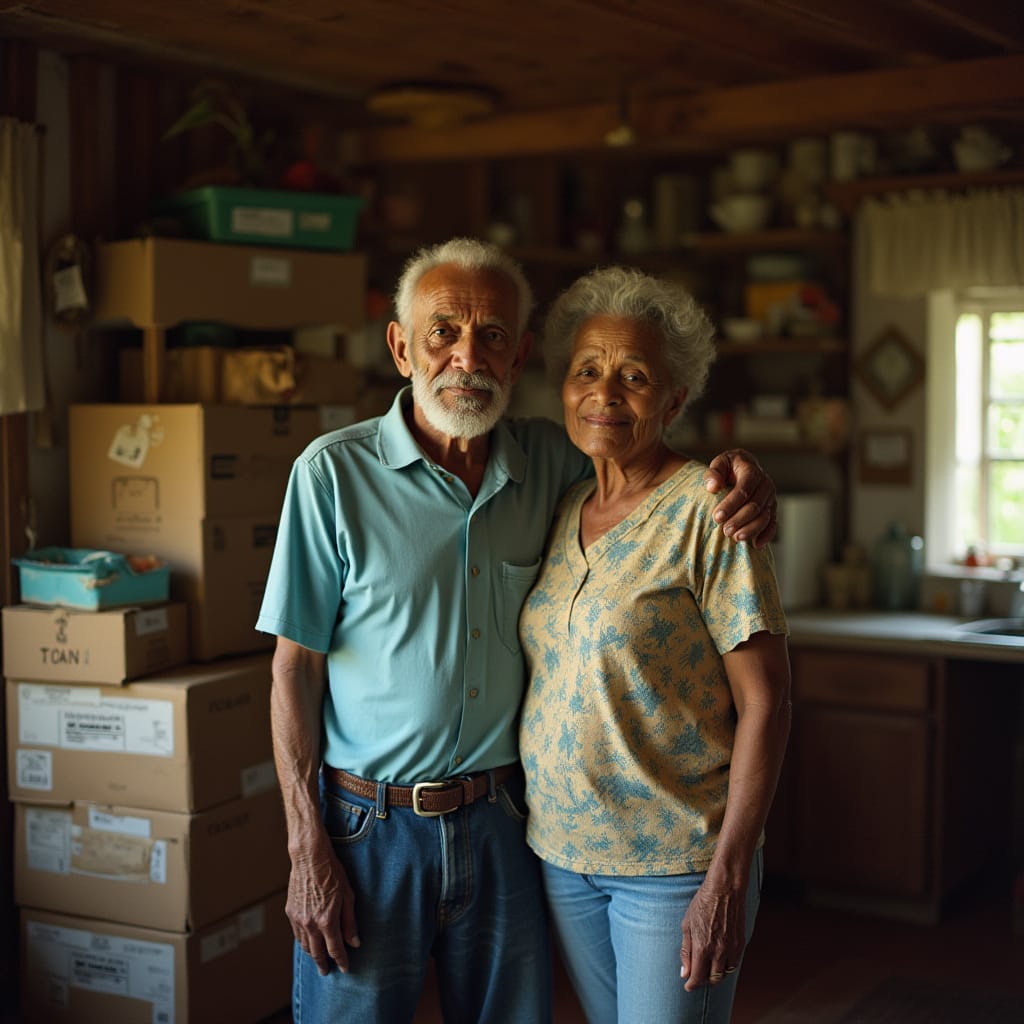
For hundreds of thousands of Jamaicans in the diaspora, that conversation has been gaining a new kind of weight. The decision to return is no longer purely sentimental — it is increasingly practical, financially considered, and shaped by a growing recognition that what Jamaica offers is not a step backward, but a different kind of forward. And in the current climate, when many diaspora Jamaicans are reassessing where their savings should go, where their children should grow up, and where their later years should be lived, the island is answering in ways it has not always been able to before.
This is not a new story. Jamaicans have been returning home in waves since the 1980s — some by choice, some by circumstance, some drawn by land inherited from parents who never wanted to leave. But something has shifted in the texture of that return in recent years. The returnee of today is often younger, better resourced, more deliberate, and more informed than previous generations. They are coming back not simply because they can, but because they have decided that home — the real one, not the holiday version — is where they want to build what matters.
The Pull That Numbers Cannot Fully Explain
Ask any returning Jamaican to describe why they came back and you will hear, beneath the practical answers about cost of living and property values, something that resists easy quantification. A sense of ease. Recognition. The particular warmth of being in a place where you do not have to explain yourself. The smell of the air after rain on dry ground. A neighbour who knows your grandmother’s name.
That pull is real, and it matters more than the real estate industry typically accounts for. Diaspora Jamaicans do not simply buy property in Jamaica. They invest in the idea of belonging somewhere specific — and that investment carries emotional weight that shapes where they look, what they are willing to pay, and how patient they are prepared to be in finding the right place.
“When a diaspora Jamaican comes home to buy property, they are not just buying square footage. They are buying back a piece of who they were before the world took them somewhere else. That is a different kind of transaction, and it deserves to be handled with a different kind of care.”
— Dean Jones, Founder of Jamaica Homes & Realtor Associate
Remittances have long been one of Jamaica’s most significant economic forces — accounting for roughly 20 percent of GDP, with the vast majority flowing from the United States, United Kingdom, and Canada. But beyond the headline figure, remittances represent something more intimate: a continuous act of loyalty to home by people who left it. That loyalty, accumulated over years and decades, eventually transforms into the question of return. And in increasing numbers, the answer is yes.
What Returning Residents Are Actually Navigating
The returning resident experience in Jamaica is not without friction. Anyone who has made or is considering the move will tell you honestly that the gap between the idea of coming home and the practical reality of doing it is significant. Infrastructure that was not there when you left is still not there in some parishes. Processes that should be straightforward — title searches, customs clearance, utility connections, banking arrangements — can take considerably longer than expected. The social dynamics of returning to a community after years or decades away carry their own quiet complexities.
None of this is insurmountable. But it requires preparation that many returnees underestimate, often because their idea of Jamaica was formed in an earlier chapter of their lives, or during holidays when the island presents its most welcoming face. The practical guidance now available to returning residents — from phased housing decisions to the importance of renting before buying, from understanding duty concessions to navigating legal processes — reflects a more honest and useful conversation about what the return actually involves.
The most experienced advisers in this space consistently recommend the same approach: arrive with patience, give yourself a period of active observation before committing to property, build or rebuild local relationships before making major financial decisions, and understand that the Jamaica you return to will be both familiar and different from the one you carry in your memory. That is not a warning. It is an invitation to see the island as it is now, rather than only as it was.
Where the Diaspora Is Looking — and Why
The geography of diaspora property investment in Jamaica has evolved considerably over the past decade. The traditional concentrations — Montego Bay for its airport access and international familiarity, Kingston for its urban convenience and professional opportunities, and coastal communities for the obvious appeal of lifestyle — remain significant. But a new pattern is emerging alongside them.
Returning residents and diaspora buyers are increasingly looking at what industry professionals describe as Tier B parishes: St. Catherine, Manchester, parts of St. James, and areas that offer good infrastructure, manageable land prices, and the kind of community character that urban centres and resort towns have often traded away in the name of development. These are places where a returning Jamaican can find familiar rhythms, reasonable land costs, and the realistic possibility of building something generational rather than simply transactional.
It is also worth noting, with both affection and a degree of amusement, that the Jamaican diaspora buyer is among the most thoroughly researched property hunters on the planet. Years of saving, planning, and Google searching from a flat in Hackney or a suburb of Toronto produce a buyer who arrives in Jamaica knowing more about certain parish property values than some local agents. The due diligence is real — and the expectations that come with it are equally real.
“The diaspora Jamaican is often the most prepared buyer in the room. They have done the research, they have saved the money, and they have thought about this for years. What they need from us is not a sales pitch — it is honesty, transparency, and someone who respects how much this decision means to them.”
— Dean Jones, Founder of Jamaica Homes & Realtor Associate
The Generational Dimension
One of the most striking features of the current returning resident wave is how explicitly generational the thinking has become. Diaspora Jamaicans who are making property decisions today are often doing so with their children and grandchildren firmly in mind — not simply as beneficiaries of a future inheritance, but as active participants in a longer family project.
The conversation about family land in Jamaica has always carried deep cultural significance. Land inherited and passed down through generations is not merely a financial asset; it is a record of belonging, of sacrifice, of people who chose to hold something in trust for those who came after them. That tradition is very much alive — and it is being joined by a new generation of diaspora Jamaicans who want to create the same thing deliberately, rather than only receiving what their parents managed to preserve.
There is a growing number of Jamaican families in the UK and North America who are pooling resources to purchase land or build homes on the island — not for immediate occupation, but as a long-term anchor. A place that belongs to the family. A place that says: regardless of where life takes each of us, there is a specific piece of this island that is ours. In an era when belonging has become increasingly fragile and expensive in the cities of the global north, that kind of rootedness carries a value that cannot be expressed in currency.
What a Recovering Jamaica Offers the Diaspora Right Now
It would be dishonest to write about the diaspora’s relationship with Jamaican property without acknowledging the current moment clearly. Jamaica is in a period of rebuilding. Reconstruction is active across multiple parishes. Supply chains for materials remain stretched. Some communities are still finding their footing. The economy contracted in 2025 and is navigating a careful path toward recovery through 2026 and beyond.
And yet — this is precisely the kind of moment that the most thoughtful diaspora investors have historically understood. Reconstruction periods, when managed carefully and approached with patience, tend to create conditions that reward early, well-informed engagement. Land prices in affected areas reflect current reality, not anticipated recovery. Communities rebuilding their infrastructure tend to attract the kind of longer-term investment that transforms their trajectory. The diaspora’s combination of capital, knowledge, and emotional investment in the island’s future makes them uniquely positioned to participate in that recovery in ways that create lasting value — for themselves, for the communities they invest in, and for Jamaica as a whole.
The Bank of Jamaica forecasts a rebound in growth averaging 2.7 percent through 2027 and 2028, driven by reconstruction and a gradual normalisation of tourism and agriculture. Mortgage rates, while elevated by the standards of a few years ago, have stabilised. The fundamentals that have always made Jamaican property attractive — limited land supply, strong cultural attachment to ownership, a growing professional class, and sustained diaspora interest — have not changed.
“Every home purchased in Jamaica right now is a vote for the island’s future. The diaspora has always been part of Jamaica’s story. The most meaningful chapters are often the ones written in difficult seasons.”
— Dean Jones, Founder of Jamaica Homes & Realtor Associate
The Conversation Is Changing
What is perhaps most significant about the current diaspora-return dynamic is the quality of the conversation surrounding it. For much of Jamaica’s post-independence history, the relationship between the island and its diaspora was framed largely in terms of what the diaspora could send back — money, goods, influence. The returnee was sometimes viewed with ambivalence: welcomed in theory, occasionally treated as a cultural outsider in practice, navigating a re-entry that was rarely as smooth as the homecoming imagined from abroad.
That dynamic is shifting. Returnees today are increasingly recognised as an economic and social force, not just a sentimental category. Policymakers, financial institutions, real estate professionals, and community organisations are all developing more sophisticated frameworks for supporting and engaging returning residents. The information available to diaspora buyers — on legal processes, market conditions, infrastructure realities, and community dynamics — is better than it has ever been.
None of which removes the emotional complexity of the journey. Going home, after years or decades away, is never a simple act. It involves negotiating a self that was formed in one place against a context that has changed in the years of absence. It involves explaining Jamaica to children who know it only through stories and holiday memories. It involves, sometimes, the quiet grief of finding that the version of home you carried inside you no longer exists in quite the same form — and the more complex joy of discovering that what has replaced it is, in many ways, more alive.
That is the nature of homecoming. It is never purely a return to what was. It is always, in part, an arrival at something new. And for the Jamaican diaspora, the island — with all its challenges, all its promise, all its noise and beauty and stubborn resilience — continues to be worth arriving at.
Jamaica Homes supports returning residents and diaspora buyers with verified listings, market insights, and professional guidance across all parishes. Visit jamaica-homes.com to explore properties and connect with trusted advisers.
Follow Jamaica Homes on Youtube @jamaicahomes and Instagram @jamaica_homes and on Facebook @jamaicahomesnews Send us a message or email us at onlinefeedback@jamaica-homes.com or editor@jamaica-homes.com

1 Comment
Pingback: Coming Home Was Never Just About the House: What Draws the Jamaican Diaspora Back to the Island – Jamaica Loop News
Visit our YouTube Community ↗