Jamaica once had a train system. In the late 19th and early 20th centuries, the railway network connected Kingston to rural parishes and the north coast, moving both people and goods efficiently across the island. Over time, as roads improved and private vehicles became the preferred mode of transport, the railways fell into disuse. Yet the memory remains—a reminder that Jamaica can, and perhaps should, embrace rail once more.
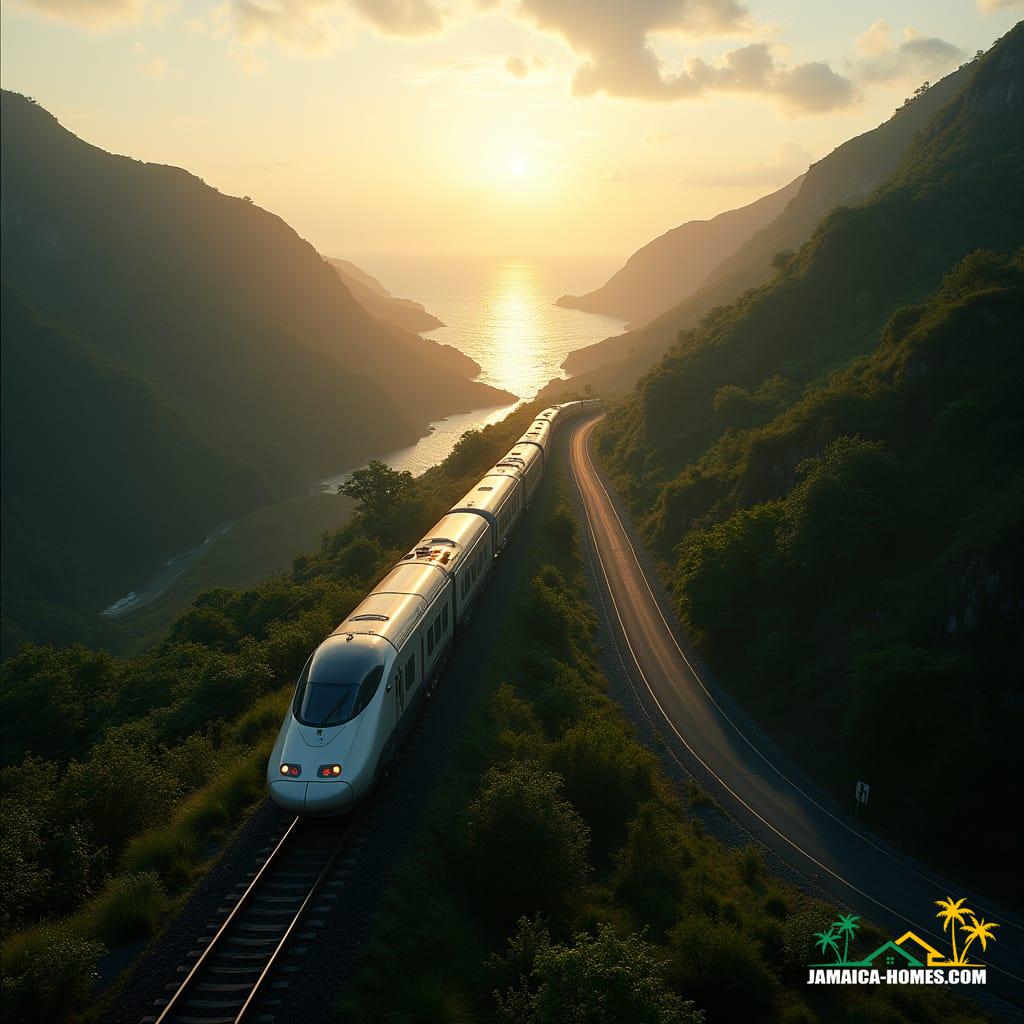
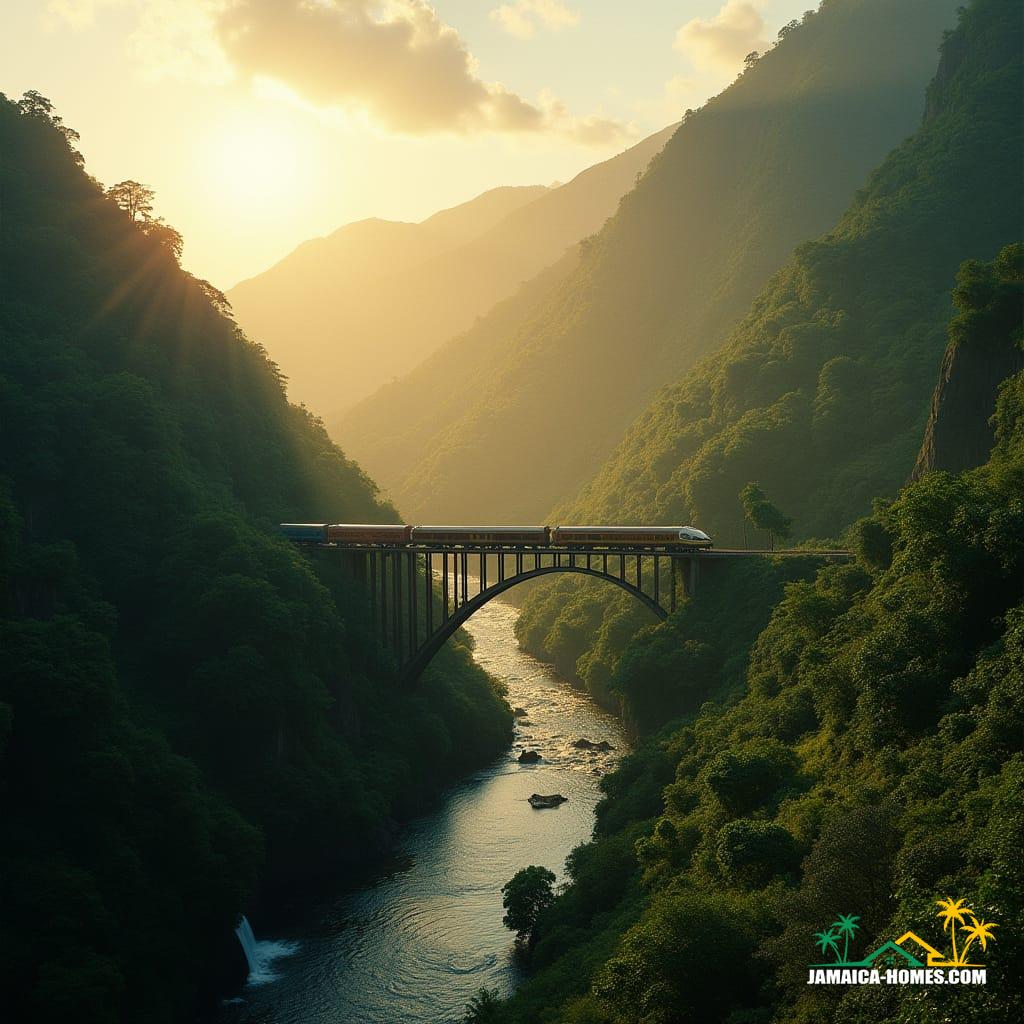
A modern bullet train snakes through the mountainous terrain of Jamaica outside Kingston, with steep verdant hills on one side and deep valleys with glittering rivers on the other. Glimpses of the vibrant Caribbean Sea appear in the far distance. Winding roads parallel the train tracks. Cinematic lighting, captured during the golden hour at sunrise, casts dramatic, elongated shadows across the mountains and creates striking reflections in the water below. Shot on ARRI Alexa 65mm, film grain, vignette, color graded, post-processed, 35mm film, live-action, best quality, atmospheric, masterpiece, epic, stunning, dramatic.
Imagine, for a moment, a modern train weaving along the coast or cutting through the hills, linking Kingston to Montego Bay, Spanish Town, or Ocho Rios. “A train is more than just steel on tracks,” says Dean Jones, founder of Jamaica Homes. “It’s an artery for progress. It shapes the way people live, work, and invest.”
Efficiency, Connectivity, and Quality of Life
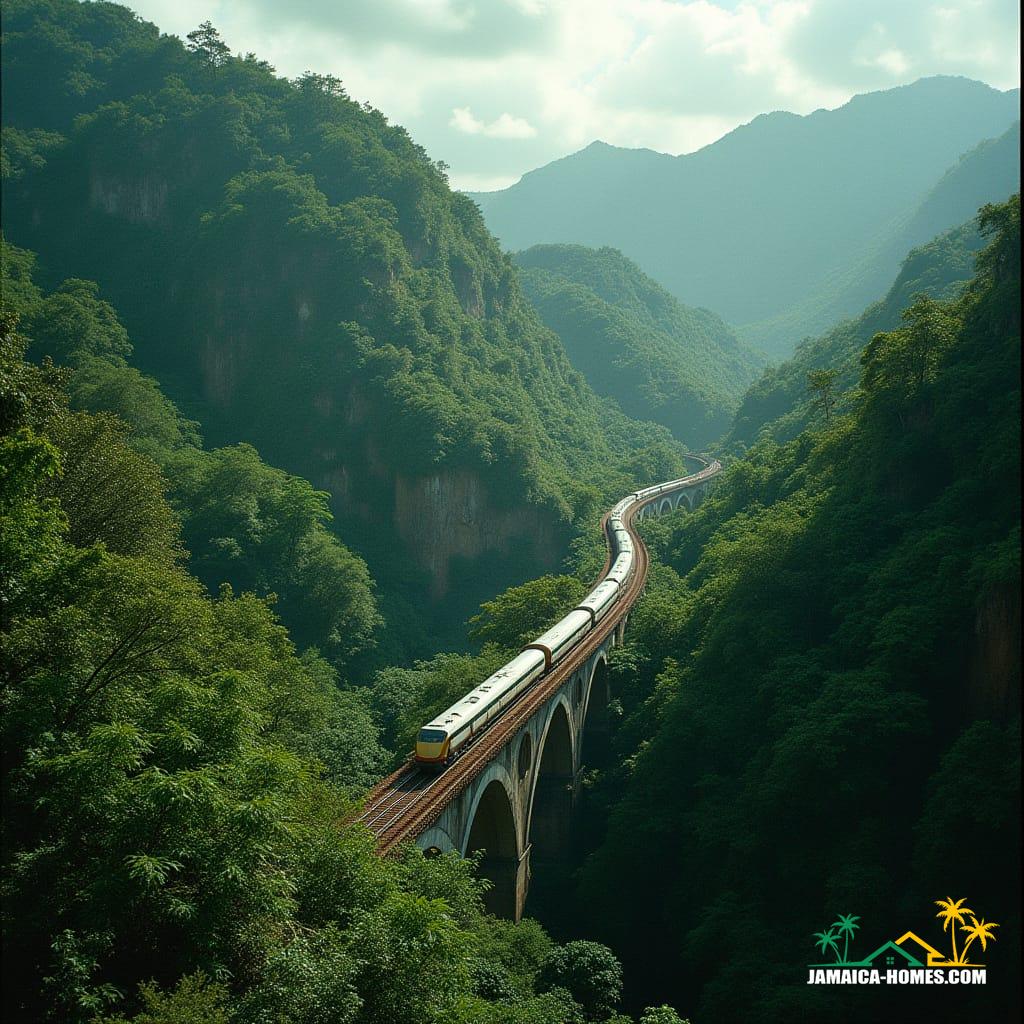
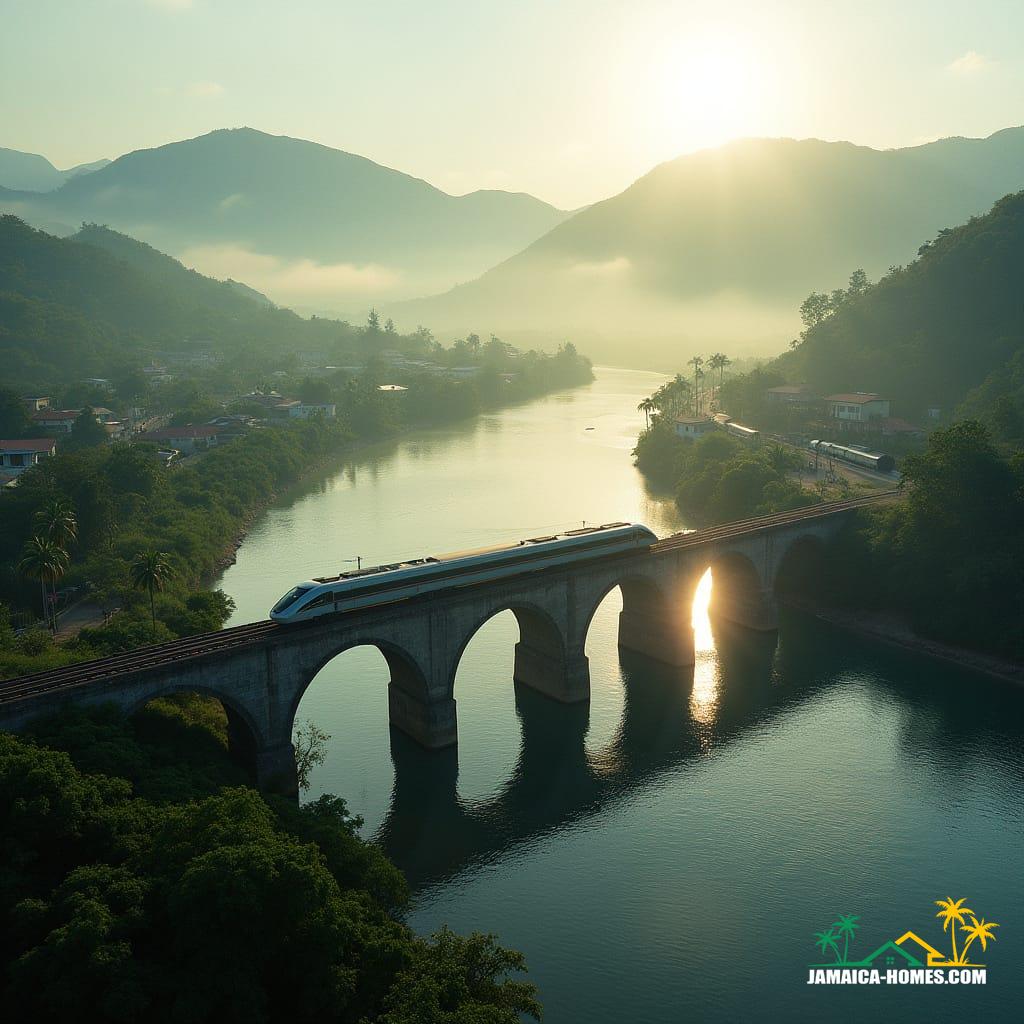
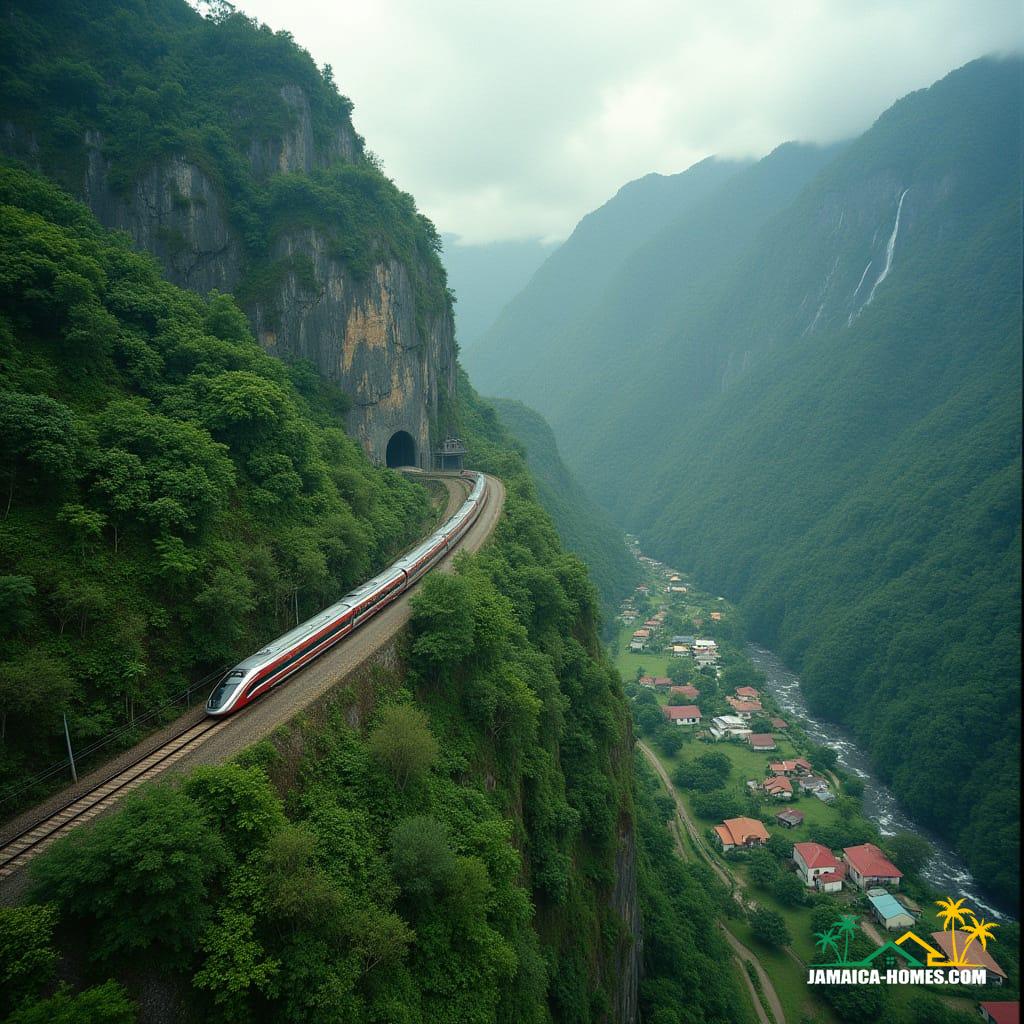
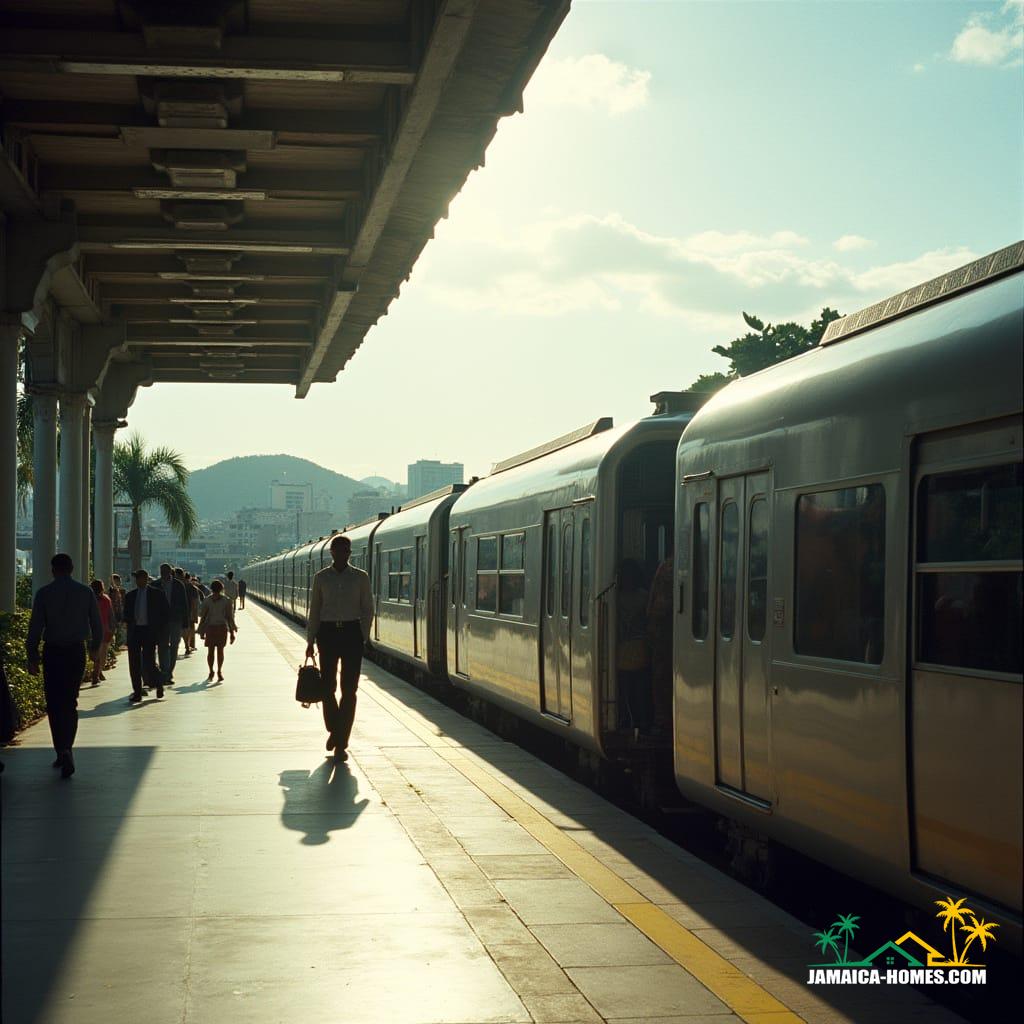
Cinematic film still of a sleek, modern train system traversing Jamaica’s varied terrains. The train crosses the iconic Flat Bridge, its distinctive arches spanning the Rio Cobre River, then navigates winding mountain roads between Kingston and Ocho Rios, hugging the lush greenery and steep cliffsides. The train cuts through dense tropical forests with towering trees and vibrant foliage. Aerial perspectives highlight the train’s harmonious integration into the natural landscape. The scenes evoke progress and connectivity, blending Jamaica’s natural beauty with modern infrastructure. Shot on v-raptor XL, film grain, vignette, color graded, post-processed, cinematic lighting, 35mm film, live-action, best quality, atmospheric, epic, stunning, dramatic. A sleek, modern train system traversing Jamaica’s varied terrains, depicted crossing the iconic Flat Bridge with its distinctive arches spanning the Rio Cobre River. The train then navigates a winding mountain road between Kingston and Ocho Rios, hugging the lush mountainside with steep cliffs. Aerial perspectives showcase the train cutting through dense tropical forests, with towering trees and vibrant foliage, highlighting its harmonious integration into the natural landscape. The scenes evoke progress and connectivity, blending Jamaica’s rich natural beauty with modern infrastructure. Cinematic film still, shot on v-raptor XL, film grain, vignette, color graded, post-processed, cinematic lighting, 35mm film, live-action, best quality, atmospheric, masterpiece, epic, stunning, dramatic. A sleek, modern train crosses the historic Flat Bridge over the Rio Cobre River, bathed in the ethereal glow of early morning light, with wisps of mist rising from the water’s surface. The surrounding Jamaican landscape features charming small towns, lush tropical trees, and majestic distant mountains. A few cars traverse the bridge, and tiny figures of people dot the riverbank, providing a sense of scale. Emphasizing realism and dramatic perspectives, the scene is captured as if by a drone or high vantage point. Cinematic film still, shot on v-raptor XL, film grain, vignette, color graded, post-processed, cinematic, dramatic lighting, 35mm film, live-action, best quality, atmospheric, masterpiece, epic, stunning, dynamic composition. Cinematic film still of a sleek, modern high-speed train running parallel to a winding old road between Ocho Rios and Kingston. Steep, lush green mountains with dramatic waterfalls cascading down sheer cliffs dominate the background. A vibrant river cuts through a deep valley below. Patches of fertile farmland and quaint small villages are visible from an aerial perspective. The train is captured dynamically as it emerges from a tunnel and curves around a dramatic mountain edge. Shot on v-raptor XL, film grain, vignette, color graded, post-processed, cinematic lighting, 35mm film, live-action, best quality, atmospheric, a masterpiece, epic, stunning, dramatic. Cinematic film still, shot on v-raptor XL with 35mm film grain, of Jamaica’s lush mountain range at golden hour. Dramatic sunlight illuminates the mountainsides, casting long shadows and reflecting brilliantly off winding rivers below. Small, arched bridges and cascading waterfalls dot the verdant landscape as a vintage train emerges from a dark tunnel, leaving a trail of cinematic haze that enhances the sense of depth and adventure. Color graded, post-processed, cinematic lighting, live-action, best quality, atmospheric, masterpiece, epic, stunning, dramatic. A modern train station in Kingston, Jamaica, bustling with life. A Jamaican man wearing a colourful patterned shirt is stepping onto a sleek, contemporary train, carrying a small brown leather bag. The station features clean architecture with expansive glass panels and vibrant tropical landscaping framing visible signage. In the background, city buildings rise against lush distant hills. Sunlight streams through the station canopy, creating dramatic, atmospheric cinematic lighting and highlighting the metallic gleam of the train, with realistic, film grain texture. People in casual and business attire move around the platform, shot on v-raptor XL, 35mm film, post-processed, best quality, epic, stunning, a masterpiece. A modern train station in Kingston, Jamaica, bustling with life, captured as a cinematic film still. A Jamaican man, carrying a a small bag, steps onto a sleek, contemporary train. The station features clean architecture with glass panels, tropical landscaping, and clear signage. In the background, city buildings rise against distant hills. Realistic lighting with sunlight streaming through the station canopy highlights the metallic gleam of the train. People in casual and business attire move around the platform, emphasizing vibrancy and a sense of daily life. Shot on v-raptor XL, film grain, vignette, color graded, post-processed, cinematic lighting, 35mm film, live-action, best quality, atmospheric, a masterpiece, epic, stunning, dramatic.
A contemporary train system would change how Jamaicans experience their island. Commutes that currently take hours could be halved, making suburban and rural areas suddenly viable for those who work in urban centers. Students, professionals, and tourists would all benefit. For Jamaica’s bustling tourism industry, rail could create a seamless experience, moving visitors from airports to resorts, beaches, and cultural hubs with ease. “When people can move freely and reliably, they live better lives. And businesses thrive because talent and customers can reach them without frustration,” Dean notes.
Jobs and Economic Growth
The construction of a rail network would generate thousands of jobs, from engineers and architects to construction crews and project managers. Once operational, a variety of roles—from conductors to maintenance staff and administrative teams—would support the system. Beyond direct employment, there would be ripple effects: retail, hospitality, and service sectors near stations would flourish.
“Investing in infrastructure isn’t just about steel and concrete,” Dean explains. “It’s about people. Each job created, each business supported, contributes to a stronger economy and a more connected community.” For a country like Jamaica, where youth unemployment remains a pressing challenge, these opportunities are vital.
The Ripple Effect on Real Estate
Perhaps the most visible change would be in real estate. Properties near stations would gain value, attracting both residents and investors. Suburban areas once considered too far from the city could become highly desirable. Mixed-use developments would emerge, blending homes, shops, and offices in vibrant, accessible communities.
“Property near transport isn’t just about convenience,” Dean observes. “It’s about potential. A home by a train station isn’t just a place to live—it’s a gateway to opportunity.” Developers would likely follow commuter patterns, creating neighborhoods designed around accessibility rather than proximity to highways alone. Over time, this could reduce pressure on urban centers, encourage balanced growth, and even reshape the island’s urban planning philosophy.
Environmental and Social Benefits
Beyond economics, rail could make Jamaica cleaner and more livable. Fewer cars on the road would mean lower emissions, less noise, and healthier communities. Affordable, reliable transport gives everyone access to jobs, schools, and services—bridging the gap between rural and urban areas. “Infrastructure like this is about equity,” Dean says. “It gives everyone a chance to participate fully in the economy, regardless of where they live.”
Challenges and Considerations
Of course, the path to a functional train system is complex. Funding, land acquisition, environmental considerations, and integration with existing roads and bus routes all need careful planning. Ticket pricing must balance affordability with operational sustainability. Yet, as Dean points out, “Challenges aren’t roadblocks—they’re opportunities to do it right. A well-planned train can transform communities in ways that highways alone never could.”
A Vision for Jamaica’s Future
Bringing trains back to Jamaica isn’t just nostalgia—it’s forward thinking. It’s about creating a system that connects people to opportunities, jobs to talent, and tourists to experiences. It’s about shaping real estate markets, stimulating economic growth, and building a more equitable society. “A train doesn’t just move you from point A to point B,” Dean reflects. “It moves a nation forward.”
The story of Jamaica’s trains isn’t finished. With vision, investment, and commitment, the rails that once linked the island could become the veins of its next great era—delivering jobs, empowering communities, and reshaping real estate for generations to come.
Disclaimer: The images and concepts depicted are artistic visualizations created for illustrative purposes. They may not represent actual train routes, stations, or current infrastructure in Jamaica. All information is intended for creative and educational purposes only.
Follow Jamaica Homes on Youtube @jamaicahomes and Instagram @jamaica_homes and on Facebook @jamaicahomesnews Send us a message or email us at onlinefeedback@jamaica-homes.com or editor@jamaica-homes.com
Jamaica Homes News is an independent newsroom covering Jamaica's property, housing and construction economy. We publish market data sourced from the Bank of Jamaica, STATIN and the Planning Institute of Jamaica, and we log every correction publicly. Founded by Dean Jones, Realtor®-Associate.
Jamaica Homes News brings you the latest Jamaican news, property, business, tourism, development and community stories from across the island. Discover the people, places and developments shaping Jamaica today, with timely news and local insight you can trust. Your source for the real estate news.
JAMAICA HOMES LTD Registered in England and Wales. Company No. 17386190. Registered Office: 14/2E Docklands Business Centre 10-16 Tiller Road London E14 8PX





Visit our YouTube Community ↗