

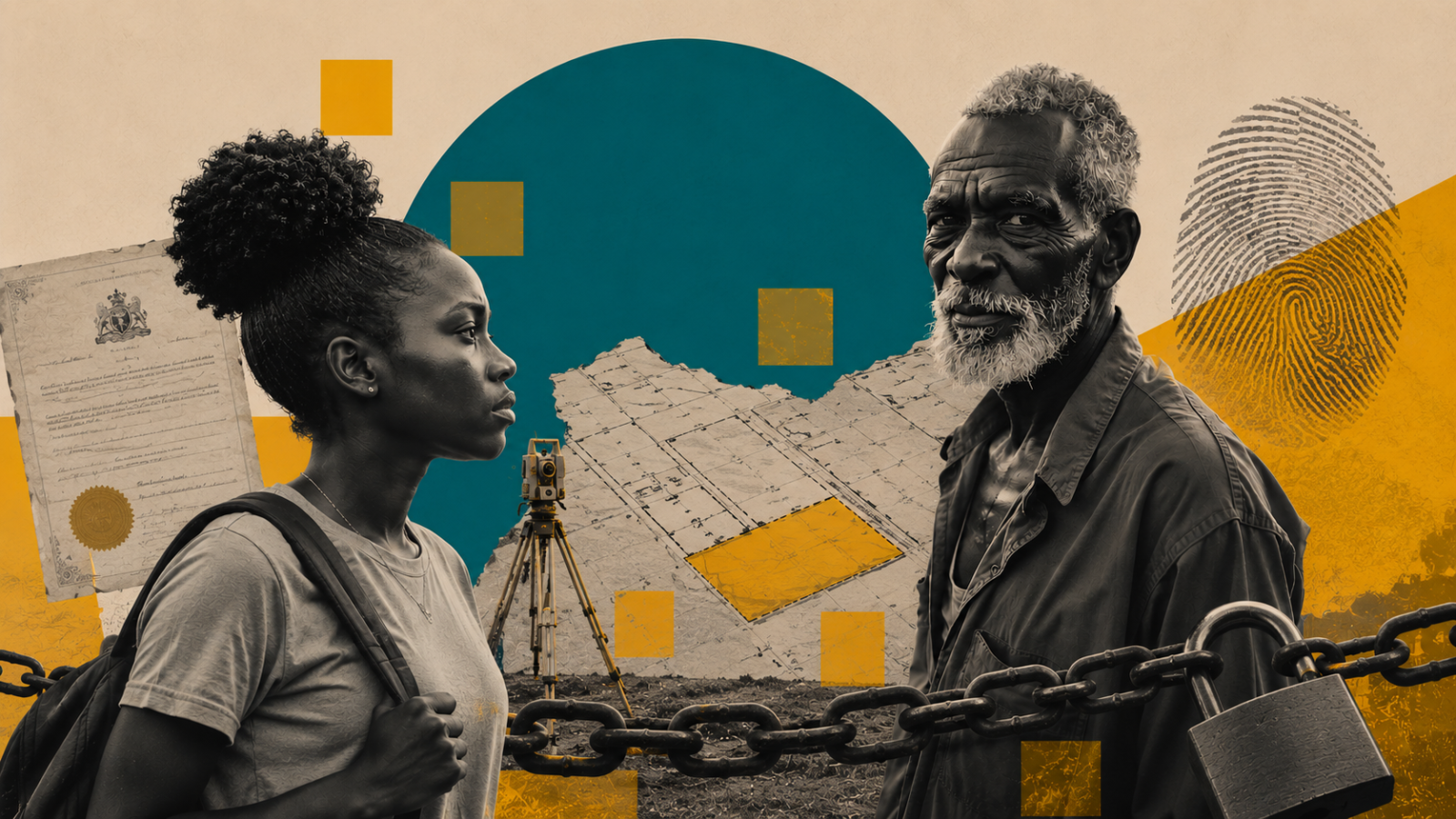
- Forged power of attorney documents are being used to transfer properties without owner consent.
- Diaspora Jamaicans granting POA to relatives face the highest documented abuse rate.
- A POA does not grant unlimited authority; scope must be specified in the document.
- Attorneys-at-law have an obligation to verify the grantor’s identity and current instructions.
- NLA’s eLandJamaica portal alerts registered owners of any dealings on their title.
A power of attorney (POA) is a legal document that authorises one person — the attorney-in-fact or agent — to act on behalf of another — the principal — in matters specified in the document. In Jamaican property transactions, POAs are commonly granted by overseas owners who cannot be present to sign contracts, attend completion meetings, or deal with government agencies in person. They are a practical necessity for the diaspora. They are also, when abused, one of the most effective instruments of property fraud in the island.
Two categories of POA fraud are regularly reported in Jamaica. The first involves forgery: a fraudster creates a document purporting to grant them authority over a property, forges the owner’s signature, and then uses it to sell or mortgage the property. The second involves scope abuse: a legitimate POA granted for a limited purpose — such as collecting rent or dealing with a specific transaction — is used by the holder to carry out a broader transaction, such as a sale, that the owner never intended to authorise.
The Diaspora Vulnerability
Jamaicans living in the United Kingdom, the United States, and Canada regularly grant powers of attorney to family members or friends to manage their affairs at home. The trust implicit in those relationships is sometimes misplaced. A person granted a POA to manage a rental property may execute a sale of that property, banking on the difficulty of legal action from overseas. By the time the owner discovers what has happened, the property may have passed to a third-party purchaser who claims to have bought in good faith.
Jamaican law provides some protection in these circumstances. A purchaser who buys from a person purporting to act under a POA should verify, as part of due diligence, that the POA is valid, that it covers the transaction type being executed, and ideally should make independent contact with the principal to confirm the transaction is authorised. An attorney acting in a conveyancing transaction has professional obligations to take reasonable steps to confirm that a POA is genuine and that its scope covers the dealing in question.
Protective Measures
Landowners can take several steps to reduce their exposure to POA fraud. First, any POA granted should be as narrow as possible — limited to specific transactions, specific properties, and a specific time period — rather than granting broad general authority. Second, landowners should register a caveat on their title through the NLA, which will require them to be notified before any dealing on the title can be registered. The NLA’s eLandJamaica portal allows title searches and provides information on the caveat process. Third, any suspicion that a POA has been misused should be reported immediately to an attorney and to law enforcement, as delay significantly reduces the prospect of recovering the property.
Follow Jamaica Homes on Youtube @jamaicahomes and Instagram @jamaica_homes and on Facebook @jamaicahomesnews Send us a message or email us at onlinefeedback@jamaica-homes.com or editor@jamaica-homes.com
Support independent Jamaican journalism.
- 1Our journalists cover housing, politics and community — stories that directly affect Jamaican lives.
- 2We have no billionaire owner and no advertisers calling the shots. Every story is decided by our editors.
- 3It costs less than a cup of coffee a week, and takes less time to subscribe than it took to read this article.
Support Jamaica Homes News today.
- Save 17% compared to monthly
- All articles unlocked
- Weekly newsletter
- Priority support
By subscribing you agree to our Privacy Policy and Terms.

Visit our YouTube Community ↗