

The second quarter of 2025 will be remembered in the economic histories of every open economy on earth as the quarter when the rules of the post-war global trading order were put in the most serious question they had faced since the 1930s. On 2 April — designated “Liberation Day” by the Trump administration — the United States announced sweeping tariffs on imports from virtually every trading partner, with rates ranging from a baseline ten per cent to multiples that figure for major deficit partners. The immediate response from global financial markets was among the most violent since the 2008 financial crisis: equity indices fell sharply, bond markets behaved in patterns that defied conventional safe-haven logic, and the currencies of export-dependent economies — including the commodity and services exporters of the Caribbean basin — experienced pressure that their central banks had to actively manage. For Jamaica, the quarter was defined by the effort to distinguish between the external noise of a global policy rupture and the underlying domestic fundamentals that had been carefully constructed over a quarter-century of fiscal discipline.
Key Highlights
- The Trump administration’s “Liberation Day” tariff announcement on 2 April 2025 imposed sweeping import levies on virtually all US trading partners, triggering one of the largest global market sell-offs since 2008 and raising widespread recession fears.
- A 90-day pause on the most aggressive tariff rates was announced for most countries on approximately 9 April, while US-China tariffs were simultaneously escalated toward 145%; the trade war’s focal point shifted overwhelmingly to the bilateral US-China confrontation.
- The US Federal Reserve held rates at 4.25–4.50% throughout Q2, caught between weakening US growth prospects and the inflationary implications of tariffs, producing a stagflationary dilemma that constrained conventional monetary policy options.
- Jamaica’s 2025–26 budget was presented to parliament in May, maintaining the primary surplus discipline while targeting increased capital expenditure on roads, water infrastructure and renewable energy.
- The spring tourism shoulder season performed at or above prior-year levels, suggesting that the leisure travel demand that Jamaica relied upon was more resilient to trade-policy anxiety than goods-trade or investment flows.
- Renewable energy procurement advanced with the OUR completing its competitive tendering process; new utility-scale solar capacity was contracted at tariffs materially below existing generation costs.
Jamaica had navigated external shocks before: oil price spikes, global financial crises, pandemics, hurricanes. Each had tested the island’s institutional capacity and fiscal resilience, and each had been managed — with varying degrees of pain and policy intervention — without a fundamental breakdown of the macroeconomic framework that the post-FINSAC generation of policymakers had constructed. The question raised by the Liberation Day tariff shock was whether this event was in the same category as those preceding shocks — severe but ultimately manageable through existing frameworks — or whether it represented a more fundamental structural break in the global trading system on which Jamaica’s export and tourism earnings depended.
Liberation Day and Its Immediate Aftermath
The 2 April tariff announcement was, in its scope and ambition, unlike anything the global trading system had experienced in the modern era. Where previous US tariff actions — including Trump’s first-term measures and the Biden-era continuation and extension of some of those measures — had been targeted at specific sectors, specific countries or specific categories of goods deemed strategically sensitive, the Liberation Day package was explicitly universal: a floor tariff on imports from every trading partner, with additional bilateral surcharges on countries the administration had designated as persistent trade deficit sources. The theoretical and legal basis for the measures was contested by trade lawyers on multiple continents, and several trading partners initiated formal WTO dispute settlement procedures, but the immediate and practical reality was that the tariffs were in effect and that the world’s largest import market had fundamentally changed its pricing architecture for goods from everywhere.
The financial market response in the days immediately following the announcement was of a character that veteran market participants described as unlike anything in their careers. US equity indices fell by percentages not seen since the pandemic’s March 2020 shock. Corporate credit spreads widened sharply. The US Treasury market — historically the world’s premier safe-haven asset, to which capital flows in times of stress — behaved anomalously, with yields rising rather than falling as investors questioned whether the global reserve status of dollar assets could withstand the self-imposed disruption that the administration’s trade policy was generating. The dollar weakened against the euro, the yen and a range of emerging-market currencies, an unusual pattern that suggested capital flows were responding to a scenario that was bad specifically for the United States rather than the generalised global risk-off of a normal market shock.
A partial reprieve came on approximately 9 April, when the administration announced a 90-day pause on the most aggressive bilateral tariff rates for most trading partners — while simultaneously escalating the tariffs on Chinese goods toward a stated rate of 145 per cent. The pause provided some relief to global financial markets, with a partial recovery in equity prices on the day of announcement, but it did not resolve the underlying uncertainty: a 90-day pause was not a permanent exemption, and the trajectory of trade policy remained opaque as the administration pursued its bilateral negotiating agenda with each affected partner.
Jamaica’s Exposure: Tourism Resilience and Trade Anxiety
Jamaica’s structural exposure to the Liberation Day tariff regime was, in the first instance, lower than that of manufacturing-intensive emerging markets whose exports of goods to the United States were directly in the tariff’s sights. Jamaica’s goods exports to the US — agricultural products, small volumes of manufactured goods, mineral products — were modest in absolute scale, and the Caribbean Basin Trade Partnership Act preferences, while subject to the administration’s broader trade policy review, were not immediately swept away by the Liberation Day measures. Tourism, which accounted for the majority of Jamaica’s foreign exchange earnings and whose services component was not directly affected by goods tariffs, provided a structural buffer that many of the island’s more manufacturing-oriented peers in the wider Caribbean and Latin America did not enjoy.
The indirect effects were, however, real and immediate. The global market sell-off in early April generated a wealth effect in North American consumer markets that was tangible: equity portfolios declined sharply, consumer confidence surveys fell to multi-year lows, and media coverage of the trade war created a psychology of economic anxiety that was reflected in discretionary spending caution. For an industry whose customers were making leisure travel decisions months in advance on the basis of their economic confidence and disposable income, the prospect of a sustained period of US consumer anxiety was a genuine demand-side risk. The Jamaica Tourist Board monitored booking trends closely through April and May, watching for evidence of cancellations or booking slowdowns that might signal a demand impact from the macro environment.
On the cost side, the tariff environment was contributing to an import-cost inflation that the Ministry of Finance and the Bank of Jamaica tracked with concern. Jamaica imported substantially all of its petroleum requirements, construction materials, machinery, food and manufactured consumer goods. The tariff-induced disruption to global supply chains — as shipping patterns, manufacturing locations and procurement strategies were reconfigured in response to the new tariff architecture — was adding cost and uncertainty to the import pipeline. Freight rates, which had partially normalised from the 2024 Red Sea peak, were again under upward pressure as shipping companies recalculated route economics in the new trade environment.
The Federal Reserve in a Stagflationary Bind
The Federal Open Market Committee’s response to the Liberation Day shock was, by the committee’s standards, constrained and cautious. The simultaneous presence of weakening growth prospects — as the tariff uncertainty suppressed business investment and consumer spending — and elevated inflation risks — from the tariffs themselves passing through to consumer prices — created a textbook stagflationary dilemma: the tool that addressed one problem (cutting rates to stimulate the weakening economy) would worsen the other (adding fuel to inflationary pressures), and the tool that addressed inflation (maintaining high rates) would aggravate the growth slowdown. The FOMC held rates at 4.25 to 4.50 per cent at its May and June meetings, with communications that emphasised the elevated uncertainty and the committee’s need for additional data before making any further adjustment to the stance of policy.
For Jamaica, the Fed’s paralysis in the face of the stagflationary bind was not straightforwardly negative: the alternative — a sharp Fed rate hike to combat tariff-driven inflation — would have been far more damaging to the island’s external financing position. The hold was the least bad option from Jamaica’s perspective, even if the underlying uncertainty that generated it was unwelcome. The Bank of Jamaica similarly held its overnight policy rate through the quarter, citing the external risks and the need to maintain the interest rate differential that had supported the Jamaican dollar’s stability through the global market turbulence of April.
The Jamaican dollar had come under modest pressure in the early April market dislocation — when the global sell-off generated demand for US dollars as the ultimate liquidity instrument — but the BoJ’s intervention capacity was exercised judiciously and the currency returned to a relatively stable range by late April as the partial tariff pause reduced the acuity of the sell-off. The gross international reserves remained at comfortable levels relative to the IMF’s adequacy benchmarks, providing the central bank with the fire-power to defend the exchange rate in a sustained manner if external conditions required it.
Tourism Through the Shoulder Season
The spring shoulder season — April through June — was Jamaica’s quieter interlude between the winter high season and the summer period, and the Liberation Day anxiety did not cause a material reversal in the visitor flow trend. The tourists who arrived in April had booked their Jamaica holidays weeks or months earlier, before the tariff announcement, and the cancellation rate for existing bookings, while slightly elevated compared to the prior-year period, did not reach the levels that would have constituted a crisis. The May and June data showed some softening relative to the torrid pace of the winter peak, but this was consistent with the seasonal pattern and did not represent a tariff-specific demand collapse.
The cruise sector demonstrated particular resilience: cruise itineraries are set far in advance and the ships’ schedules are essentially fixed over multi-year horizons, meaning that the Falmouth and Ocho Rios call schedules for Q2 were unaffected by the tariff environment. The passenger throughput at those terminals ran at levels consistent with the prior year, providing a steady if not spectacular contribution to the quarter’s tourism receipts. The shore excursion and shopping economy associated with cruise calls was the segment most likely to see consumer caution reflected in spending per head, but the aggregate volume of cruise passenger-days maintained the prior-year benchmark.
The 2025–26 Budget: Discipline Under Pressure
The Minister of Finance presented the 2025–26 budget to parliament in May against the backdrop of the tariff uncertainty, and the fiscal framework that emerged reflected the competing demands of continuity and caution. The primary surplus target was maintained at a level consistent with the IMF Stand-By Arrangement’s performance criteria, preserving the fiscal credibility that Jamaica had spent fifteen years building and which provided the external financing market’s confidence in the sovereign. Capital expenditure allocations for roads, water infrastructure, renewable energy and social infrastructure were modestly increased relative to the prior year, reflecting the government’s third-term commitment to visible infrastructure delivery.
The revenue projections embedded in the budget were, by the Ministry’s own acknowledgement, subject to wider-than-normal ranges of uncertainty: the tourism revenue projections depended on North American consumer confidence that the tariff environment was testing; the import-related tax revenues (customs duties, general consumption tax on imports) were subject to both volume and price effects from the tariff-disrupted global trade flow; and the corporate tax take would reflect the profitability of businesses navigating higher input costs and uncertain demand. The Ministry’s communications emphasised the contingency provisions in the budget framework and the fiscal space that the reserve buffer and the IMF programme relationship provided in the event that a downside scenario materialised.
Renewable Energy: The Procurement Milestone
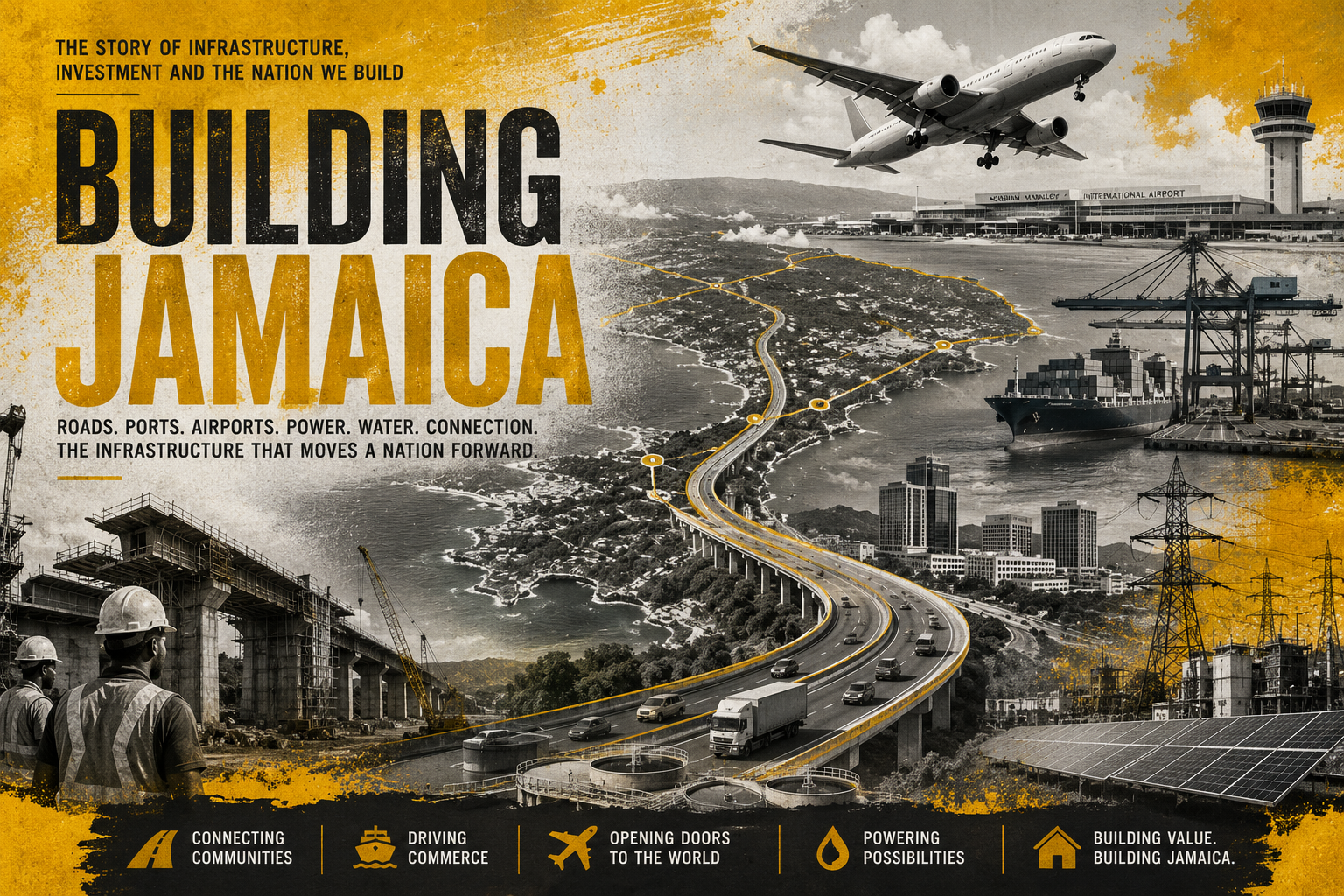
Amid the tariff turbulence, Jamaica’s energy sector reached a significant structural milestone. The Office of Utilities Regulation’s competitive procurement process for new renewable generation capacity — which had been under way since 2024 — concluded in Q2 2025 with the contract award to independent power producers for utility-scale solar and wind projects totalling several hundred megawatts. The contracted tariffs were materially below the marginal cost of generation from the Jamaica Public Service grid’s existing heavy fuel oil and LNG fleet, representing a fundamentally favourable economics shift for a country that had for decades been paying some of the highest electricity prices in the Western Hemisphere as a consequence of its dependence on imported fossil fuels.
The renewable build-out timeline projected commissioning of the first tranches of new capacity within eighteen to twenty-four months of financial close, meaning that the electricity system would begin its structural transition toward lower-cost, lower-carbon generation in 2026 and 2027. The implications for Jamaica’s industrial and commercial competitiveness were significant: lower electricity costs reduced the operating cost handicap that high energy prices imposed relative to continental economies with access to grid-scale renewable generation. Hotels, manufacturers, logistics operators and other energy-intensive businesses were monitoring the timeline closely and incorporating the prospective cost reduction into their capital expenditure and business planning.
Roads and Water: The Continuing Programme
The new fiscal year’s road rehabilitation programme was mobilised across the National Works Agency’s project portfolio through Q2, with the rainy season’s onset in May and June creating the familiar tension between the need for road repairs and the weather conditions that made them difficult. The NWA’s construction programme for 2025–26 had been designed to front-load the dry-season works in the January-to-April window and to focus the May-to-August rainy period on the maintenance activities — drainage clearance, slope stabilisation, pothole patching — that were appropriate to wet conditions. The procurement cycle had been accelerated relative to prior years, reflecting the government’s third-term commitment to improving the speed of capital programme delivery.
The water sector investment programme was entering its implementation phase following the financing negotiations that had been concluded with the IDB and CDB during Q1. The programme’s first tranche covered the Kingston metropolitan area’s distribution network rehabilitation — the replacement of the oldest and most leakage-prone sections of the pipe network that had been identified in the post-El Niño assessment as the primary source of the NWC’s high non-revenue water ratio — and the construction of additional storage capacity in the Hermitage watershed. Procurement documents had been issued for the first tranche contracts, and site investigations were under way to update the ground conditions data that the engineering designs required.
Navigating the Uncertainty
As the second quarter closed, Jamaica’s economic managers were navigating the most significant external trade policy disruption since the 2008 financial crisis with a combination of institutional caution, fiscal discipline and the structural advantage of a tourism-centred economic model that was more insulated from goods-tariff impacts than many of the island’s peers in the wider emerging-market world. The 90-day pause on the most aggressive tariff rates for countries other than China provided a temporary respite, but the underlying trade policy uncertainty had not been resolved, and the negotiations that would determine whether the pause became a permanent accommodation or an escalation into broader confrontation were far from concluded.
The third quarter of 2025 — the beginning of the hurricane season and the summer shoulder period for tourism — would test whether the consumer confidence data that had been weakening in North America translated into a visible softening of tourist arrivals to Jamaica, and whether the global economic slowdown that the tariff shock had created would affect the island’s fiscal revenues in a manner that required a budget revision. The island entered Q3 with its reserves intact, its IMF programme on track, its post-Beryl reconstruction complete and its renewable energy transition contracted. The external environment was turbulent, but the domestic foundations were solid — and in the history of Jamaica’s economic management, that combination had repeatedly proved more durable than the noise of the moment suggested.
Follow Jamaica Homes on Youtube @jamaicahomes and Instagram @jamaica_homes and on Facebook @jamaicahomes Send us a message or email us at onlinefeedback@jamaica-homes.com or editor@jamaica-homes.com
Support independent Jamaican journalism.
- 1Our journalists cover housing, politics and community — stories that directly affect Jamaican lives.
- 2We have no billionaire owner and no advertisers calling the shots. Every story is decided by our editors.
- 3It costs less than a cup of coffee a week, and takes less time to subscribe than it took to read this article.
Support Jamaica Homes News today.
- Save 17% compared to monthly
- All articles unlocked
- Weekly newsletter
- Priority support
By subscribing you agree to our Privacy Policy and Terms.
