

The first quarter of 2020 will be remembered in Jamaica as the moment when the most sustained period of economic progress in a generation ran into the most severe external shock in a century. January and February delivered tourism numbers that surpassed any prior winter season. Then, on March 10th, Jamaica confirmed its first case of the novel coronavirus disease that had by then swept through China, begun devastating Italy and Spain, and prompted the World Health Organization to declare a pandemic the following day. Within weeks, the airports were near-empty, hotels were shuttering, and the government was implementing emergency measures that no planning document had anticipated.
Key Highlights
- Jamaica confirms first COVID-19 case on March 10th; WHO declares pandemic the following day; rapid spread of public health measures follows
- Winter tourism season records strongest January–February in history before collapsing entirely in the final weeks of March
- Government implements emergency public health orders: curfews, movement restrictions, school closures, border controls
- Major airlines suspend or drastically reduce Jamaica services; hotel sector begins phased closure of properties
- Infrastructure construction programmes assessed for continuity; works deemed essential continue with health protocols
- Emergency economic support package announced; fiscal framework suspended to allow deficit spending
For eight weeks, everything was going right. The winter of 2019–20 had opened in October with the strongest advance bookings the Jamaica Tourist Board’s analysts could recall, and the months of December, January, and February delivered on that promise in full. Stopover arrivals for January and February 2020 were running several percentage points ahead of the already-record comparable period in 2019, and the hotel sector was reporting occupancy levels across the north coast that strained the capacity of properties that were still being asked by their revenue managers to hold rates up in the face of strong demand. Every metric of Jamaica’s tourism economy pointed forward.
The first reports of a novel respiratory disease spreading in Wuhan, China had been circulating in global health monitoring systems since late December, and the Jamaican Ministry of Health and Wellness had activated its routine international health surveillance protocols. But the outbreak seemed distant — a Chinese phenomenon, then an East Asian concern, then an Italian emergency. It was not until late February, when cases began appearing with alarming speed in Iran, South Korea, and across the European continent, that the realisation spread through health ministries worldwide that containment had failed and that the virus was following travellers wherever travellers went. Jamaica, whose economy exists almost entirely because of travellers, was acutely exposed.
On March 10th, the Ministry of Health confirmed Jamaica’s first positive case: a returning Jamaican traveller who had arrived from the United Kingdom, where community transmission was already underway. Within days, additional cases had been confirmed, and the epidemiological curve that health officials had been dreading — early cases linked to travel, followed by community transmission — began to take shape. Prime Minister Holness addressed the nation, implementing the Disaster Risk Management Act emergency framework that gave the government authority to impose restrictions that would have been unthinkable under normal law: curfews, mandatory quarantines for arriving travellers, limitations on public gatherings, and the closure of schools and certain categories of business.
Tourism: Record to Ruin in Three Weeks
The speed of the tourism sector’s collapse was without precedent in Jamaica’s economic history. The crisis of September 11, 2001, which had devastated transatlantic air travel, had taken several weeks to fully affect Caribbean arrivals and had produced a deep but ultimately temporary trough. The 2008 global financial crisis had squeezed visitor numbers over a period of a year or more. The COVID-19 pandemic compressed the destruction into a matter of days. From the peak occupancy of February, the industry moved within three weeks to a situation where the major international airlines — American, Delta, JetBlue, Air Canada, British Airways, Virgin Atlantic — were suspending their Jamaica services entirely or reducing to a handful of repatriation flights.
The hotel sector faced a stark choice between continuing to operate with dramatically reduced occupancy (and the public health risks that concentrated-stay environments presented) or closing entirely. Most major properties elected closure, implementing furlough arrangements for their employees that used the government’s emergency support framework where it was available and drew down reserves where it was not. The all-inclusive model that has dominated Jamaica’s accommodation sector — with its high fixed cost base of food and beverage operations, entertainment staff, and maintenance teams — was particularly ill-suited to partial occupancy operation, making complete shutdown the economically rational choice for operators facing weeks or months of near-zero demand.
The Jamaica Tourist Board has been working with the Tourism Product Development Company to assess the immediate and near-term damage to the sector. The loss of visitor revenue for the March period alone — historically one of the strongest months of the winter season — represents hundreds of millions of US dollars of foreign exchange receipts that will not flow. The indirect effects cascade across the economy: the farmers who supply hotel kitchens, the taxi operators who transport visitors, the craft vendors who sell to cruise passengers, the cleaning and laundry services that support the resort district — all have seen their revenue fall sharply or disappear entirely. Tourism is not merely Jamaica’s largest industry; it is the axis around which large sections of the community and service economy rotate.
Government Response: Emergency Framework Activated
The Holness administration’s response to the crisis has drawn on the Disaster Risk Management Act’s provisions to implement a programme of restrictions and supports that would have required new legislation in the absence of the emergency framework. The Curfew Orders that restricted movement during nighttime hours were followed by more extensive Shelter-in-Place directives for the Kingston Metropolitan Area. Schools, which had already been placed on extended break, were shifted to a remote learning model whose implementation revealed the depth of the digital divide between households with internet access and the majority of Jamaican students who depend on physical attendance for their education.
The economic support package announced by Finance Minister Dr Nigel Clarke included direct grants to the most vulnerable households, expanded access to the Programme of Advancement Through Health and Education (PATH) social support network, and working capital loans for small businesses through the Development Bank of Jamaica. The fiscal cost of these measures, added to the collapse in tax revenues that accompanies any sharp economic contraction, will drive the government’s fiscal balance from surplus to deficit for the first time in years — the Fiscal Responsibility Act’s provisions have been explicitly suspended to allow the deficit spending that the emergency requires.
The international financial institutions have responded quickly to the changed circumstances. The IMF made rapid-disbursement emergency financing available to member countries facing pandemic-related balance of payments pressures, and Jamaica engaged with the Fund to access these instruments. The World Bank and the IDB have also been reorienting their Jamaica programmes, redirecting available resources toward emergency public health and social support expenditure and deferring the infrastructure commitments that cannot proceed under the current conditions.
Infrastructure: Essential Works Continue Under Protocol
The government has classified road construction and utility maintenance as essential services, allowing the NWA and its contractors to continue works underway under the emergency orders that restrict movement and require physical distancing. The practical implementation of these protocols on active construction sites — where the nature of the work requires proximity between operatives and shared use of equipment — has required rapid adaptation of working procedures, including staggered shift patterns, enhanced personal protective equipment requirements, and temperature screening at site entry points.
The Portland road programme, which had been in its final stages of completion at the start of the quarter, has been able to continue through the emergency period with appropriate health protocols. The final surfacing sections are expected to complete in the coming weeks, subject to the operational constraints of the emergency environment. Bridge rehabilitation works at several locations across the island have been paused pending assessment of whether the contractor workforce can be safely accommodated within the health protocol framework; the most critical of these works is expected to resume once the assessment is complete.
The Old Harbour Bay LNG facility has continued to operate normally throughout the emergency period, delivering natural gas to the Jamaica Public Service generating station without interruption. The FSRU and its associated infrastructure have been designated as critical national infrastructure, and the operating teams have been provided with accommodation on-site to minimise the risk of introducing the virus into the facility and potentially disrupting power supply during a period when the health system’s demand for reliable electricity is elevated. The renewable energy installations across the island have similarly continued to generate without significant disruption.
Port: Supply Chains Under Stress
Kingston Freeport Terminal Limited has been facing the dual pressures of reduced trade volumes as global demand collapses and the operational challenges of maintaining a large workforce of stevedores and port operators under health protocol conditions. Container volumes have declined sharply from the record levels of late 2019 as the global trade disruption caused by simultaneous demand collapse in major importing economies and supply-side disruption in Asian manufacturing centres reduces the flow of goods through all transhipment hubs. The first quarter’s volume data will almost certainly show a significant reversal of the growth trend that had characterised KFTL’s performance through 2018 and 2019.
The National Water Commission has maintained water supply services throughout the emergency period, a responsibility that has taken on heightened importance given that handwashing has been identified as a critical public health measure for reducing COVID-19 transmission. The NWC’s operational teams have been working under enhanced health protocols, and the commission has been coordinating with the Office of Disaster Preparedness and Emergency Management to ensure that water supply to hospitals, quarantine facilities, and densely populated communities is maintained at consistent pressure and quality levels. The pandemic has underscored in the most direct possible terms the connection between infrastructure quality and public health outcomes.
Economic Outlook: The Scale of the Unknown
As the first quarter of 2020 closes, the economic damage inflicted by the pandemic on Jamaica is severe and the trajectory remains deeply uncertain. The Planning Institute of Jamaica has suspended its normal forecasting round pending a better understanding of the duration and severity of the crisis. The Bank of Jamaica has adjusted its policy framework to support economic activity, reducing its policy rate and taking measures to maintain adequate liquidity in the banking system.
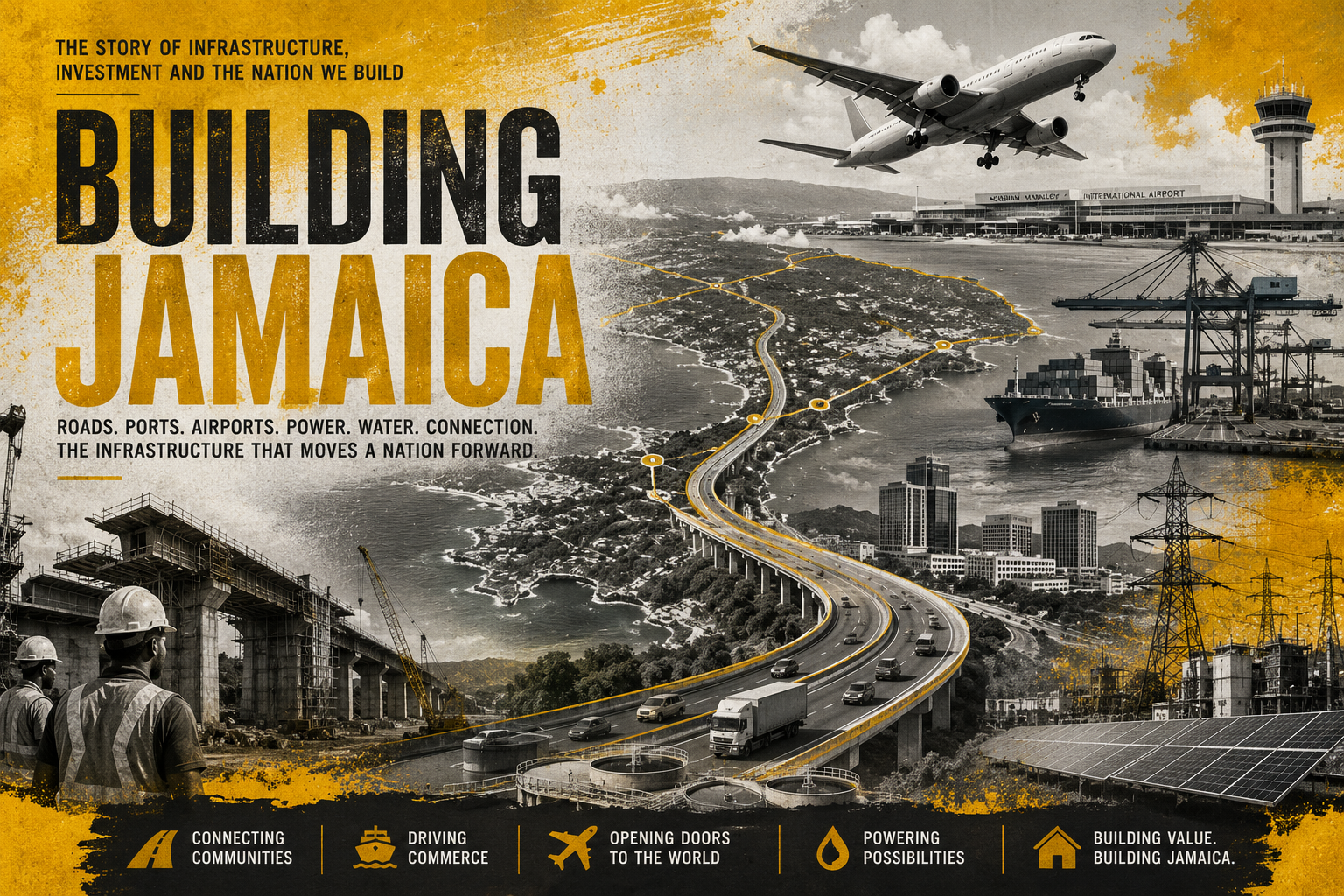
The fundamental question for Jamaica’s economic planners — when will international travel resume, and in what form — is unanswerable with any precision from the vantage point of late March 2020. The epidemiological trajectory of the virus, the development of effective treatments or vaccines, the threshold of infection control that major source-market governments will require before lifting travel restrictions — all of these are genuinely unknown. What is knowable is that the infrastructure Jamaica has built over the past decade — the gas supply, the renewable generation, the improved roads, the container terminal, the updated airports — will be exactly as essential to recovery as it has been to the growth that preceded this crisis. The structures will survive what is coming. The question is how the economy that depends on them will endure the interval.
Follow Jamaica Homes on Youtube @jamaicahomes and Instagram @jamaica_homes and on Facebook @jamaicahomesnews Send us a message or email us at onlinefeedback@jamaica-homes.com or editor@jamaica-homes.com
Support independent Jamaican journalism.
- 1Our journalists cover housing, politics and community — stories that directly affect Jamaican lives.
- 2We have no billionaire owner and no advertisers calling the shots. Every story is decided by our editors.
- 3It costs less than a cup of coffee a week, and takes less time to subscribe than it took to read this article.
Support Jamaica Homes News today.
- Save 17% compared to monthly
- All articles unlocked
- Weekly newsletter
- Priority support
By subscribing you agree to our Privacy Policy and Terms.

Visit our YouTube Community ↗