

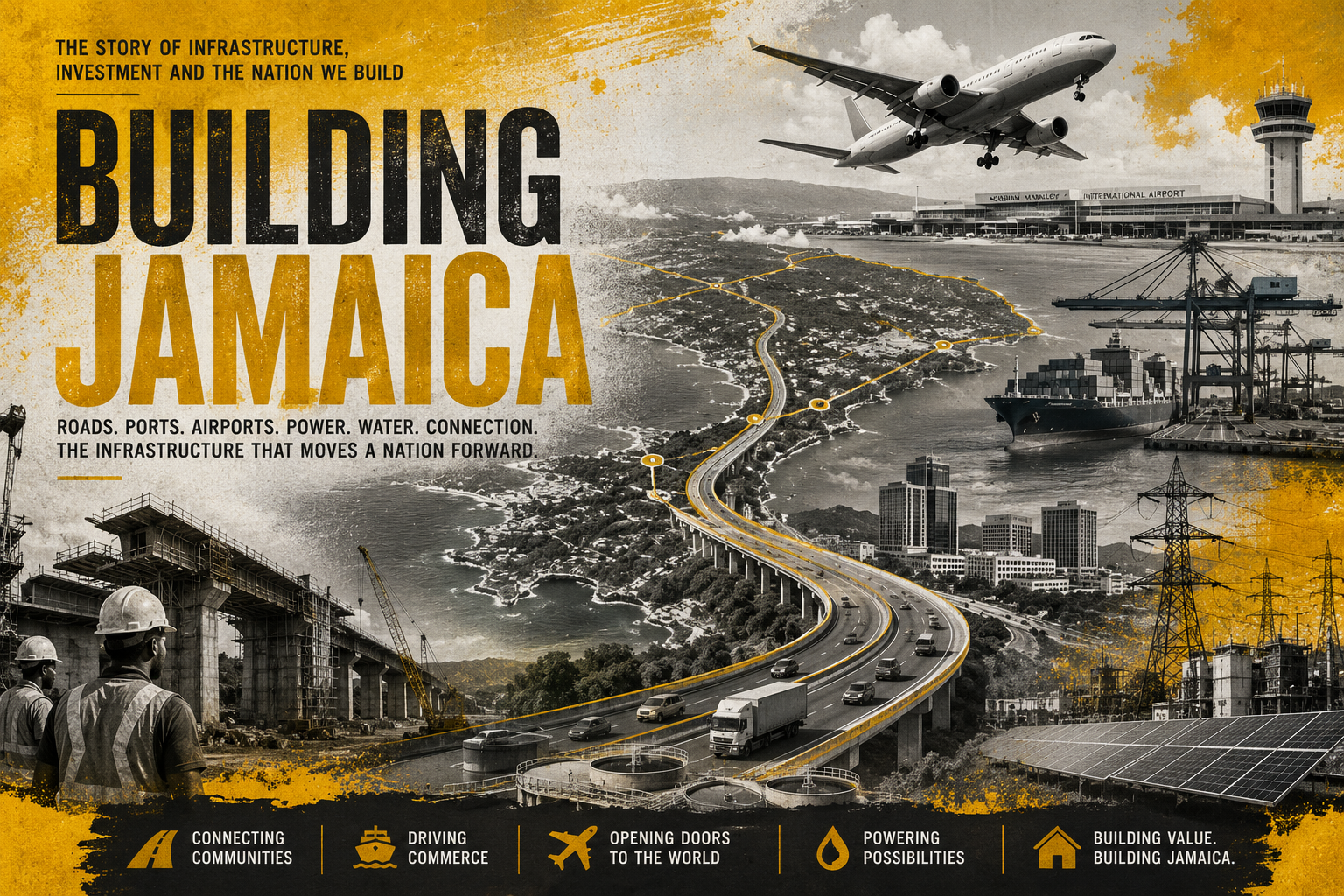
New Fortress Energy’s Montego Bay Bogue terminal delivered first gas to Jamaica’s north coast in the second quarter of 2022, completing the national LNG infrastructure arc that the company had been building since 2016 and extending the promise of cleaner, cheaper generation to the western parishes. The milestone arrived as tourism reached its strongest post-pandemic performance, even as persistently elevated global inflation, an aggressive US Federal Reserve tightening cycle, and sustained Ukraine war energy costs tested the resilience of the island’s recovery.
Key Highlights
- NFE Bogue LNG terminal in Montego Bay delivered first gas in Q2 2022, completing the dual-terminal national gas supply network and enabling LNG-fired generation on Jamaica’s north coast for the first time
- Tourism arrivals in spring 2022 reached their highest post-pandemic levels, with north-coast resort occupancy approaching pre-COVID benchmarks and cruise call volumes continuing to build at Falmouth and Kingston
- Global inflation remained near multi-decade highs: US CPI approached nine per cent in June 2022 as Ukraine war energy and food price pressures proved more persistent than initially projected
- US Federal Reserve accelerated its tightening cycle with fifty and seventy-five basis point rate increases, raising fears of a US recession that could dampen the remittance flows and discretionary travel spending on which Jamaica depends
- Bank of Jamaica continued raising its benchmark rate through Q2 2022 as domestic headline inflation persisted well above the 4–6 per cent target band
- National Works Agency road programme advanced with major primary-route rehabilitation and the largest tranche of secondary-road resurfacing in recent years
In the spring of 2022, two powerful and contradictory forces were shaping Jamaica’s economic outlook simultaneously. On one hand, the island’s tourism recovery was accelerating past every optimistic projection, with hotels reporting occupancy levels and average daily rates not seen in more than two years. On the other, the inflationary shockwave unleashed by Russia’s invasion of Ukraine was feeding through into every corner of the Jamaican economy — from electricity bills and fuel pump prices to the cost of flour, cooking oil and imported building materials. The quarter asked, with considerable urgency, whether Jamaica’s recovery was robust enough to sustain itself against forces that originated thousands of miles from its shores.
Bogue Delivers: A National Energy Milestone
The commissioning of New Fortress Energy’s Montego Bay Bogue LNG terminal in the second quarter of 2022 was the most significant energy infrastructure event in Jamaica since the Old Harbour Bay facility delivered its first gas in early 2019. The Bogue terminal — a natural gas import, storage and regasification facility sited on the industrial waterfront at the western end of Montego Bay — had been under active construction since 2021 and under regulatory development since 2020. Its first gas delivery, piped to generation assets serving the north coast network of Jamaica Public Service Company, marked the completion of the dual-terminal LNG supply architecture that New Fortress had been contracted to deliver.
The commercial significance was considerable. Before the LNG programme, Jamaica’s electricity costs were among the highest in the Caribbean, driven by a generation fleet dominated by heavy fuel oil and diesel assets whose economics were directly exposed to crude oil price volatility. The Old Harbour Bay terminal had addressed that problem for the south coast and Kingston metropolitan area from 2019 onwards. Bogue extended the same logic to the north coast, to Montego Bay’s hotel, commercial and residential consumers, and to the generation plant that served the western parishes more broadly.
The timing of Bogue’s commissioning, in the middle of the worst global energy price surge since the 1970s, was ironic in one respect and providential in another. Gas-fired generation remained more expensive, in absolute terms, in mid-2022 than it had been before the Ukraine war, because global LNG markets had been drawn into the scramble to replace Russian pipeline gas in Europe. But the tariff differential between gas-fired and oil-fired generation remained significant, and the long-term supply contracts that New Fortress had structured for its Jamaican customers provided partial insulation against the spot market volatility that was devastating unhedged energy buyers across the world. For Jamaica, the completion of the Bogue terminal meant that both coasts of the island now had access to cleaner and, under normal market conditions, less costly generation than the fuel oil baseline had provided.
The Office of Utilities Regulation initiated the tariff review process that Bogue’s commissioning triggered, examining how the north coast’s fuel mix change should be reflected in the electricity rates paid by consumers in the Montego Bay region and the surrounding parishes. The regulatory process was expected to take several months, and the full tariff implications would not be visible to consumers until the review was concluded. But the structural shift in Jamaica’s generation economics that the dual LNG terminal system represented was now, as of mid-2022, complete.
Tourism: The Strongest Post-Pandemic Season
The spring and early summer of 2022 delivered the strongest tourism performance Jamaica had recorded since the onset of the COVID-19 pandemic. Arrivals through Sangster International Airport in April, May and June tracked significantly above the equivalent months of 2021 and, in several metrics, approached or matched the 2019 pre-pandemic benchmark. The Jamaica Tourist Board reported that stopover arrivals for Q2 2022 were on course to reach ninety per cent or more of the Q2 2019 level — a recovery speed that had not been anticipated even in the most optimistic scenarios developed in the dark days of 2020.
Several factors combined to produce this exceptional result. The United States market, which had driven the initial recovery from the Omicron dip, was operating at full momentum: Americans were travelling at rates that reflected the release of two years of pent-up demand, supported by a labour market that remained historically tight despite the Federal Reserve’s tightening signals. Average daily rates at Jamaica’s all-inclusive resorts had risen substantially from pandemic lows, reflecting both the strong demand and the hoteliers’ own need to recover the margins compressed by two years of low occupancy and high COVID compliance costs.
The cruise sector’s recovery continued its own strong trajectory. Falmouth Pier was receiving vessels multiple times per week through the spring season, and the passenger experience infrastructure that the Port Authority of Jamaica and the private operators of Falmouth’s craft and commercial zone had invested in over the preceding decade was fully operational. The economic spillover from cruise arrivals — to taxi and tour operators, craft vendors, Dunn’s River, Dolphin Cove, and the dozens of smaller attractions that compete for cruise passenger time and dollars — was visible in the economic indicators of the parishes along the north coast corridor.
The Jamaica Hotel and Tourist Association’s quarterly sentiment survey showed its highest reading in several years, reflecting hotel operators’ confidence in the durability of the recovery and their willingness to invest in property renovation and upgrading that had been deferred through the pandemic. Several significant renovation and expansion projects were announced or commenced through Q2 2022, indicating that the sector’s long-term capital commitment to Jamaica was being maintained despite the macroeconomic uncertainties of the broader global environment.
The Inflation Challenge Deepens
While tourism celebrated its recovery, the inflation environment that the Ukraine war had created was, through Q2 2022, proving more persistent and more severe than the early projections of international economic agencies had suggested. In the United States, the Consumer Price Index reached eight and a half per cent in March 2022 and climbed further to approach nine per cent by June — levels not seen since the early 1980s. The European economies that were more directly exposed to Russian energy supply disruptions fared even worse in their inflation statistics.
For Jamaica, the transmission channels were numerous and familiar: fuel import prices, which fed directly into electricity costs and transport prices; food commodity prices, which affected the cost of the imported grains, proteins and oils that formed a large part of the diet of lower-income households; and building materials, whose prices had been elevated since the post-pandemic construction boom of 2021 and were now further inflated by the commodity disruptions of 2022. The statistical office’s monthly CPI releases showed headline inflation running well above the Bank of Jamaica’s 4–6 per cent target through the entire quarter.
The social consequences were real. Jamaican households at the lower end of the income distribution spend a disproportionately high share of their budgets on food and transport, and the price increases in those categories were materially above the headline rate. The government’s social protection programmes — PATH transfers, school feeding, the school bus fare subsidy — provided some cushion, but the scale of the external price shock exceeded what those programmes had been designed to absorb. The Ministry of Finance monitored the social impact closely and considered whether supplementary support measures could be accommodated within the fiscal framework that the IMF Stand-By Arrangement required.
The Federal Reserve and Global Recession Risk
In Washington, the United States Federal Reserve was responding to its own inflation crisis with the most aggressive monetary tightening cycle in forty years. After a twenty-five basis point move in March 2022, the Federal Open Market Committee raised rates by fifty basis points in May and then by an unprecedented seventy-five basis points in June — the largest single increase since 1994. The message was unambiguous: the Fed was prepared to accept economic pain in order to bring inflation back to its two per cent target, and the timeline for doing so was measured in quarters, not months.
For Jamaica, the implications of a US slowdown were more nuanced than a simple negative. Remittances from the Jamaican diaspora in the United States had remained robust through the pandemic and were continuing at a strong pace through Q2 2022, reflecting the tightness of the US labour market that benefited the blue-collar and service-sector workers who make up a large proportion of the diaspora. But a recession severe enough to materially weaken the US labour market would eventually weaken remittance flows, and the prospective US consumer slowdown that the Fed’s tightening implied would, at some point, reduce the discretionary income available for Caribbean travel.
The Bank of Jamaica’s own tightening continued through Q2 2022, as the Monetary Policy Committee raised the overnight rate in steps that were calibrated to domestic inflation dynamics while remaining alert to the growth implications of higher borrowing costs. By mid-2022, Jamaica’s policy rate had moved considerably from its pandemic-era low of 0.50 per cent, and the transmission of those increases into lending rates in the commercial banking system was becoming visible in mortgage and consumer credit statistics. The housing market, which had shown unusual buoyancy through 2021, began showing early signs of the cooling that rising mortgage rates typically produce.
Roads and Capital Works
The National Works Agency’s capital programme advanced strongly through Q2 2022, with a significant tranche of secondary road resurfacing across multiple parishes and continued rehabilitation of primary routes identified in the medium-term road investment plan. The programme benefited from multi-year project continuity: contractor relationships, equipment mobilisations and engineering supervision arrangements that had been established in prior fiscal years were continuing to deliver outputs efficiently, even as the cost of bitumen and aggregate responded to the global commodity environment.
Several parish councils, which maintained responsibility for the tertiary road network below the NWA’s primary and secondary classification, were reporting significant gaps between road maintenance needs and available resources. The parish road network — tens of thousands of kilometres of rural tracks, farm roads and community access routes — represented a maintenance liability whose scale dwarfed what any realistic level of parish rate revenue and central government transfer could address. The NWA’s ambition to absorb more of this network into its managed portfolio was constrained by capacity and resource considerations that showed no prospect of rapid resolution.
Port infrastructure continued to be a quiet but important contributor to Jamaica’s economic recovery. Kingston Container Terminal, operated under the Kamco concession, handled container volumes that reflected the partial normalisation of global supply chains after the extreme disruptions of 2021. The port’s deep-water berths and efficient crane operations gave Jamaica a competitive advantage in regional trans-shipment logistics that the government was keen to develop further, and planning work on potential capacity expansion remained active through the quarter.
Renewable Energy and the Long-Term Agenda
Against the backdrop of LNG commissioning and fossil fuel price volatility, Jamaica’s longer-term renewable energy agenda was moving forward, if at a pace that energy transition advocates consistently described as insufficient. The solar and wind projects commissioned in preceding years were operating satisfactorily and contributing their contracted output to the JPS dispatch, providing a measure of price stability that their fixed-cost economics guaranteed regardless of movements in global fuel markets. The government’s stated target of thirty per cent renewable generation by 2030 remained in place, supported by the national energy policy framework and the IDB-backed regulatory development work that had been proceeding for several years.
New renewable procurement tenders were in preparation at the Office of Utilities Regulation, seeking additional solar and wind capacity that would expand the renewables share in the generation mix. The economics of utility-scale solar had improved dramatically over the preceding decade — a global trend reflecting the remarkable fall in photovoltaic panel costs — and Jamaica’s solar resource, one of the most abundant in the Caribbean, gave competitive projects here a natural advantage in the international auction market. The challenge was less about economics than about pace: the regulatory and grid integration processes that brought new renewable projects from planning to commissioning in Jamaica were slower than in comparably ambitious small-island energy transition programmes, and accelerating them without sacrificing rigour was the central challenge facing the sector’s regulators and planners.
Looking to the Second Half of 2022
As Q2 2022 closed, Jamaica’s infrastructure and economic managers could point to a set of genuine achievements — the Bogue commissioning, the tourism recovery, the maintenance of fiscal discipline under difficult external conditions — that demonstrated the resilience of the frameworks built over the preceding decade. The LNG infrastructure was now complete in its planned dual-terminal form. The road network was being maintained and incrementally improved. The tourism sector was recovering faster than almost any observer had predicted eighteen months earlier.
The challenges ahead were equally clear. Inflation was running hot and would require sustained monetary tightening at a cost to growth and borrowing that would be felt across the economy. The global energy and food price environment, while possibly past its worst peak, showed no sign of returning to pre-Ukraine levels in the near term. The US economy’s trajectory — critical for remittances and travel demand — was increasingly uncertain as the Fed’s medicine took hold. And Jamaica’s own structural vulnerabilities — the dependence on imported fuel and food, the high debt service burden, the relatively narrow economic base — remained as present in 2022 as they had been in every previous decade of the island’s post-independence history.
The second half of the year would test whether the structural improvements of the past decade — in energy, transport and institutional quality — provided the kind of durable resilience that could sustain a small open economy through a challenging global environment without the kind of destabilising adjustment that had characterised Jamaica’s economic history in earlier periods of external stress. The evidence from the first two quarters of 2022 suggested that the foundations were holding. The test was not yet over.
Follow Jamaica Homes on Youtube @jamaicahomes and Instagram @jamaica_homes and on Facebook @jamaicahomesnews Send us a message or email us at onlinefeedback@jamaica-homes.com or editor@jamaica-homes.com
Support independent Jamaican journalism.
- 1Our journalists cover housing, politics and community — stories that directly affect Jamaican lives.
- 2We have no billionaire owner and no advertisers calling the shots. Every story is decided by our editors.
- 3It costs less than a cup of coffee a week, and takes less time to subscribe than it took to read this article.
Support Jamaica Homes News today.
- Save 17% compared to monthly
- All articles unlocked
- Weekly newsletter
- Priority support
By subscribing you agree to our Privacy Policy and Terms.

Visit our YouTube Community ↗