

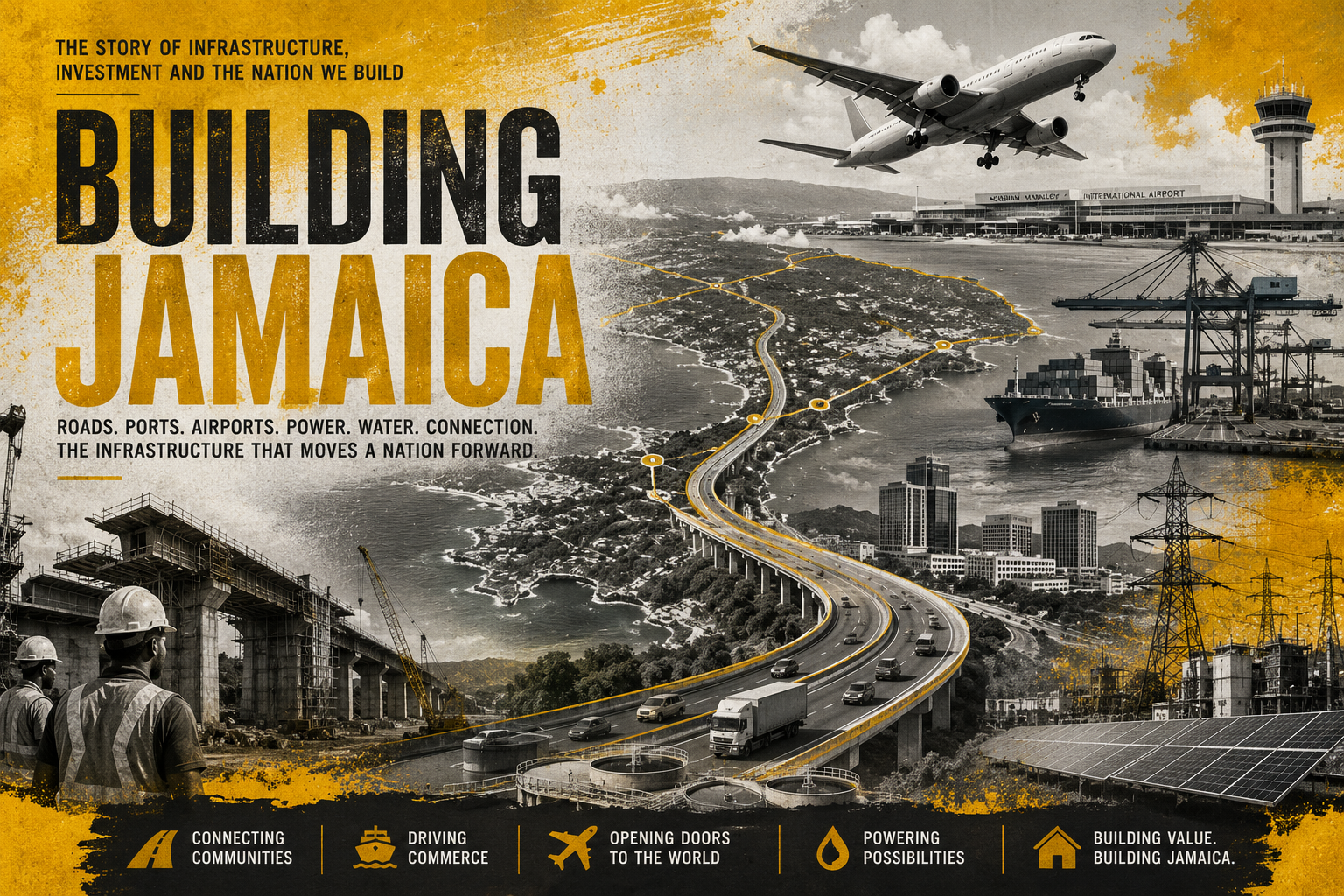
Spring 2023 delivered another quarter of tourism performance that exceeded pre-pandemic benchmarks, as the United States economy’s surprising resilience in the face of the Federal Reserve’s tightening cycle continued to sustain the American consumer spending and travel demand that drives Jamaica’s most important growth engine. The Bank of Jamaica held its policy rate steady as domestic inflation continued its progress toward target, and the island’s road and water infrastructure programmes advanced through the planting season with expanding project pipelines and recovering contractor capacity.
Key Highlights
- Spring 2023 stopover tourism surpassed the equivalent 2019 quarter across all major source markets; Jamaica’s full restoration of pre-pandemic visitor volumes was confirmed across consecutive quarters for the first time
- The United States economy proved more resilient than anticipated through Q2 2023, avoiding the recession that many forecasters had predicted; US consumer spending and labour market strength sustained travel demand to the Caribbean
- US Federal Reserve raised rates by twenty-five basis points in May before pausing in June; global inflation continued declining with US CPI approaching four per cent by May 2023
- First Republic Bank failed on May 1, 2023 and was acquired by JPMorgan Chase; the US banking system stress continued episodically but systemic contagion was avoided; Jamaica’s financial sector remained sound
- Bank of Jamaica maintained its benchmark policy rate at the tightening-cycle peak through Q2 2023, with inflation data supporting the view that the disinflation process was on track without further increases
- NWA road capital programme reached peak construction season; National Water Commission completed key Kingston Metropolitan Area main rehabilitation works reducing non-revenue water losses in targeted zones
The second quarter of 2023 opened with a question that economists around the world were debating with unusual intensity: would the most aggressive monetary tightening cycle in forty years finally produce the US recession that models and historical precedent suggested should by now have arrived? The US Federal Reserve had raised its benchmark rate from near-zero in March 2022 to above five per cent by mid-2023, a pace and magnitude of increase that, in virtually every historical episode that preceded it, had been followed by a contraction in economic activity. And yet the data stubbornly refused to confirm the predicted downturn. Consumer spending was holding up. Employment remained historically tight. Services sector activity was expanding. The recession, if it was coming, was taking its time.
For Jamaica, the answer to the recession question was not academic. The United States accounts for the largest share of the island’s stopover tourism arrivals, and American consumers’ willingness to spend on Caribbean travel is directly correlated with their confidence in their own financial position. The US labour market’s strength through Q2 2023 was, in this sense, Jamaica’s most important macroeconomic variable — more consequential for the island’s quarterly economic performance than any domestic policy decision the Holness government could make.
Spring Tourism: Consecutive Quarters Above 2019
Jamaica’s spring tourism season — April through June, traditionally a softer period between the winter peak and the US summer family travel surge — delivered results in 2023 that confirmed the recovery had reached a new plateau. Stopover arrival data for the quarter showed visitor numbers above the comparable 2019 period across all major source market categories, marking the second consecutive quarter in which pre-pandemic benchmarks had been exceeded. The Jamaica Tourist Board characterised the spring 2023 performance as reflecting a structural expansion of the island’s market rather than merely a recovery of lost ground: new visitors who had discovered Jamaica as a destination during the post-COVID travel boom were returning, and repeat visitor numbers were at their highest recorded level.
The hotel sector’s financial performance through the spring maintained the elevated revenue-per-available-room metrics that had characterised Q1 2023. Average daily rates remained substantially above pre-pandemic levels, even as occupancy settled into more normalised seasonal patterns. The combination produced hotel revenue outcomes that, for the major branded all-inclusive operators, translated into the strongest consecutive quarters of EBITDA in their Jamaican portfolios since the pre-COVID peak. Several operators announced further renovation and capacity expansion commitments during the quarter, signalling sustained confidence in Jamaica’s medium-term growth trajectory.
The cruise sector maintained the strong trajectory that had been building since the 2021 restart. Falmouth and Kingston combined handled vessel calls and passenger arrivals in Q2 2023 that, on a quarterly basis, exceeded the comparable 2019 figures — another milestone in a sector whose recovery had, at times during 2020 and 2021, seemed impossibly distant. The economic ripple effect of cruise recovery in the parishes along the north coast — in employment for tour operators, taxi drivers, craft vendors, musicians and the dozens of other categories of worker whose livelihoods connected to the passenger economy — was now fully evident in the employment and income data for the region.
The US Economy’s Remarkable Resilience
The economic data from the United States through Q2 2023 continued to confound the recession consensus. GDP growth for Q1 2023 came in at an annualised rate of 1.1 per cent — modest but positive, and well ahead of the contraction that many forecasters had projected. The labour market was adding jobs at a pace that, while slower than the post-pandemic hiring surge of 2021, was inconsistent with an economy in or approaching recession. Consumer confidence indices remained resilient, and the retail and services spending data showed American households continuing to prioritise experiences — dining, travel, entertainment — even as the goods consumption boom of the pandemic era moderated.
The Federal Reserve’s May 2023 rate increase — a further twenty-five basis points that brought the federal funds target range to 5.00–5.25 per cent — was followed at the June meeting by what the Fed’s chair, Jerome Powell, characterised as a “skip”: a pause to allow the committee to assess the cumulative effects of its tightening before deciding whether to resume. The market interpreted the skip as evidence that the hiking cycle was near or at its peak, and risk assets across equity and credit markets responded positively. The Jamaican sovereign bond, tracking the broad emerging market debt environment, benefited modestly from the improved global risk sentiment that the Fed pause produced.
The US banking system experienced another episode of stress in May when First Republic Bank — a San Francisco-based lender that had been weakened by the SVB failure’s effect on confidence in smaller regional banks — was placed in FDIC receivership on May 1, 2023 and acquired by JPMorgan Chase in a government-brokered transaction. The failure was the largest US bank collapse since the 2008 financial crisis by asset size, and it raised fresh questions about the vulnerability of regional lenders to the interest-rate risk that the Fed’s rapid tightening had exposed. For Jamaica, the First Republic failure added to the watchfulness that the SVB episode had already heightened at the BoJ and FSC, though the direct financial system exposure remained negligible.
Inflation’s Final Approach
Global inflation continued to moderate through Q2 2023, with the trajectory of major economy CPI releases confirming that the worst of the 2022 price shock was behind the world economy. In the United States, the Consumer Price Index fell to 4.9 per cent in April 2023, 4.0 per cent in May and 3.0 per cent in June — a rate of disinflation faster than most projections had assumed when the year began. The decline reflected primarily the mathematical base effects of high 2022 energy and goods prices falling out of the year-on-year comparison, but also genuine underlying moderation in goods price inflation as supply-chain normalisation continued and shipping costs fell back toward pre-pandemic levels.
For Jamaica, the external price improvement was increasingly evident in domestic statistics. The Statistical Institute of Jamaica’s May and June releases showed headline CPI inflation declining toward the upper bound of the Bank of Jamaica’s 4–6 per cent target range. The fuel cost component of the electricity tariff, reflecting the lower international LNG and oil price environment, contributed to a reduction in the portion of household electricity bills attributable to generation fuel costs. Petrol prices at the pump were tracking below the peaks of 2022, providing continued relief to transport operators and private motorists.
The Bank of Jamaica’s Monetary Policy Committee maintained the benchmark policy rate at its cycle-peak level through Q2 2023, consistent with the holding posture signalled at the start of the year. The committee’s communications through the quarter noted the encouraging inflation trajectory while maintaining a watchful stance: the decline in headline inflation was welcome, but the persistence of domestic services and food price inflation required continued attention, and premature rate reductions risked undermining the credibility of the inflation-targeting framework that the BoJ had worked to establish. The market expectation of eventual rate cuts was gradually shifting from late 2023 toward 2024 as the committee’s communications reinforced its commitment to holding rates restrictive.
Road Capital Programme: Peak Season
The National Works Agency’s road capital programme entered its peak construction season in Q2 2023, with the dry-weather window of April through June providing optimal conditions for asphalt paving, earthworks and drainage construction. The NWA reported that all major contracts awarded in the first quarter of the fiscal year had been mobilised and that active construction was under way across thirty-seven distinct work sites across all fourteen parishes — a geographic spread that the agency described as the most extensive in its operational history.
The programme’s composition in 2023–24 reflected the government’s commitment to expanding investment beyond the primary road network that had absorbed most historical capital. Secondary road rehabilitation accounted for approximately forty per cent of the year’s capital budget, addressing hundreds of kilometres of roads in rural communities that had experienced years of deferred maintenance. The works were being delivered through a combination of the NWA’s own equipment fleet and competitively tendered contracts awarded to the private civil engineering sector, with supervision by both NWA engineers and independent consultants engaged to ensure quality compliance.
The Highway 2000 network continued to perform well through Q2 2023. Traffic volumes on the toll road were running above the comparable 2022 quarter, reflecting the continuing recovery in tourism-related logistics, freight movement and private vehicle trips between Kingston, Spanish Town and May Pen. TransJamaican Highway Limited’s toll revenue for the quarter was tracking ahead of the business plan assumptions that had been stress-tested through the pandemic years, providing reassurance about the concession’s long-term economics.
National Water Commission: Kingston Main Rehabilitation
The National Water Commission completed in Q2 2023 a significant package of water main rehabilitation works in Kingston and the surrounding urban parishes that had been planned for several years and whose execution had been delayed by the COVID period’s resource constraints. The works — involving the replacement of aging cast-iron and asbestos cement mains with modern ductile iron and high-density polyethylene pipes in targeted zones of the Kingston Metropolitan Area — were expected to materially reduce the non-revenue water losses in the affected areas, a chronic efficiency problem that the Commission’s management had identified as among the highest-priority capital needs in the system.
Non-revenue water — the proportion of treated water that is produced but lost to leakage, theft and metering inaccuracies before it reaches paying customers — had historically run at rates in the Jamaican system that significantly exceeded international benchmarks for well-managed urban water utilities. Reducing those losses was a dual priority: it recovered revenue that the Commission was failing to collect from expensively produced water, and it reduced the volume of water that had to be pumped and treated to meet consumer demand — a direct efficiency benefit given the NWC’s significant energy costs. The completed Kingston works were projected to reduce non-revenue water in the targeted zones by fifteen to twenty per cent over the twelve months following the pipe renewals, with further improvement as the rehabilitated infrastructure settled into service.
Republic Report and Constitutional Progress
The joint parliamentary committee examining Jamaica’s constitutional transition to a republic completed its analytical phase in Q2 2023, with drafting of the committee’s report to Parliament under way by June. The report was expected to set out the committee’s findings from the parish consultation process, its assessment of the constitutional and legal questions involved in the transition, and its recommendations on the framework for amendment. The committee’s chairman indicated publicly that the report would be tabled in the current parliamentary session, setting the stage for the subsequent legislative process that would be required to advance the constitutional changes.
The constitutional discussion had, through 2022 and 2023, become more concretely focused on the practical arrangements for a Jamaican republic than on the abstract question of principle, which most public commentary treated as settled. Discussions among legal scholars centred on the model for presidential selection — parliamentary election being the preferred approach — and the specific constitutional provisions that would need to be amended or re-enacted to remove the Crown from its current position in the Jamaican constitution. The timeline for completing the full constitutional process, including the required parliamentary supermajority and any referendum mechanism, was not confirmed through Q2 2023, with the government maintaining that it would be guided by the committee’s recommendations and the practicalities of the legislative calendar.
Looking Toward the Hurricane Season
As Q2 2023 ended and the formal Atlantic hurricane season began in June, Jamaica’s infrastructure and emergency management planners undertook the preparations that the season demanded. The National Meteorological Service’s seasonal outlook pointed to an active season, with above-normal Atlantic basin activity projected on the basis of warmer-than-average sea surface temperatures. The island’s Office of Disaster Preparedness and Emergency Management activated its seasonal readiness protocols, working with parish councils, the NWA, the NWC and the energy utilities to ensure that contingency plans for storm response were current and that vulnerable infrastructure had received the protection measures that engineering assessments recommended.
Jamaica’s hurricane readiness had improved considerably over the decades since the catastrophic passages of Gilbert in 1988 and Ivan in 2004. Building codes had been strengthened and more consistently enforced. Emergency communication systems had been modernised. The NWC’s and JPS’s storm-response procedures had been refined through repeated testing. But the island’s terrain, its aging housing stock in vulnerable communities, and the concentration of critical infrastructure in flood-prone coastal zones meant that any significant storm passage would test the resilience of systems that all the preparation in the world could not make invulnerable.
The quarter’s closing assessment was of an economy performing well and an infrastructure programme advancing steadily, operating within a global environment that had, despite its risks, proved more supportive than the pessimists of 2022 had feared. The US economy’s resilience was a gift that Jamaica’s economic managers had not been able to plan for but were benefiting from. The question of how long that resilience would be sustained — and what would replace it when the effects of the most aggressive Fed tightening in a generation eventually arrived in the demand statistics — remained the dominant uncertainty as the island’s summer of 2023 got under way.
Follow Jamaica Homes on Youtube @jamaicahomes and Instagram @jamaica_homes and on Facebook @jamaicahomesnews Send us a message or email us at onlinefeedback@jamaica-homes.com or editor@jamaica-homes.com
Support independent Jamaican journalism.
- 1Our journalists cover housing, politics and community — stories that directly affect Jamaican lives.
- 2We have no billionaire owner and no advertisers calling the shots. Every story is decided by our editors.
- 3It costs less than a cup of coffee a week, and takes less time to subscribe than it took to read this article.
Support Jamaica Homes News today.
- Save 17% compared to monthly
- All articles unlocked
- Weekly newsletter
- Priority support
By subscribing you agree to our Privacy Policy and Terms.

Visit our YouTube Community ↗