


Kingston, Jamaica
For decades, Negril has operated as one of Jamaica’s most recognised resort destinations while being governed, effectively, by no one clearly in charge. The town sits across the boundary of two parishes, Westmoreland and Hanover, a jurisdictional split that has left it caught between competing local authorities, underserved by both, and unable to act decisively on its own behalf. In July 2024, the country’s head of government publicly called for that to change, proposing that Negril be given its own municipal status.
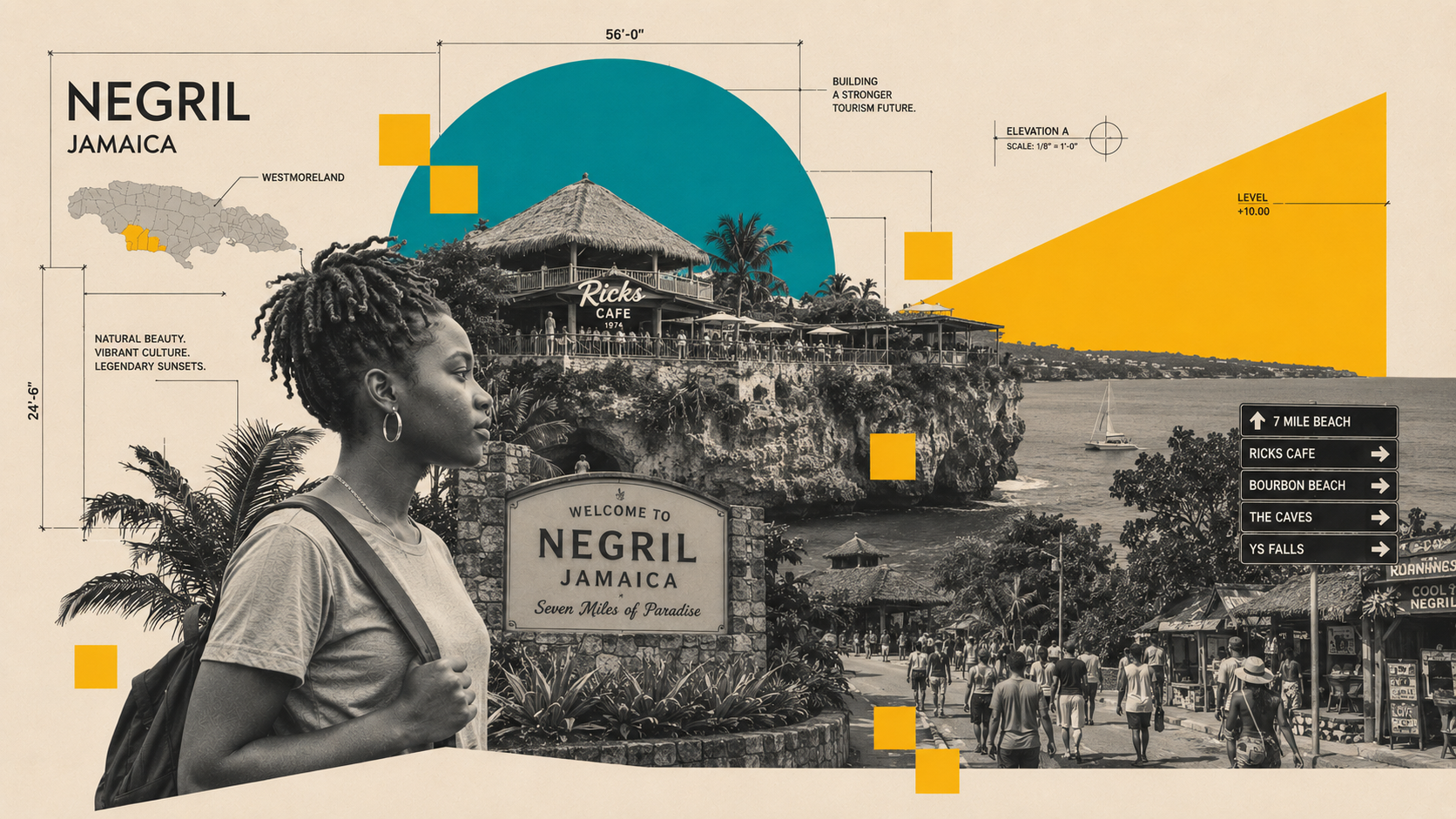
The Structural Problem
The division is not merely administrative. It shapes what gets built, where it gets built, and how quickly approvals are obtained. Development applications that might affect infrastructure on both sides of the parish boundary must navigate two sets of officials, two sets of priorities, and two councils whose revenue bases are partly dependent on a resort town they do not fully control. For investors and developers, this fragmentation has long been a source of friction.
The head of government put it plainly: Negril has outgrown not only its physical infrastructure but its management structure. The comparison drawn was to Portmore in St Catherine, which was granted its own municipal corporation after expanding beyond the governance capacity of the surrounding parish structure. The argument is that Negril, similarly, requires a single authority capable of making coherent decisions about land use, planning, public order, and service delivery.
A Decade of Calls for Change
This was not a new conversation in 2024. The Negril Chamber of Commerce had long argued that professional management of the resort, independent of parish politics, was essential to its future. In 2016, squatting on government-owned land had become so entrenched that stakeholders were openly calling for Negril to control its own destiny. By 2018, the idea of municipal status had already been floated at the ministerial level, only to be deferred on the grounds that the town was not financially ready to stand alone.
What shifted by 2024 was the accumulation of a development case: a pipeline of hotel projects, a government-backed master plan for a New Negril area in Hanover, and growing diaspora investment in the resort corridor. The argument for a coherent governance structure became harder to defer when significant capital was visibly at stake.
Land, Planning, and Property
For property owners, buyers, and developers in Negril and its surrounds, municipal status would represent a meaningful change in the operating environment. A single local authority with dedicated revenue, planning capacity, and accountability for infrastructure would be better positioned to enforce development orders, manage land titling processes, and address the unplanned settlements that have long depressed values in parts of the resort area.
The Land Authority that oversees Negril and the Green Island area has operated within the constraints of a dual-parish structure. A unified municipal framework would, in principle, allow for a more integrated approach to land use planning across the full resort corridor, from the West End through the Seven Mile Beach and into the emerging development area in Hanover.
Legislation Still Required
A public proposal from the country’s head of government is a significant signal but not a legal reality. Municipal status requires legislative change, consultation, and the resolution of financial questions around what revenue Negril would command and what it would cede from the existing parishes. Those conversations will take time. What the July 2024 announcement confirms is that the political will to have them is now formally on record, and that the governance of Negril, after years of institutional drift, is at last a live question at the national level.
Follow Jamaica Homes on Youtube @jamaicahomes and Instagram @jamaica_homes and on Facebook @jamaicahomesnews Send us a message or email us at onlinefeedback@jamaica-homes.com or editor@jamaica-homes.com

Visit our YouTube Community ↗