

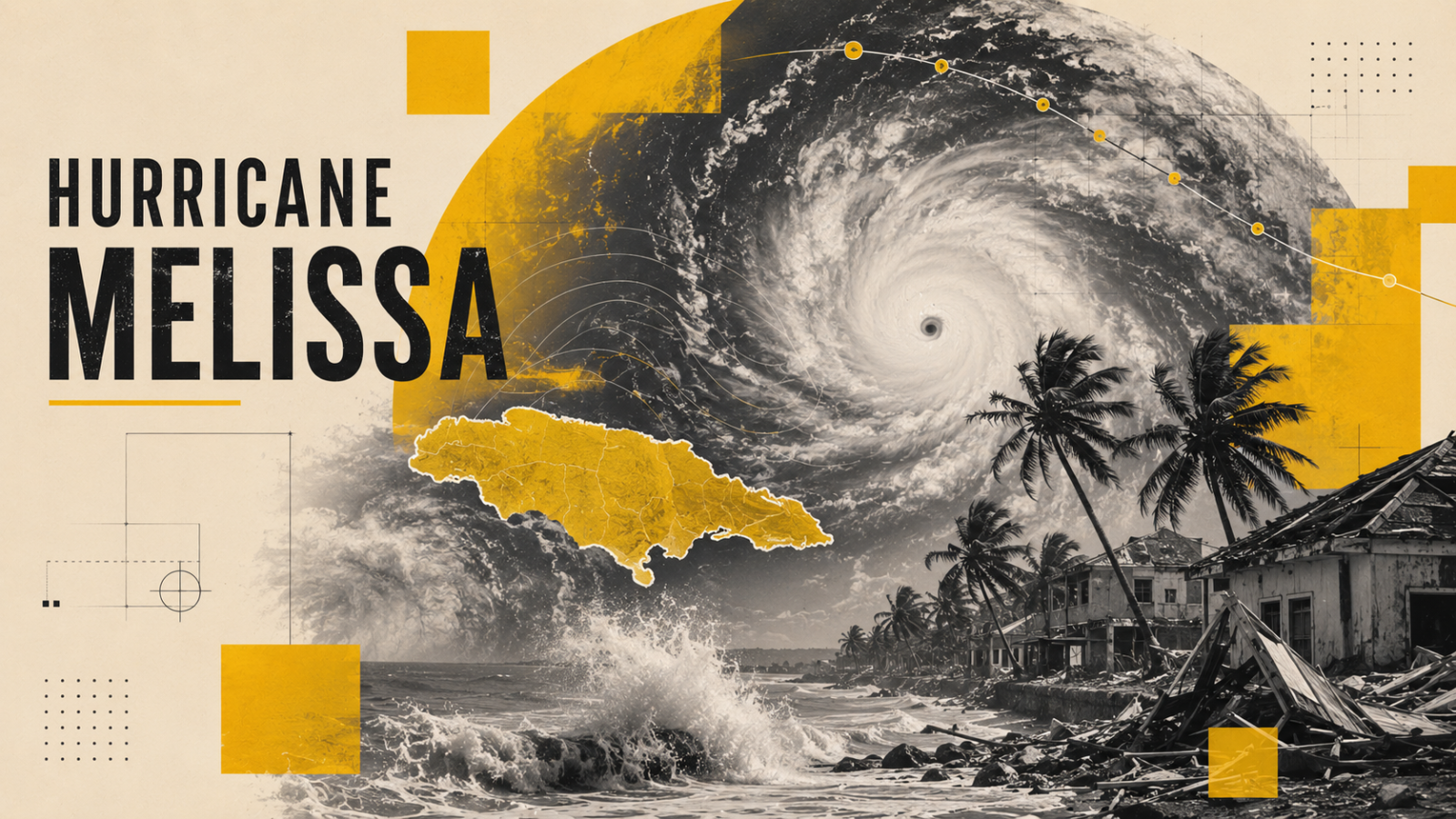
Preliminary structural assessments carried out in the parishes of St. Elizabeth, Westmoreland, and Hanover in the week after Hurricane Melissa’s landfall at Black River reveal a troubling pattern: 62 percent of buildings that suffered structural collapse had documented permit violations — construction that deviated in significant ways from the approved plans on file. This is not an anomaly. It reflects a systemic failure in Jamaica’s building code enforcement infrastructure, one that planning professionals and housing advocates have warned about for years.
Melissa did not merely expose the destructive capacity of a Category 4 hurricane making landfall at 140 mph and 944 mb. It exposed the gap between Jamaica’s written building standards and the reality on the ground. The island has comprehensive building codes. It has a permit system administered through parish councils and the National Environment and Planning Agency. What it has lacked, consistently and over decades, is the enforcement capacity to ensure that what is built matches what is approved.
The violations documented in the post-Melissa surveys take several forms. Some structures used substandard materials — concrete blocks with inadequate cement ratios, reinforcing steel of insufficient gauge, or roofing that did not meet the wind-load specifications required in a Category 4 zone. Others deviated from approved plans in ways that compromised structural integrity: columns removed or repositioned, tie beams omitted, additional stories added beyond the approved design. In some cases, structures were built entirely without permits, on land with unclear title, with no engineering oversight whatsoever.
Each of these failures has a face. In the community of Myersville, just north of Black River, a concrete block home where a family of four sheltered through the storm lost its roof and one wall completely — damage consistent with roofing fixings that did not meet code specifications. In Lacovia, a two-storey addition to a commercial property collapsed into the ground floor, injuring three people. Assessors found no evidence that the addition had received planning approval.
It is important to note that some buildings which did have proper permits also failed during Melissa. A Category 4 hurricane with 140 mph winds and the associated surge represents an extreme loading condition, and even code-compliant structures face real risk. The point is not that permits are a guarantee of survival. The point is that the 62 percent figure represents preventable deaths and preventable damage — homes and buildings that would have had a materially better chance of withstanding the storm had they been built to the standard they were supposed to meet.
ECLAC’s preliminary damage estimate stands at $2.4 billion USD — approximately 14 percent of Jamaica’s GDP. That figure encompasses infrastructure, agriculture, housing, and commerce. The housing component alone is enormous: thousands of units damaged or destroyed, a large share of them in communities where incomes are low and insurance coverage is minimal or absent.
The reform agenda that follows Melissa must address the enforcement gap directly. Advocates are calling for increased parish council resourcing for inspections, mandatory third-party structural certification for all new construction, and a national programme to retroactively assess and remediate the most at-risk existing building stock. Whether those calls translate into policy change will be one of the defining tests of Jamaica’s recovery from its most costly natural disaster on record.
Follow Jamaica Homes on Youtube @jamaicahomes and Instagram @jamaica_homes and on Facebook @jamaicahomesnews Send us a message or email us at onlinefeedback@jamaica-homes.com or editor@jamaica-homes.com
Support independent Jamaican journalism.
- 1Our journalists cover housing, politics and community — stories that directly affect Jamaican lives.
- 2We have no billionaire owner and no advertisers calling the shots. Every story is decided by our editors.
- 3It costs less than a cup of coffee a week, and takes less time to subscribe than it took to read this article.
Support Jamaica Homes News today.
- Save 17% compared to monthly
- All articles unlocked
- Weekly newsletter
- Priority support
By subscribing you agree to our Privacy Policy and Terms.

Visit our YouTube Community ↗