

- GDP grows approximately 2.0% as Jamaica navigates a more uncertain global environment while maintaining its domestic momentum
- Inflation falls toward 4.5%, reaching the edge of the Bank of Jamaica’s target band for the first time since before the pandemic
- Public debt declines toward 68.0% of GDP, approaching the long-term consolidation target set at the outset of the IMF programme era
- Tourism remains strong, with arrivals sustained above 3.0 million as the sector establishes its post-pandemic performance levels as a new baseline
- The United States’ sweeping tariff regime and trade policy shift under the second Trump administration introduces a new source of external uncertainty for Jamaica’s open economy
- The Bank of Jamaica continues its rate-cutting cycle, with the policy rate falling closer to its neutral level as inflation approaches the target
The New Uncertainty: Jamaica in 2025
Jamaica’s 2025 opened in a posture of earned confidence and renewed caution. The confidence was legitimate: a decade of fiscal discipline had brought the debt to levels not seen since the early years of the millennium, tourism had established a new and higher baseline, and the institutional frameworks built through the IMF programme era had proven durable across changes of government and waves of external shock. The caution was equally legitimate: the second inauguration of Donald Trump as President of the United States in January 2025 brought with it a trade policy agenda whose sweeping tariff ambitions threatened to disrupt the global economic architecture within which Jamaica’s open, import-dependent economy operated. The year was not a crisis — but it was the kind of year that requires an economy to demonstrate that the resilience it has built is real, and not merely the residue of favourable conditions that had not yet been tested by a genuinely novel shock.
GDP at 2.0 Per Cent: Holding the Line
Jamaica’s economy grew at an estimated rate of approximately 2.0 per cent in 2025 — broadly consistent with the structural growth rate of the post-pandemic period and a figure that reflected the economy’s capacity to sustain momentum even as the external environment grew less supportive. Tourism continued to be the dominant growth driver, with arrivals sustained at levels above three million as the sector’s post-pandemic performance established itself as a new and higher baseline rather than a temporary surge. The BPO sector maintained its employment base and its contribution to service exports. Construction activity, while constrained by the higher financing costs of the post-tightening rate environment, remained positive as public infrastructure investment continued and private residential development persisted in the face of chronic undersupply.
The growth figure was achieved against a global backdrop that had become meaningfully more uncertain than at any point since the pandemic. The United States’ tariff agenda, the resulting disruptions to global trade flows, and the uncertainty about the durability and scope of the new trade architecture all weighed on the confidence of businesses making investment decisions that would take years to generate returns. Jamaica’s exposure to this uncertainty was indirect but real: as a small open economy that is deeply integrated with the United States through tourism, remittances, goods trade and the pricing of its sovereign debt, Jamaica could not be fully insulated from the economic consequences of policy turbulence in Washington. The 2.0 per cent growth that 2025 produced was therefore an expression not only of the economy’s underlying capacity but of the institutional stability that had allowed it to maintain investor and business confidence through an uncertain period.
The agricultural sector’s performance in 2025 was shaped by the continuing challenge of climate variability and the input cost environment that remained elevated relative to the pre-pandemic period. The government’s efforts to expand domestic food production and reduce the agricultural import bill — a longstanding policy aspiration that had acquired new urgency with the experience of the 2022 food price shock — produced some visible progress, but the structural constraints on Jamaican agriculture: land fragmentation, irrigation infrastructure deficits, the difficulty of achieving economies of scale in smallholder production — continued to limit the pace of change. The ambition to reduce Jamaica’s food import dependence was more explicitly acknowledged in 2025 as a strategic economic priority than it had been in previous years, but the gap between ambition and achievement remained significant.
An economy that maintains 2.0 per cent growth when its primary trading partner is generating trade policy uncertainty, when global investment confidence is under pressure and when commodity prices are volatile is not underperforming. It is demonstrating exactly the kind of resilience that a decade of institutional investment was designed to produce.
Inflation at 4.5 Per Cent: The Target in Reach
Consumer price inflation fell to approximately 4.5 per cent in 2025 — placing Jamaica within or at the upper boundary of the Bank of Jamaica’s formal target band for the first time since the pre-pandemic period. The achievement was the culmination of a multi-year monetary management effort that had required the Bank to raise rates aggressively through 2022 and into 2023, maintain them at a level restrictive enough to bear down on entrenched price expectations through 2023 and 2024, and then begin the carefully calibrated process of easing without prematurely signalling that the inflation battle had been won. That the inflation data of 2025 confirmed the return to target was a validation of the Bank’s framework and the discipline with which it had been applied — and a demonstration that inflation-targeting institutions in emerging economies can deliver their mandates even against globally transmitted inflationary shocks if their credibility is sufficiently established.
The return of inflation to target had tangible consequences for Jamaican households and businesses. Wage negotiations that had been conducted against a background of double-digit inflation in 2022 could now be anchored to expectations of inflation within the 4-6 per cent target range, providing a foundation for real wage gains where nominal settlements exceeded the expected price path. Businesses making pricing decisions could plan with greater confidence. The Bank of Jamaica’s ability to continue its rate-cutting cycle without being constrained by above-target inflation provided direct relief to borrowers, including the mortgage holders and commercial borrowers whose financing costs had risen substantially through the tightening phase. The return to target inflation was not merely a statistical achievement; it was the precondition for the normalisation of economic conditions that the recovery had been working toward since 2021.
Debt at 68.0 Per Cent: The Programme Goal Reached
Jamaica’s public debt ratio fell to approximately 68.0 per cent of GDP in 2025 — bringing the ratio to the level that had been set, in the earliest years of the IMF Extended Fund Facility programme, as the medium-term consolidation target. The journey from 147 per cent in 2013 to 68 per cent in 2025 was one of the most significant fiscal achievements in the post-independence history of the Jamaican economy, and it was accomplished through a combination of elements that rarely coexist in small developing economies: sustained political commitment to fiscal discipline across changes of government, institutional frameworks that made that discipline credible and verifiable, and the maintenance of primary surpluses through an extraordinary sequence of external shocks — the 2016 commodity price collapse, the 2018 hurricane season, the pandemic, the Russia-Ukraine inflation shock, the global trade disruption of 2025.
The achievement of the programme-era target in 2025 raised a question that Jamaica’s policymakers were beginning to address explicitly: what comes next? The IMF programme framework had provided a clear medium-term fiscal anchor — reduce the debt ratio, maintain primary surpluses, rebuild institutional capacity — but it had always been designed as an intermediate step rather than a destination. With the target achieved, the next phase of Jamaica’s fiscal strategy needed to answer questions that the programme framework had not been designed to address: How much of the fiscal space created by debt reduction should be directed toward social investment — in health, education, housing, social protection — and how quickly? What is the appropriate long-term debt target for an economy of Jamaica’s size, external vulnerability and institutional capacity? How should the fiscal framework balance the claims of debt reduction against the investments in people and infrastructure that sustainable growth requires? These were the questions that 2025’s milestone put onto the policy agenda.
Reaching the debt target is the end of one story and the beginning of another. The discipline that produced the reduction must now be directed toward something beyond the number — toward the investment in human capital, physical infrastructure and economic diversification that the number was always meant to make possible.
Tourism: The New Baseline
Jamaica’s tourism sector sustained arrivals above three million visitors in 2025, consolidating the post-pandemic record performance as the new normal rather than a cyclical peak. The sector’s receipts remained above US$3.8 billion, underpinned by strong performance from the United States market and the continued growth of the higher-spending stopover segment relative to cruise arrivals. The Jamaica Tourist Board’s marketing strategy continued to invest in positioning Jamaica as a destination for repeat visitors and extended-stay travellers — segments that generate higher per-visitor expenditure and stronger linkages to the broader Jamaican economy — alongside the large-group all-inclusive market that had dominated the sector’s economics for two decades.
The tourism sector’s relationship with the broader Jamaican economy remained a central tension in 2025. The record performance at the aggregate level coexisted with persistent concerns about the local economic linkages of the all-inclusive model, the environmental and social pressures of high visitor volumes in concentrated coastal areas, and the labour market conditions of a sector where formal employment contracts and comprehensive social protection remained less than universal. The policy discussion around these tensions had matured considerably from the earlier decades: the debate was no longer about whether tourism was good for Jamaica but about what kinds of tourism investment, what kinds of linkage requirements and what kinds of social and environmental standards were necessary to ensure that the sector’s economic benefits were more broadly and equitably distributed. The answers being developed in 2025 would shape the sector’s character for the decade ahead.
The Trade Disruption: Jamaica and the Tariff Era
The trade policy revolution initiated by the second Trump administration in early 2025 — sweeping tariffs on imports from major trading partners, the reconfiguration of the rules-based international trading system that had governed global commerce since the 1990s, and the uncertainty generated by an administration willing to use tariffs as instruments of geopolitical leverage as well as economic protection — created a new and unfamiliar external environment for Jamaica and the Caribbean region. Jamaica’s direct exposure to US tariffs was relatively limited in terms of the goods trade: Jamaica’s principal exports to the United States are services, primarily in the form of tourism receipts and remittances, rather than manufactured goods subject to tariff schedules. But the indirect exposures were significant: a United States economy disrupted by trade conflict would generate fewer tourists, remit less diaspora income, and create a less benign environment for the capital flows on which Jamaica’s debt refinancing depended.
Jamaica’s government and the private sector responded to the trade policy uncertainty with the measured caution that a well-managed small open economy deploys when it cannot control the external environment but can influence its own preparation and positioning. The Holness government sought to maintain and deepen Jamaica’s bilateral relationship with the United States, emphasising the security, intelligence and migration cooperation dimensions of the partnership that gave Jamaica leverage outside the trade relationship itself. The private sector diversified where it could — seeking new source markets for tourism, new export opportunities for services, new investment relationships beyond the North American core — without abandoning the fundamentally US-centric structure of Jamaica’s external economic relationships that three decades of integration had made difficult to reconfigure quickly. The tariff era of 2025 was a reminder that Jamaica’s economic strategy could not be built solely around the assumption of a stable and open international trading environment.
Housing: The Deficit Deepens
Jamaica’s housing deficit in 2025 was larger, in absolute terms, than it had been a decade earlier — despite the NHT’s continued delivery of new units, despite the private sector’s sustained investment in residential development, and despite the policy attention that the housing affordability crisis had attracted through the post-pandemic period. The arithmetic of housing supply and demand in Jamaica remained stubbornly unfavourable: household formation was outpacing new construction, informal settlement was expanding in the peri-urban areas of Kingston, Spanish Town and Montego Bay, and the price of formal housing in urban markets had risen to levels that placed homeownership beyond the reach of the majority of Jamaican households without NHT assistance or diaspora remittance capital. The Bank of Jamaica’s rate-cutting cycle was providing some relief to mortgage borrowers, as falling interest rates reduced the monthly servicing cost of NHT and private sector mortgages, but the affordability improvement from lower rates was partially offset by property values that had not retreated from their post-pandemic highs.
The housing policy discussion of 2025 was shaped by a growing recognition that the institutional framework for housing delivery in Jamaica required modernisation. The NHT’s mandate, designed in the 1970s around a model of formal employment contribution and homeownership as the primary housing pathway, was increasingly misaligned with an economy where informal and contract employment was widespread, where rental housing was the only realistic option for a substantial and growing share of the working population, and where the land use planning system’s slowness and complexity added significant cost and time to every development project. The debate about NHT reform — its contribution base, its benefit structure, its relationship to the formal rental market — was more substantive and more public in 2025 than it had been in previous years, reflecting the urgency that the accumulated housing deficit had created and the political priority that the 2024 election’s housing-focused campaigns had placed on the issue.
The Legacy Lives On
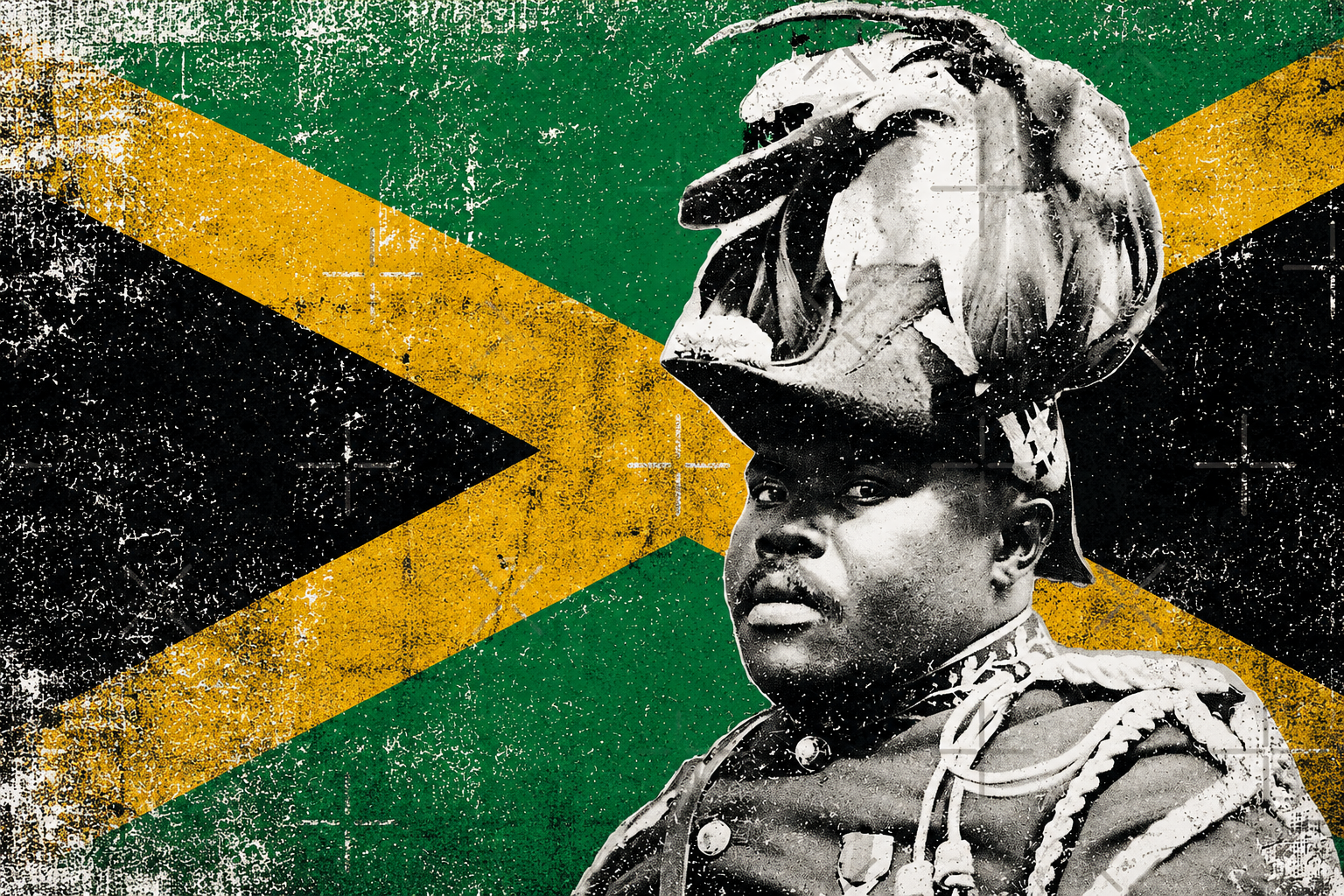
This series began with Marcus Garvey’s birth in 1887 and the century of Jamaican history that preceded independence. It has traced the economy through its post-independence development ambitions, its debt crises, its structural adjustment, its IMF programmes, its gradual consolidation and its pandemic disruption. In 2025, 138 years after Garvey’s birth and 63 years after independence, Jamaica is a different kind of economy than it was in any of the years this series has examined: its debt is lower, its institutions are stronger, its tourism is at record levels, and its monetary framework is more credible than at any point in the post-independence era. These are real achievements, hard-won across decades that included genuine suffering and genuine sacrifice.
What Garvey’s legacy demands is that the achievements be measured not only against the statistical targets they have reached but against the lives of the Jamaican people whose labour, patience and resilience made them possible. The debt ratio that has fallen to 68 per cent was paid down by taxpayers whose incomes were constrained by the primary surpluses that produced the reduction. The tourism record was delivered by workers whose employment conditions, wage levels and social protections have not always matched the sector’s headline performance. The macroeconomic stability that Jamaica has achieved is the foundation for a better Jamaica — but it is not yet the better Jamaica itself. Building that Jamaica, with the fiscal space and the institutional capacity that 2025’s position makes available for the first time in a generation, is the work that the years ahead of this series remain to document.
Series note: This is Edition 28 of Marcus Garvey & The Making of Modern Jamaica — an ongoing editorial series examining Jamaica’s social, economic and built environment through an annual lens, from the birth of Marcus Garvey in 1887 to the present day. Edition 1 (1887–1998), Edition 2 (1999), Edition 3 (2000), Edition 4 (2001), Edition 5 (2002), Edition 6 (2003), Edition 7 (2004), Edition 8 (2005), Edition 9 (2006), Edition 10 (2007), Edition 11 (2008), Edition 12 (2009), Edition 13 (2010), Edition 14 (2011), Edition 15 (2012), Edition 16 (2013), Edition 17 (2014), Edition 18 (2015), Edition 19 (2016), Edition 20 (2017), Edition 21 (2018), Edition 22 (2019), Edition 23 (2020), Edition 24 (2021), Edition 25 (2022), Edition 26 (2023), Edition 27 (2024) are available on Jamaica Homes News.
Follow Jamaica Homes on Youtube @jamaicahomes and Instagram @jamaica_homes and on Facebook @jamaicahomesnews Send us a message or email us at onlinefeedback@jamaica-homes.com or editor@jamaica-homes.com
Support independent Jamaican journalism.
- 1Our journalists cover housing, politics and community — stories that directly affect Jamaican lives.
- 2We have no billionaire owner and no advertisers calling the shots. Every story is decided by our editors.
- 3It costs less than a cup of coffee a week, and takes less time to subscribe than it took to read this article.
Support Jamaica Homes News today.
- Save 17% compared to monthly
- All articles unlocked
- Weekly newsletter
- Priority support
By subscribing you agree to our Privacy Policy and Terms.

Visit our YouTube Community ↗