


In a region long associated with oversized villas and ornamental excess, a new generation of Caribbean architecture is beginning to embrace restraint, atmosphere and emotional warmth over spectacle.
There is something quietly radical about a home that refuses to shout.
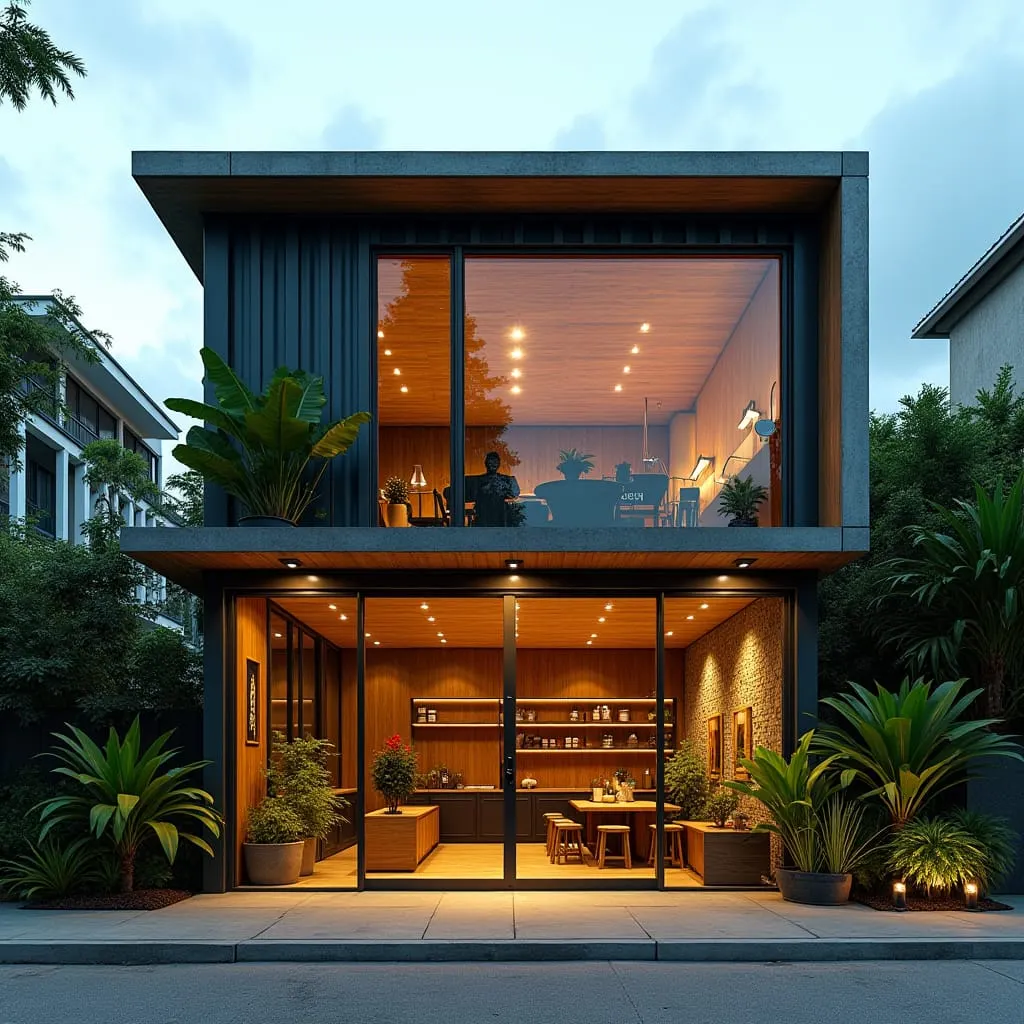
At first glance, this structure appears almost impossibly restrained. A dark geometric frame. Walls of glass. Warm timber light spilling into the evening. Yet the more one studies it, the more the building begins to reveal itself not as a piece of architecture obsessed with spectacle, but as an exercise in emotional control. In an age where luxury homes often compete to dominate landscapes with scale and excess, this design chooses composure instead.
The building reads almost like a lantern placed carefully within the tropics. During the day, the sharp lines and charcoal exterior would likely absorb the Caribbean sun with a sculptural seriousness. But at dusk, the entire composition softens. The interior glow transforms the house from an object into an atmosphere. You do not simply look at it. You begin to imagine life unfolding inside it.
What makes the concept compelling is its understanding of modern urban Caribbean living. The footprint is disciplined, almost compact, yet the transparency of the glass dissolves the boundary between inside and outside. Plants soften the hard geometry. Timber ceilings introduce warmth against the industrial palette. The upper level hovers with a calm confidence, creating the impression that the building is floating rather than sitting heavily on the site.
There are echoes here of contemporary Japanese minimalism, Scandinavian restraint, and the clean precision of tropical modernism, yet the mood remains distinctly suited to a changing Caribbean city. It feels designed for a generation that values privacy but still longs for openness. A generation more interested in experience than ornament.
Perhaps most striking is the sense that the home understands modern loneliness and responds to it with light. The transparent façade turns domestic life into silhouette and shadow, allowing the building to feel inhabited even from the street. In many ways, the architecture succeeds because it resists the temptation to over explain itself. It trusts proportion, material and atmosphere to do the talking.
Increasingly, architectural impressions like this are becoming part of a broader conversation about how Caribbean cities may evolve over the next decade. Smaller footprints. Cleaner lines. Energy conscious layouts. Homes that blur the distinction between sanctuary and workspace. Whether or not this exact structure is ever built, the idea behind it already feels believable enough to belong to the future.
Follow Jamaica Homes on Youtube @jamaicahomes and Instagram @jamaica_homes and on Facebook @jamaicahomesnews Send us a message or email us at onlinefeedback@jamaica-homes.com or editor@jamaica-homes.com

Visit our YouTube Community ↗