

Briefing
- Six-year EU and GoJ coastal climate project reaches completion in 2026.
- €6 million invested across three key Jamaican watersheds.
- NEPA gains new field equipment for ongoing marine monitoring.
- Mason River Protected Area secured with 500 metres of new fencing.
- Project offers a replicable blueprint for Caribbean coastal resilience.
In mid-June 2026, the National Environment and Planning Agency marked the conclusion of one of the most ambitious coastal and wetland management initiatives in Jamaica’s recent history. The project, known as A Jamaican Path from Hills to Ocean, had run for six years and drawn on a joint investment of approximately €6 million — with the European Union contributing €4.9 million through its Global Climate Change Alliance Plus programme and the Government of Jamaica providing €1.1 million, as reported by the Jamaica Observer.
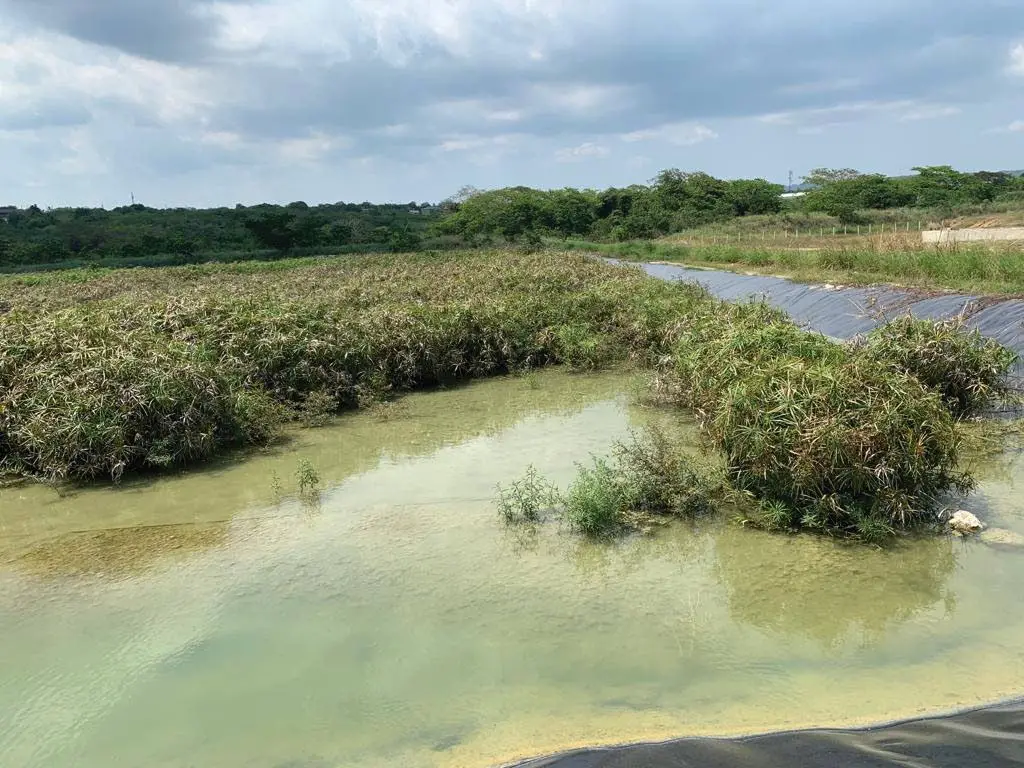
The project targeted three of Jamaica’s most ecologically significant watersheds, working from the inland forests and hillside communities that feed those systems all the way to the reef flats, seagrass beds, and mangrove fringes that define the island’s coastline. Its premise was a straightforward one: that what happens in the hills cannot be separated from the health of the coast. Deforestation accelerates sedimentation, which smothers reef systems. Poor agricultural practice degrades river water quality before it reaches the sea. Without managing the full hydrological chain, coastal restoration is always fighting a battle it cannot win.
What the Project Delivered
Implemented by the Planning Institute of Jamaica as its executing agency, the initiative brought together NEPA, the Rural Agricultural Development Authority, and the Public Gardens Division of the Ministry of Agriculture, Fisheries and Mining. Each contributed expertise across the project’s core themes: wetland restoration, sustainable land management, climate monitoring, and community resilience.
Among the most visible physical achievements was the installation of 500 metres of boundary fencing at the Mason River Protected Area in Clarendon and St Ann, completed on 14 May 2026. Mason River is a Ramsar-designated wetland site, meaning it carries formal international recognition for its ecological significance, and the fencing will help manage access and reduce encroachment on a habitat that provides critical refugia for freshwater species found nowhere else in the Caribbean. The Castleton Botanical Gardens also received rehabilitation works, including the installation of solar equipment, garden furniture, refurbished restroom facilities, gabion basket infrastructure, and repairs to existing structures.
Perhaps the most consequential outcome, however, was the institutional one. NEPA received a suite of environmental monitoring and field research equipment through the project, including dive gear, GPS units, and technical laptops that will support the agency’s capacity to conduct sustained marine and terrestrial ecosystem monitoring. In a country where institutional resources for environmental oversight have historically lagged behind the scale of development pressures, that capacity matters.
Jamaica’s Coastline Under Pressure
The significance of this investment becomes clearer when set against the scale of what Jamaica’s coastal ecosystems face. The island’s coral reefs, which protect shorelines from wave energy and support the marine ecosystems that underpin both fisheries and dive tourism, have declined sharply over recent decades through the combined effects of warming ocean temperatures, ocean acidification, agricultural and sewage pollution, and physical damage from coastal construction. In September 2025, NEPA launched its inaugural Coral Reef Awareness Month in an effort to drive public and institutional attention towards the crisis, including a programme of assisted coral fertilisation designed to help replenish degraded reef systems.
Mangroves present a similarly troubling picture. Data cited by NEPA shows that more than 770 hectares of mangrove forest were lost between 1996 and 2006 alone. Mangroves are not simply aesthetically significant: they act as nurseries for commercially important fish species, provide natural buffering against storm surge and erosion, and sequester carbon at rates that make their destruction environmentally costly by any accounting. Jamaica’s experiences during Hurricane Melissa in October 2025, when communities along low-lying coastlines bore the worst of the storm’s surge, illustrated in the starkest possible terms the consequences of removing those natural buffers.
The Bigger Picture: Development Versus Resilience
The completion of Hills to Ocean arrives at a moment when Jamaica’s coastal development pipeline is filling rapidly. The billion-dollar Harmony Cove resort project in Trelawny has begun its first phase of construction. Several all-inclusive resorts on the north coast have secured approvals for expansion. And the broader investment environment, boosted by post-Melissa reconstruction spending, is creating conditions in which coastal land in particular is under increasing development pressure.
Against this backdrop, the environmental monitoring capacity that Hills to Ocean has helped build is not a minor administrative footnote. NEPA’s ability to conduct baseline assessments of reef and wetland condition, to track change over time, and to produce the kind of data that can inform — or challenge — Environmental Impact Assessment processes is directly relevant to whether Jamaica’s development boom leaves the coast healthier or more depleted than it found it.
The EIA process at NEPA remains the primary regulatory gate through which development proposals affecting sensitive coastal habitats must pass. But that process is only as robust as the ecological data informing it, and historically those data have been incomplete. The equipment and institutional capacity handed over at the project’s close represent an investment in the quality of that oversight at a time when the stakes of getting it wrong have never been higher.
A Model Worth Repeating
The Hills to Ocean model — a landscape-scale, multi-agency initiative that integrates upstream land management with downstream coastal restoration and treats both as inseparable — is exactly the kind of approach that climate scientists and conservation practitioners have been advocating for the Caribbean for years. The fact that Jamaica has now completed a full cycle of such a project, with documented outputs and institutional gains, puts it in a position to apply those lessons more broadly.
The question is whether the political and financial will to replicate and scale that model will follow. Environmental projects of this kind tend to be celebrated at their conclusion and then left to compete for funding in the same constrained fiscal environment that makes sustained conservation difficult everywhere. If Hills to Ocean is to be genuinely transformative, the monitoring capacity it built must be resourced, the restoration work it began must be maintained, and the integrated watershed approach it demonstrated must be embedded in how Jamaica plans development across its most ecologically sensitive areas — not least its coast.
Related: Property Market Analysis | Latest Jamaica News
Follow Jamaica Homes on Youtube @jamaicahomes and Instagram @jamaica_homes and on Facebook @jamaicahomesnews Send us a message or email us at onlinefeedback@jamaica-homes.com or editor@jamaica-homes.com
Support independent Jamaican journalism.
- 1Our journalists cover housing, politics and community — stories that directly affect Jamaican lives.
- 2We have no billionaire owner and no advertisers calling the shots. Every story is decided by our editors.
- 3It costs less than a cup of coffee a week, and takes less time to subscribe than it took to read this article.
Support Jamaica Homes News today.
- Save 17% compared to monthly
- All articles unlocked
- Weekly newsletter
- Priority support
By subscribing you agree to our Privacy Policy and Terms.

Visit our YouTube Community ↗