


KINGSTON, Jamaica — If you were designing a country from scratch and you wanted to maximise its global cultural impact, you probably would not start with 10,990 square kilometres of Caribbean island, a population of under three million, and a colonial history defined by extraction and exploitation. You would start somewhere larger, somewhere better resourced, somewhere with established institutions and centuries of accumulated capital.
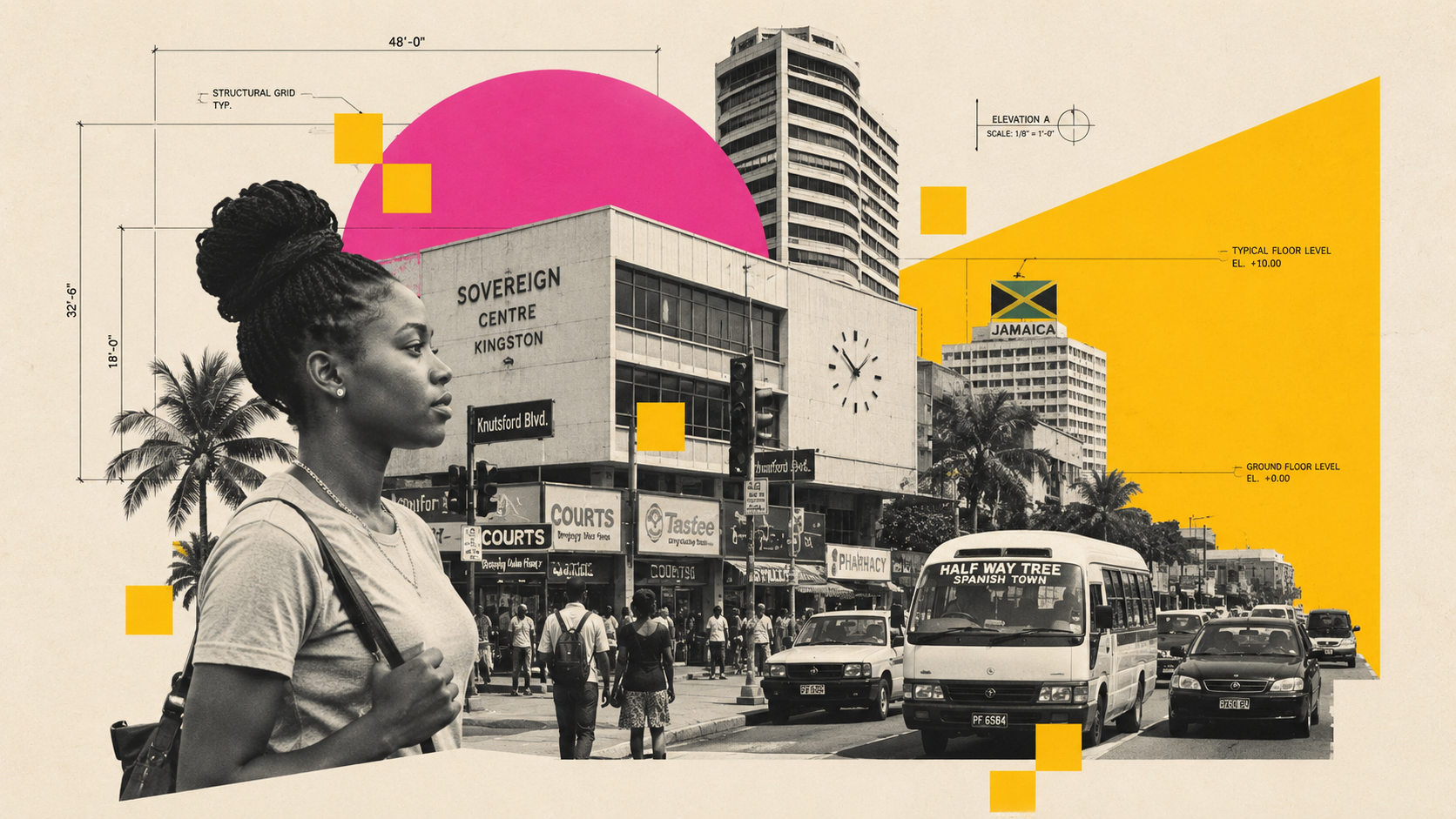
And yet, here we are. Jamaica. A country that did not have those advantages, and proceeded to produce Bob Marley, Usain Bolt, Louise Bennett-Coverley, Claude McKay, Shelly-Ann Fraser-Pryce, and an entire global genre of music that now carries UNESCO recognition. A country whose language, fashion, food, and philosophical approach to life have embedded themselves into global culture with a persistence that no marketing budget could have manufactured.
The question worth sitting with is not whether Jamaica’s creative output is extraordinary. It clearly is. The more interesting question is: what does Jamaica do with that understanding? How does a country that has always produced cultural excellence begin to fully value, protect, and build upon what it has always had?
The Economy That Was There All Along
Jamaica’s creative economy is not a new discovery. It is a recognition — formal, increasingly financial, and long overdue — of something that Jamaican communities have always known. That the music produced in a single-room studio in a yard in Kingston could change the consciousness of a generation in Europe. That a Jamaican novelist writing in the 1920s could shape the Harlem Renaissance. That a sixteen-year-old girl from a small parish, training on an inadequate track with whatever footwear was available, could become the fastest woman on earth.
The formal numbers now attach a dollar value to what was always there. Jamaica’s cultural and creative industries contribute an estimated $107 billion annually to the national economy — approximately 5.1 percent of GDP, and by some estimates as high as 7.6 percent when extended impacts are included. That comfortably exceeds the global average for comparable sectors. The island punches above its weight not as an exception, but as a consistent pattern across decades and disciplines.
“Jamaica’s greatest resource has never been bauxite or beaches or tourism. It has always been the Jamaican people — their creativity, their hunger, their refusal to accept that limitation is permanent. Every policy, every investment, every decision should begin with that understanding.”
— Dean Jones, Founder of Jamaica Homes & Realtor Associate
The National Policy for Culture, Entertainment and the Creative Economy 2025–2035, introduced by the Jamaican government, represents a formal commitment to translating that creative reality into structured economic development. It is, in the language of policy, a ten-year roadmap. But behind the language, it is something more fundamental: an acknowledgement that the thing Jamaica has always done naturally — create, perform, innovate, express — is also the thing that can sustain and grow its economy if taken seriously and protected accordingly.
The Creators Who Never Got the Credit
One of the more uncomfortable truths in Jamaica’s creative history is the gap between the global value generated by Jamaican creativity and the financial benefit that has flowed back to Jamaican creators. Reggae shaped the world. The revenues it generated did not always find their way home. Dancehall influenced every major genre of popular music in the past three decades — hip-hop, pop, Afrobeats, reggaeton, electronic music — and the Jamaican artists and producers who built that foundation frequently saw their contributions appropriated, interpolated, or simply uncredited in ways that a better intellectual property framework and stronger industry infrastructure might have prevented.
This is not a lament. It is context for understanding why the current policy moment matters. Stronger protections for Jamaican intellectual property, better frameworks for how Jamaican creators benefit from the global use of their work, and more deliberate investment in the institutions that support creative industries — from music studios to film infrastructure to design education — are not peripheral concerns. They are central to whether Jamaica’s next fifty years of creative output is more economically beneficial to Jamaicans than the last fifty.
The global creator economy is now valued at roughly US$36.8 billion. Jamaica, with its disproportionate influence on global culture and its growing digital-native creative class, is not absent from that economy. But it could be much more present, much more deliberately represented, and much more financially rewarded for the value it continues to contribute.
Where Creativity and Community Still Meet
What is perhaps most distinctive about Jamaica’s creative culture — and what distinguishes it from creative industries in more institutionalised contexts — is where it lives. It does not live primarily in corporate structures, government agencies, or university programmes, though all of those play roles. It lives in communities. In the informal networks of mentorship and imitation through which musicians, dancers, athletes, and artists have always learned their craft. In the sound system culture that democratised music production and distribution long before streaming services existed. In the church choirs that produced singers. In the school competitions that sharpened debaters, writers, and performers. In the yard gatherings where ideas were tested on an audience that would give you an honest response, immediately.
That community-embedded creativity is both Jamaica’s greatest strength and its most endangered asset. As communities change — as economic pressure disperses families, as digital culture competes with physical gathering, as the informal institutions that transmitted creative culture lose funding and attention — there is a genuine risk that what has always regenerated Jamaica’s creative output at the grassroots level becomes harder to sustain.
“The ideas that changed the world did not come from Jamaica’s boardrooms. They came from its communities — from people who had less than they needed and more than enough imagination. Protecting those communities is not social spending. It is economic strategy.”
— Dean Jones, Founder of Jamaica Homes & Realtor Associate
This is one of the reasons why the conversation about housing, community development, and creative economy are more connected than they might initially appear. Where people live, and under what conditions, shapes what they create. Communities with secure, dignified housing; reliable infrastructure; accessible public spaces; and functioning communal institutions produce differently than communities that are physically precarious, economically marginalised, and institutionally abandoned. Jamaica’s creative output has historically emerged despite those conditions, not because of them. Imagine what it might look like if the conditions genuinely supported it.
The Diaspora as Creative Force
Any serious conversation about Jamaica’s creative economy must include the diaspora — not as an afterthought, but as a central actor. The Jamaican communities in London, New York, Toronto, Miami, and Birmingham have not simply preserved Jamaican culture at a distance. They have extended it, hybridised it, and fed it back to the island in forms that have shaped everything from dancehall fashion to digital media strategy. The Jamaican creative who built a career in the UK brought back not only financial capital but creative capital — exposure to different markets, different aesthetics, different commercial structures.
The policy framework now being developed in Jamaica explicitly identifies the diaspora as a compelling investment partner — with the potential to fuel cultural exports across music, film, fashion, culinary tourism, and digital innovation. That potential is real and largely untapped at a structural level. The informal connections already exist. What remains is to build the formal channels through which diaspora creative investment can flow more efficiently and more beneficially to the island.
What the Creative Economy Means for Property
There is a direct and underappreciated connection between the growth of Jamaica’s creative economy and the trajectory of its property market. Creative industries generate employment, attract talent, stimulate consumption, and create the kind of urban and community energy that drives demand for housing, commercial space, and mixed-use development. The neighbourhoods in Kingston that have seen the most interesting property activity in recent years are often those with active creative scenes — where studios, galleries, cafés, and production spaces have created the kind of environment that professionals, returning residents, and investors find compelling.
This is not coincidence. Creative economies are urban development engines. They attract young professionals. They generate the foot traffic that sustains local businesses. They create the kind of neighbourhood character that transforms an area’s perception and, over time, its property values. Recognising and investing in this connection — between creative industry support and strategic property development — represents one of the more interesting opportunities for thoughtful investors and policymakers in Jamaica’s current moment.
“Where creativity thrives, communities strengthen. Where communities strengthen, property follows. The wisest investment in Jamaica right now is not just in land — it is in the places and people that make land worth owning.”
— Dean Jones, Founder of Jamaica Homes & Realtor Associate
A Country Still Writing Its Story
Jamaica’s creative economy policy runs through 2035. That is a horizon worth holding in mind. By then, if the framework is executed with seriousness and foresight, Jamaica’s creative industries should be more formally structured, more equitably rewarding to the creators who drive them, more deliberately connected to international markets, and more deeply integrated into the national development strategy. The creative Jamaican of 2035 should be better supported, better compensated, and better connected to the global economy than their counterpart today.
Whether that outcome is achieved depends on decisions being made right now — in government, in the private sector, in educational institutions, in communities, and in the individual choices of Jamaican creators who decide whether to build their careers at home or take them elsewhere. The pull of larger markets, better infrastructure, and more developed creative industries in London or New York or Toronto is real and rational. The work of making Jamaica a place where that pull is countered by something equally real — opportunity, recognition, community, and a viable creative livelihood — is the work of this decade.
It is work that Jamaica is capable of. The evidence for that capability is not theoretical. It is the entire history of what Jamaican people have produced, with limited resources and unlimited imagination, across every generation since independence. The question, as always, is not whether the potential is there. It is whether the conditions are built to honour it.
Jamaica Homes connects buyers, sellers, investors, and the diaspora across Jamaica’s dynamic property market. For listings, insights, and community-centred property guidance, visit jamaica-homes.com.
Follow Jamaica Homes on Youtube @jamaicahomes and Instagram @jamaica_homes and on Facebook @jamaicahomesnews Send us a message or email us at onlinefeedback@jamaica-homes.com or editor@jamaica-homes.com

1 Comment
Pingback: The Resource Jamaica Has Always Had and Never Fully Valued: The Case for Its Creative People – Jamaica Loop News
Visit our YouTube Community ↗