


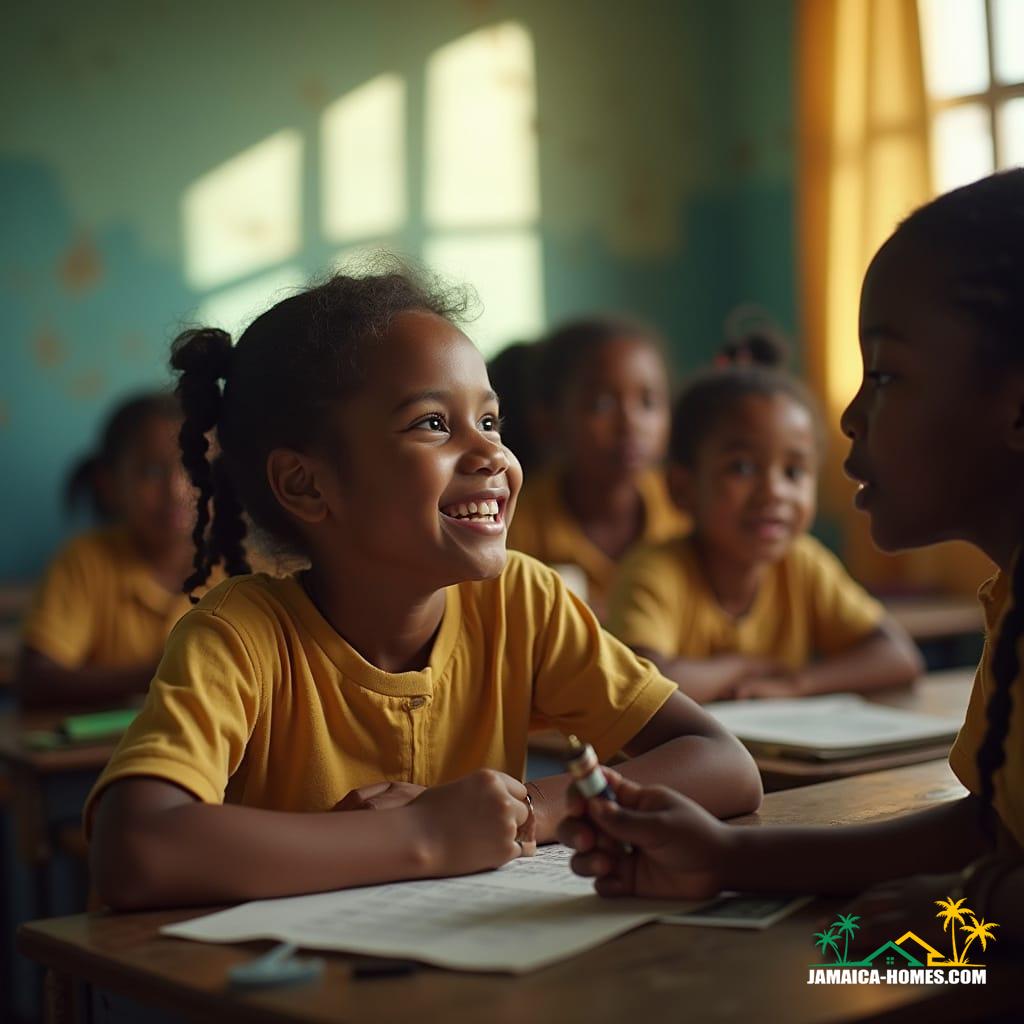
As the Government reviews costly schoolbook lists, questions are emerging about whether assistance should extend beyond households qualifying for PATH
Jamaica does not operate a broad, recurring child benefit comparable to the payments available to families in countries such as the United Kingdom. Instead, financial support for children is largely concentrated on households assessed as poor or vulnerable.
The principal programme is the Programme of Advancement Through Health and Education, better known as PATH. Administered by the Ministry of Labour and Social Security, PATH provides conditional cash assistance to eligible households, including support for children, older people, persons with disabilities and other vulnerable groups.
For families that qualify, the programme can provide valuable help. However, it does not reach every household raising a child, and that distinction is becoming increasingly important as parents confront the combined cost of food, electricity, transportation, rent, school supplies and childcare.
The question is whether Jamaica now needs a wider form of support for families who may not be considered poor enough for PATH but are still struggling to keep their household finances together.
Back-to-school costs renew affordability concerns
The issue has become particularly relevant at the beginning of the 2026/27 academic year.
On September 7, the Ministry of Education, Skills, Youth and Information announced that it would review school textbook lists following concerns about the financial burden placed on parents.
According to the Jamaica Information Service, the review is expected to distinguish between books that are mandatory and those that should be treated as supplementary reading.
Parliamentary Secretary Senator Marlon Morgan said some families were making significant sacrifices to purchase prescribed books, only to discover that certain texts were not used during the school year. He also acknowledged that requiring five to seven books for a single subject could create an unsustainable burden.
The proposed review may reduce unnecessary spending, but textbooks form only one part of the financial pressure facing households with children.
“Many Jamaican families are not destitute, but neither are they financially secure. They are working, paying bills and doing their best, yet one school expense or utility increase can throw the entire household off balance,” said Dean Jones, founder of Jamaica Homes and Realtor Associate.
What assistance is currently available?
PATH is Jamaica’s main conditional cash-transfer programme. Eligibility is based on an assessment of the household’s economic circumstances rather than simply on whether children live in the home.
That approach allows the Government to direct limited public resources towards families considered most vulnerable. It also means that a parent does not automatically receive assistance after having a child.
Jamaica’s National Insurance Scheme provides benefits in specific circumstances, including maternity and survivors’ benefits, but these are not the same as an ongoing child allowance paid to households generally.
There is also no broad dependent-child allowance within Jamaica’s personal income-tax system. Tax residents receive an annual tax-free threshold, but there is no general personal allowance for each child comparable to child-related tax relief offered in some other countries. PwC’s Jamaica tax summary confirms that Jamaica does not provide general personal allowances in addition to the tax-free threshold.
Consequently, many households receive no regular child-related payment or tax reduction, even though the cost of raising children directly affects how much money remains available for rent, mortgages, utilities and food.
The households caught in the middle
A means-tested programme will always have an eligibility boundary. On one side are households that qualify for assistance. On the other are families whose income or living circumstances place them just outside the programme.
These households may include security guards, domestic workers, shop employees, tradespeople, taxi operators, small business owners and other parents earning irregular or modest incomes.
A household can appear financially stable on paper while carrying substantial rent, transportation, childcare and education costs. Informal earnings may fluctuate from one month to the next, while a sudden illness, job loss or property repair can quickly change the family’s position.
This is particularly important in the housing market. When parents cannot absorb increases elsewhere in their budget, housing payments may be delayed, maintenance may be postponed, or families may be forced into overcrowded accommodation.
“A child benefit would not simply be education spending. In many homes, it would help protect the rent, keep the light connected and put food in the kitchen,” Jones said.
Should Jamaica introduce a child benefit?
A Jamaican child-benefit programme would not necessarily have to copy the British system.
One option would be a universal monthly payment for every registered child, with the amount recovered from higher-income households through taxation. Another would be an income-tested payment available to a broader group than PATH beneficiaries.
The Government could also expand existing PATH coverage and introduce a gradual reduction in assistance as household income rises. That could prevent families from losing all support immediately after crossing an eligibility threshold.
However, any proposal would require careful costing. A universal benefit could be expensive because it would include affluent households that do not require financial assistance. A tightly targeted programme would cost less but could reproduce the same gaps already experienced by families whose incomes sit marginally above the qualifying level.
Safeguards would also be needed to prevent duplicate claims, confirm which caregiver is responsible for the child and ensure that payments continue reaching children when parents separate or household arrangements change.
Jamaica would therefore need to decide what problem it wants such a programme to solve. It could be designed as an anti-poverty measure, a response to declining household affordability or a longer-term investment in children’s health, housing stability and education.
A wider conversation about household bills
The Government’s decision to examine schoolbook lists shows that the financial pressure on parents is being recognised. The next question is whether reducing selected costs will be sufficient.
A child benefit would not replace employment, affordable housing or properly funded schools. Nor would a modest payment cover the full cost of raising a child. It could, however, provide predictable assistance before a family reaches the point of crisis.
“Supporting children before a household collapses is usually less expensive than trying to repair the consequences afterwards,” Jones said. “The real policy question is not whether families need help, but how Jamaica can deliver that help fairly and sustainably.”
Jamaica already has a social-protection system designed to assist its most vulnerable citizens. What it does not currently have is a broad child payment reaching ordinary working households.
As school and household costs continue to test family budgets, the gap between qualifying for assistance and being able to manage without it deserves greater public attention.

Visit our YouTube Community ↗