


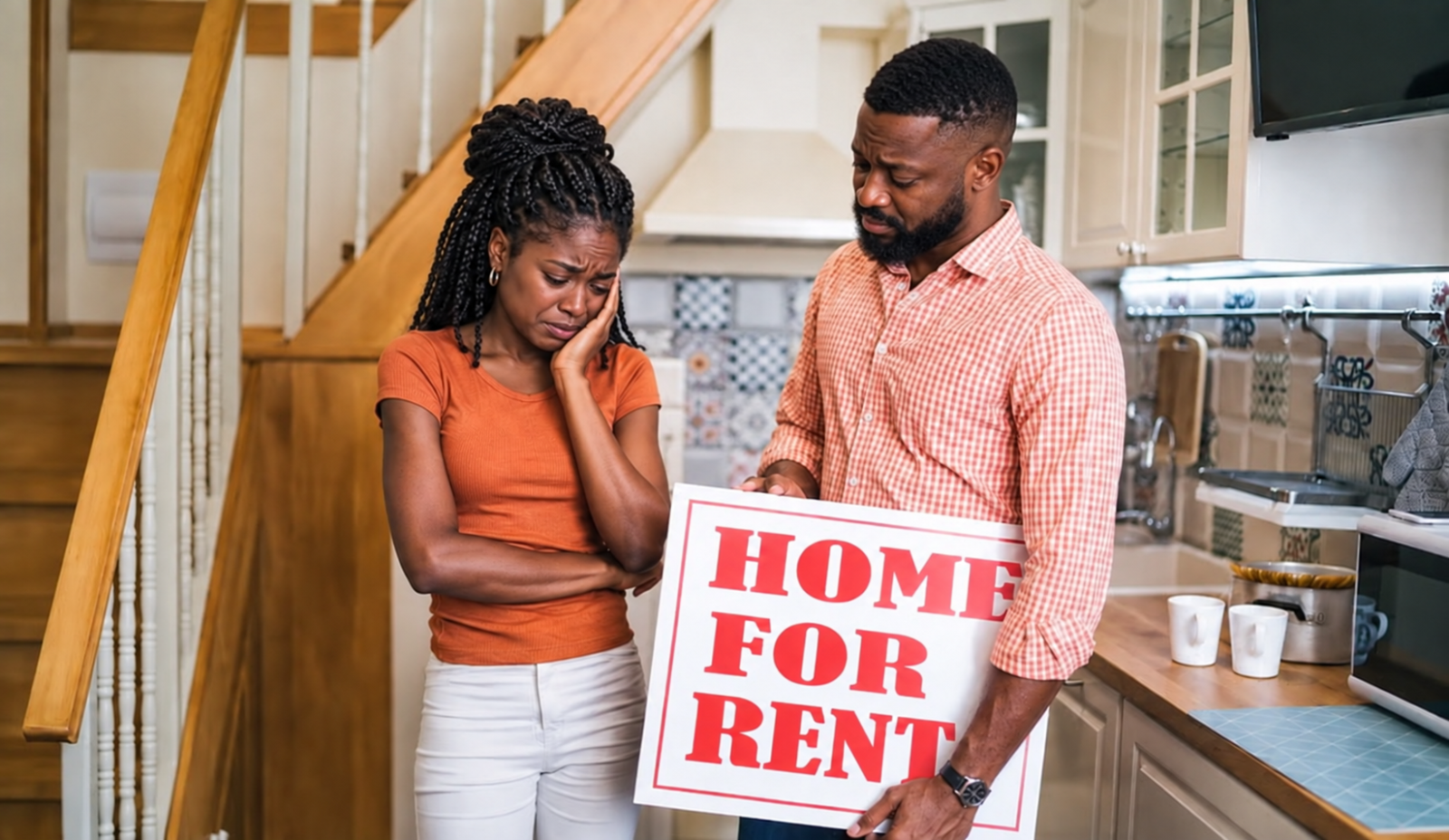
The next squeeze on Jamaican renters may begin somewhere they rarely look, not with the monthly rent notice, but with the cost of owning and maintaining the property itself.
Jamaica is not facing the same landlord tax changes currently causing concern in Britain, but the underlying economic question is increasingly relevant here. Property taxes are heading towards a major revaluation, building and repair costs have increased, apartment owners continue to carry strata expenses, borrowing remains relatively expensive, and landlords must also account for insurance, vacancies and general maintenance.
At the same time, tenants are already dealing with higher housing costs.
Data from the Statistical Institute of Jamaica showed that actual residential rents were 7 per cent higher in February 2026 than a year earlier. The same report recorded a 6 per cent annual increase in the cost of maintenance, repair and security of dwellings.
That leaves Jamaica facing a difficult housing equation. Landlords cannot indefinitely operate properties at a loss, but tenants cannot endlessly absorb higher rents either.
The land beneath the house could become more expensive
One of the most important developments for landlords may have little to do with rent at first.
The National Land Agency began a nationwide revaluation exercise on July 1 covering roughly 900,000 parcels of land. The exercise is expected to take about 20 months and will update unimproved land values, which are used as the basis for Jamaica’s property tax system. Some valuations have remained unchanged since the 2017 to 2018 period.
The exercise does not itself mean that every landlord will receive a dramatically higher tax bill. Final liabilities will depend on the updated valuations and the tax framework applied to them.
But the direction is important.
Land values have increased substantially in several parts of Jamaica since the previous valuation cycle, and the revaluation is expected to lead to higher property tax bills for at least some owners. Earlier government announcements have indicated that the new values are expected to affect property taxation from the 2027 to 2028 fiscal year.
For rental property owners, that matters because property tax is an operating expense.
Jamaican rental law also explicitly recognises increases in property taxes when rents are being assessed. The Rent Assessment Board says landlords may seek increases beyond the normal threshold where costs such as property taxes have risen, subject to its procedures.
The potential chain is therefore relatively straightforward: land values rise, property assessments increase, ownership costs increase and, where the market permits it, some of that pressure may eventually appear in rents.
Not every landlord will be able to pass the cost on. But neither does the cost disappear.
Rents are already moving
This pressure arrives at a difficult time for tenants.
Official statistics show that rents have already been rising faster than Jamaica’s overall inflation rate during parts of the past year. In February, while annual headline inflation remained below the Bank of Jamaica’s target range, STATIN recorded actual housing rents 7 per cent higher than a year earlier.
By August, Jamaica’s overall inflation rate had risen to 7.9 per cent, while the Bank of Jamaica maintained its policy interest rate at 5.50 per cent. The central bank has warned that higher international energy and transport costs are feeding into domestic prices and may create second-round increases elsewhere in the economy.
Housing does not sit outside those pressures.
A landlord replacing a damaged water heater, repairing a roof, repainting between tenants or paying contractors for electrical and plumbing work is purchasing goods and services in the same inflationary economy as everyone else.
Building-material suppliers reported price increases of as much as 15 per cent in some categories earlier this year as fuel, freight and imported input costs increased.
That means the economics of an existing rental property can deteriorate even when nothing dramatic has changed with the building itself.
A rent cheque is not the landlord’s profit
There is also a tendency to look at the advertised rent and assume that figure represents the owner’s return.
It does not.
An apartment renting for J$180,000 per month produces J$2.16 million in gross annual rent if it remains occupied for all 12 months.
From that may come mortgage payments, property taxes, insurance, maintenance, repairs, appliances, periods without a tenant, management expenses and, in strata developments, maintenance contributions.
Strata costs are particularly relevant in Kingston and other markets where apartment living has expanded rapidly.
Under Jamaica’s strata framework, maintenance fees and other common-property expenses are allocated according to unit entitlement and the corporation’s approved budget. Those budgets can include electricity, water, cleaning, security and maintenance of common areas.
As the costs of running a development increase, the individual unit owner’s contribution can rise with them.
Dean Jones, founder of Jamaica Homes, said the distinction between rent and return is often lost in discussions about affordability.
“The tenant sees the rent leaving the account every month, which is understandably what matters to them. But housing policy also has to recognise that gross rent and landlord profit are two completely different things. The long-term rental market only works if both sides of that equation remain sustainable.”
Jamaica’s rent law is more than 80 years old
There is another complication.
Jamaica is attempting to regulate a modern property market using legislation that dates back to 1944 and was last amended in 1983.
The Rent Assessment Board currently states that landlords may increase rents by 7.5 per cent annually with its permission, while increases beyond that level must go before the Board. It says higher property taxes and improvements to the premises are among the factors that can be considered.
Tenant protections remain essential. Housing is not an ordinary commodity. Losing a home can disrupt children’s schooling, employment, family relationships and financial security.
But regulation also has to reflect how the housing market actually operates.
A potential difficulty arises when the rent paid by a long-standing tenant falls significantly below the amount a comparable property could command when offered afresh to the market. That gap can create incentives around shorter tenancies, property sales or alternative uses.
It does not mean landlords will automatically remove tenants. It does mean policymakers must consider how rent regulation affects the willingness of property owners to remain in the long-term rental market.
Short-term rentals provide another option
Unlike landlords of earlier generations, today’s owner may also have another choice.
A property in Kingston, Montego Bay, Ocho Rios or another high-demand location can potentially move between long-term and short-term accommodation.
Third-party market data from AirDNA recorded 2,181 active short-term rental listings in Kingston as of August 2026. About 91 per cent were entire homes and nearly 60 per cent were one-bedroom units, putting much of that stock in direct physical competition with the type of accommodation sought by single professionals and couples.
But the data also contain an important warning against exaggeration. AirDNA estimates that active Kingston short-term rental supply was actually down 40.1 per cent year on year.
So there is insufficient evidence to claim that short-term rentals are currently swallowing Jamaica’s long-term rental supply.
What can be said is that landlords now have alternative ways of using residential property. If conventional renting becomes significantly less attractive, some owners have somewhere else to go.
Supply ultimately decides who pays
That brings the issue back to the most important part of the rental equation: supply.
MLS data released by the REALTORS® Association of Jamaica recorded approximately J$772 million in rental transactions during 2025, with St Andrew, St Catherine and St Ann producing the highest rental revenues. The Association cautioned that the figures cover MLS transactions and therefore exclude private rentals and direct developer activity.
There is also no single Jamaican rental market.
A new apartment development in Kingston with several vacant units may give tenants bargaining power. A landlord there may simply be unable to increase rent because another owner in the same complex will undercut the price.
The situation can be entirely different in communities where suitable rental housing is scarce.
That distinction matters because landlords do not determine rents in isolation. The market does.
Where supply is plentiful, higher property costs may reduce the landlord’s return.
Where supply is scarce, more of those costs can eventually migrate towards the tenant.
Bills, after all, have an unfortunate habit of learning how to walk.
Protecting both sides of the market
The answer is therefore not to treat landlords as victims, nor tenants as an obstacle to investment.
It is to recognise that Jamaica needs both.
Renters need reasonable security, functioning properties and protection from arbitrary or excessive increases. Landlords need a regulatory and economic environment in which providing long-term housing remains worthwhile.
The coming land revaluation makes that balance more important.
Property taxation should be based on credible and current values. But policymakers should also understand what happens when higher taxes arrive alongside more expensive repairs, strata costs, financing and general inflation in a housing market where many tenants are already stretched.
Dean Jones said the objective should be broader than controlling the rent on individual homes.
“The real question is whether Jamaica can create enough good-quality housing that tenants have genuine choice. When supply is healthy, competition disciplines rents. When housing is scarce, almost every additional cost eventually finds someone who has to carry it.”
Higher landlord costs will not automatically send every Jamaican rent soaring.
Some owners will absorb them. Some will accept smaller returns. Others will increase rents, sell, or change how their properties are used.
But as Jamaica updates the value of the land beneath almost a million properties, reforms an ageing rental framework and continues rebuilding in a more expensive construction environment, the relationship between the cost of providing housing and the price of renting it deserves much closer attention.
Protecting tenants and keeping landlords in the long-term rental market should not be treated as opposing objectives.
For Jamaica’s housing system to work, it will need to achieve both.
Follow Jamaica Homes on Youtube @jamaicahomes and Instagram @jamaica_homes and on Facebook @jamaicahomesnews Send us a message or email us at onlinefeedback@jamaica-homes.com or editor@jamaica-homes.com

Visit our YouTube Community ↗