


Antigua and Barbuda has taken the keys to a 150-home replacement for the former Booby Alley settlement and is already asking Beijing for twice as many more, a model that raises questions about cost, upkeep and dependence that are familiar in Jamaica.
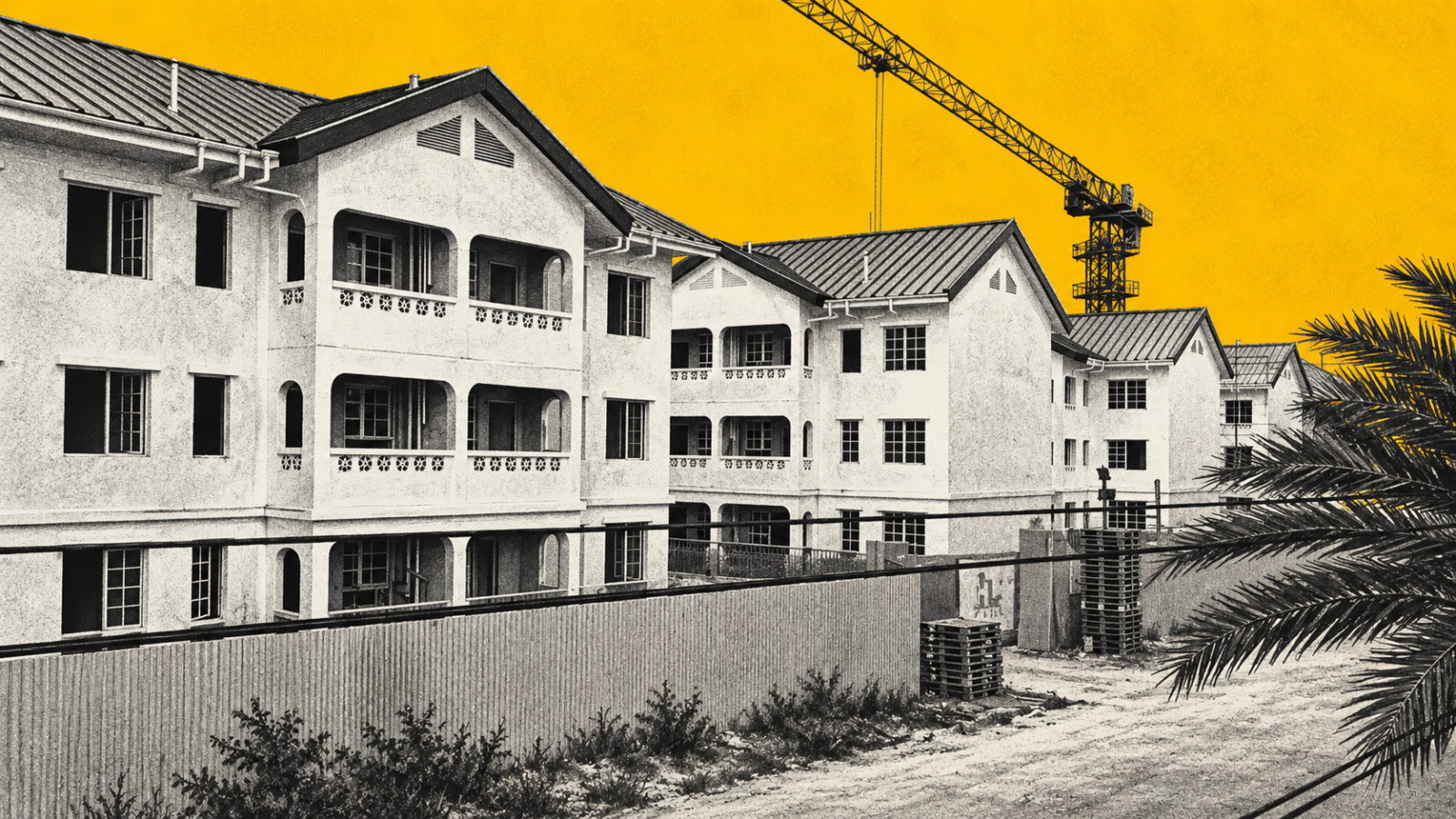
ST JOHN’S, Antigua and Barbuda, 15 October 2026, The Government of Antigua and Barbuda on Thursday formally received Pelican Court, a 150-unit condominium development built with an EC$50 million grant from China on the site of the former Booby Alley community in the Point area of the capital. At the handover, the country’s Prime Minister said he had already written to China requesting a further 300 condominium units for the Perry Bay area, according to reports first carried by Antigua News Room. He did not announce any approval of that request, any funding agreement or any timetable.
The handover is of interest beyond Antigua’s capital. Governments across the Caribbean, Jamaica’s among them, are trying to replace or regularise ageing, densely built communities whose residents often cannot raise a conventional mortgage. Pelican Court replaces an entire neighbourhood of small wooden houses with apartment blocks, so the terms on which families move back in, and how the buildings are run afterwards, deserve close attention.
Eight years from clearance to keys
The project has been a long time coming. The Prime Minister said earlier this month that the redevelopment had taken eight years, slowed by disputes, legal challenges and the pandemic, the Antiguan Trumpet reported. A Chinese design team arrived in December 2022 to carry out site investigations and prepare drawings. A Chinese project representative said construction took 22 months and delivered nine residential buildings with more than 148,500 square feet of floor space, despite complex site conditions, long shipping times for materials and variable weather.
The handover does not mean families move in tomorrow. Speaking to ABS after the ceremony, the Prime Minister said administrative allocation had begun, but that landscaping still has to be finished and meters installed by the state utility, APUA, before residents can take up their homes. He said the outstanding work could take another couple of months, and the government is aiming for January. According to the Antiguan Trumpet, the development is intended to rehouse more than 300 former residents.
Who gets what, and who pays
The allocation rules are the heart of the matter. Former owner-occupiers, some of whom lived in chattel houses worth a small fraction of the new units, are to receive replacement condominiums at no additional cost. Landlords who rented out low-value property will not automatically be given a far more valuable unit: in radio remarks before the handover, the Prime Minister said a former rental property must be valued at least half the cost of its replacement, with the owner paying the difference. Former tenants can keep renting at rents the government says will be set within their means, and the government has said its preference is for mortgages, with subsidised loans for other qualifying residents repaid according to ability to pay. Adult children of former owners will not automatically receive separate units free of charge.
Ownership also brings obligations. The Prime Minister said a condominium maintenance fee will be introduced, suggesting it could be as little as $50 a month, though no final amount or start date has been announced. He said a facility manager has been appointed to make sure community rules are followed, and he warned residents that drug trafficking and gambling would not be tolerated, adding that those unable to live within the rules should make other arrangements. The project’s chairman called for clear maintenance arrangements and transparent management.
A gift with a wider message
China’s ambassador described the homes as a gift ahead of Antigua and Barbuda’s 45th independence anniversary and said Beijing was willing to take on more projects to improve living conditions. The Prime Minister went further, calling China the country’s most important development partner and saying Antigua and Barbuda should stand by the relationship despite what he described as geopolitical threats, even if that brings consequences. He also said the state’s separate programme of free homes for indigent households will move towards more climate-resilient materials next year, questioning the durability of wooden construction.
Grant-funded housing solves the hardest part of the equation, the capital cost, but it shifts attention to what follows. Shared buildings need sinking funds, repairs, insurance and management long after the ribbon is cut. When residents move from individual houses and yards into apartment blocks, the household’s relationship with property changes: a plot that could be extended room by room becomes a unit governed by rules, fees and neighbours. Whether Pelican Court is still in good order in 20 years will say more about the model than the handover ceremony.
What Jamaica can take from it
Jamaica is grappling with a version of the same challenge. In Western Kingston this week, about 221 Tivoli Gardens residents received Certificates of Possession, a step short of title, after a government amnesty that allowed occupiers in regularised government housing schemes to settle outstanding balances, the Jamaica Information Service reported. Jamaica’s Prime Minister said the buildings would be assessed, and any necessary repairs carried out, before strata titles are issued. The experience in both countries points the same way: rehousing is only half the job, and secure tenure, sound buildings and a workable system for maintaining shared property are what turn a housing scheme into a lasting asset.
For Antigua and Barbuda, the immediate tests are allocation, written ownership terms and the January move. For the wider region, including Jamaica, the more lasting question is whether grant-funded renewal can be paired with the governance and resilience standards that keep new homes valuable for the next generation, and whether governments are prepared to depend on a single foreign partner to build them.
Follow Jamaica Homes on Youtube @jamaicahomes and Instagram @jamaica_homes and on Facebook @jamaicahomesnews Send us a message or email us at onlinefeedback@jamaica-homes.com or editor@jamaica-homes.com

Visit our YouTube Community ↗