


Kingston, Jamaica
A $50-million master plan commissioned by the Ministry of Economic Growth and Job Creation and the National Environment and Planning Agency is set to reshape how Jamaica thinks about the northern stretch of the Negril coastline. The plan, mandated by Cabinet, will produce a formal vision for an area described as New Negril, covering the Hanover coastline from the Westmoreland parish boundary northward toward Lucea.
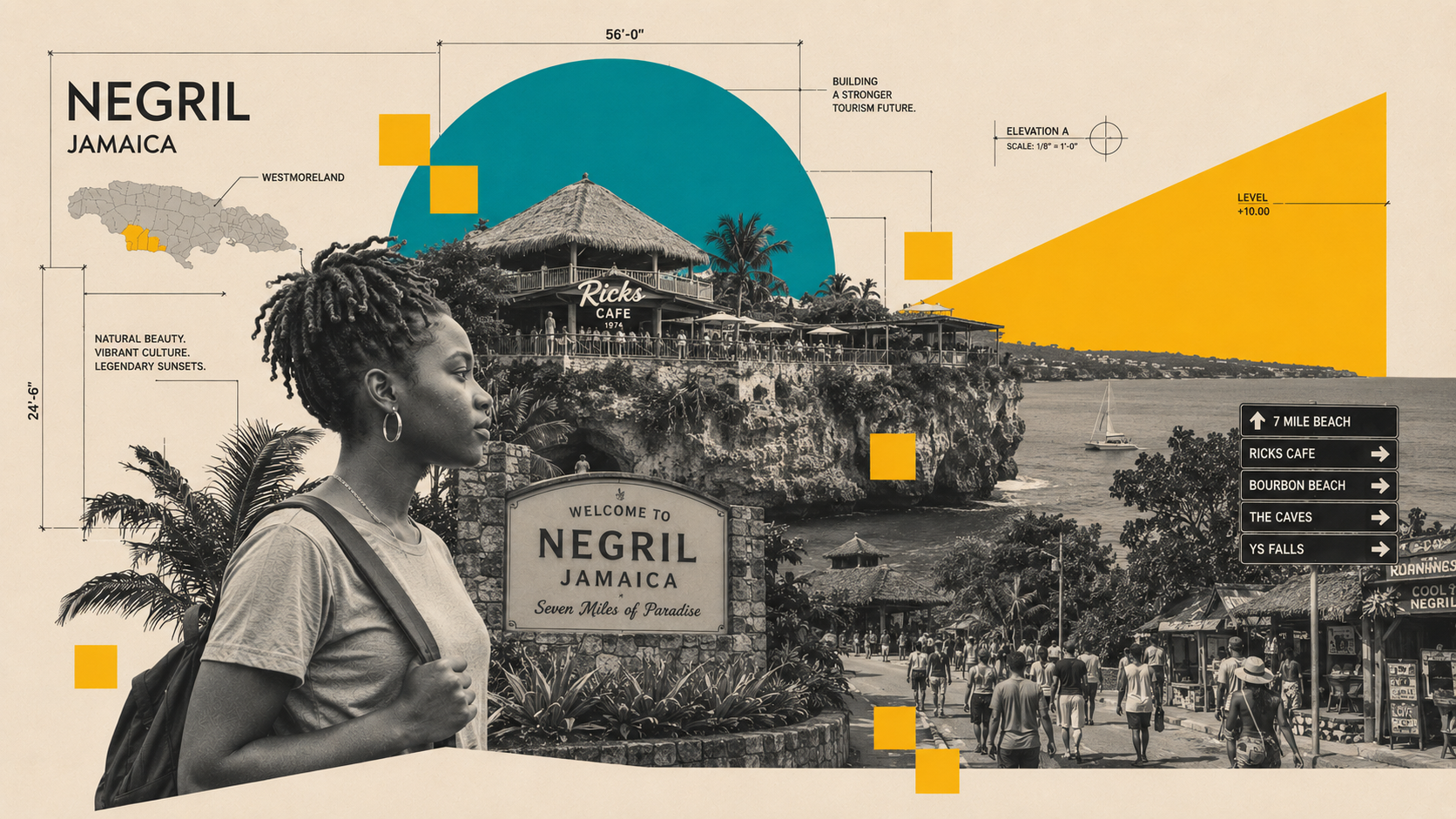
Why a New Negril
The concept of New Negril arises from a recognition that the existing resort area, the Seven Mile Beach and the West End, is constrained. Infrastructure in old Negril has been stretched beyond its capacity, land use patterns are entrenched, and the scope for significant new development without environmental disruption is limited. The Hanover coastline, by contrast, offers a relatively undeveloped stretch of coastal land with access to some of the most scenic and ecologically intact landscapes in western Jamaica.
By creating a formal planning framework for this area, the government aims to guide development rather than react to it. The plan will cover land use, physical development, infrastructure, disaster risk management, climate adaptation, and social and economic development. In other words, it is intended to be comprehensive, addressing not just what gets built but how the entire system functions.
The Timeline and Process
At the time of the announcement, the master plan was at an early stage. Background work had begun in April 2018, with a reconnaissance survey planned for the same month as the November 2018 announcement. Land use and study surveys were scheduled for early 2019, with stakeholder consultations ongoing throughout. Three-dimensional model images of the conceptual plan were projected for mid-2019, with a draft master plan document expected by October 2019.
Critically, the process was designed to include the full range of stakeholders: government agencies, non-government organisations, and individual landowners within the designated area. For those holding land along the Hanover coastline, the master plan process represented both an opportunity and a constraint. Opportunity, because a formal planning framework tends to attract investment and support land values. Constraint, because the outcome would define what could and could not be built on their holdings.
Height, Density, and the Environment
One of the most sensitive questions in the New Negril planning process was whether the area would be subject to the same height and density restrictions that apply in old Negril, or whether the government intended to relax those controls to attract larger-scale hotel investment. Reports in early 2019 suggested the government was considering eliminating height restrictions, a proposal that drew significant pushback from environmental organisations and community groups, who argued that unchecked density would repeat the mistakes made in the existing resort area.
The Jamaica Environment Trust noted that the stretch of coastline earmarked for New Negril includes some of the most ecologically valuable landscapes in Jamaica, including wetlands and coral reef systems that provide natural protection against flooding and storm surge. Planning decisions made in 2018 and 2019 for this area will shape what is still possible decades from now.
Implications for Land
For landowners and investors, the master plan process is a signal that the Hanover coastline is moving from informal interest to formal development agenda. Land that has historically been held without clear development prospects gains a different character once it sits within a government-endorsed planning framework. Whether the New Negril plan ultimately delivers the investment it envisions depends on the quality of the framework produced and the consistency with which it is enforced, two areas where Jamaica’s track record in resort development has not always been strong.
Follow Jamaica Homes on Youtube @jamaicahomes and Instagram @jamaica_homes and on Facebook @jamaicahomesnews Send us a message or email us at onlinefeedback@jamaica-homes.com or editor@jamaica-homes.com

Visit our YouTube Community ↗