

Jamaica Homes Global Conflict & Caribbean Impact Review | Published 3 April 2006 | Reporting Period: 3 January – 2 April 2006
Quarterly Briefing
- Hamas wins the Palestinian Legislative Council elections on January 25 with 74 of 132 seats, defeating Fatah and achieving the most decisive single-party majority in any Palestinian election; the result produces immediate international paralysis: the United States and European Union refuse to recognise the Hamas-led government and suspend aid to the Palestinian Authority; the result is a deepening humanitarian crisis in Gaza and the West Bank.
- Iran restarts uranium enrichment at the Natanz facility in January after breaking IAEA seals and withdrawing from negotiations with the European Union; President Ahmadinejad declares Iran’s nuclear programme an expression of national sovereignty; the UN Security Council is referred to the matter in February; the confrontation enters a new, more dangerous phase.
- The al-Askari mosque in Samarra — one of Shia Islam’s holiest shrines — is bombed by Sunni extremists on February 22, destroying its Golden Dome; the attack provokes retaliatory killings of Sunni civilians by Shia militias; Iraqi security forces stand aside; the bombings mark the beginning of a full-scale sectarian civil war that transforms the nature of the conflict.
- Iraq’s elections of December 15, 2005 produced a result but not a government; the negotiations between the dominant Shia United Iraqi Alliance, the Kurdish Alliance and Sunni factions to form a government are still ongoing as this edition is published; Nuri al-Maliki will eventually emerge as prime minister but the process takes until May.
- Slobodan Milosevic, the former Yugoslav president on trial for genocide and war crimes at The Hague, dies in his cell on March 11; his death ends the most significant international war crimes prosecution of the post-Cold War era without a verdict; the International Criminal Tribunal for the former Yugoslavia faces questions about the capacity of international justice to reach those most responsible for mass atrocities.
- Hurricane Katrina’s aftermath continues to reshape US domestic politics and federal emergency management; the failures of FEMA and the Bush administration are under sustained Congressional scrutiny; the Katrina disaster has permanently altered the political calculus around natural disaster preparedness at every level of government in the United States and beyond.
Prologue: Three Crises, One Quarter
The first quarter of 2006 delivered three separate events, each of which would in isolation have been sufficient to define a year. Hamas’s election victory was the democratic process delivering a result that democratic theory required to be respected and that Western governments could not bring themselves to accept; their refusal would produce a humanitarian crisis and an ethical contradiction that played out for years. Iran’s resumption of enrichment was the definitive end of the negotiating track that the EU3 had pursued since 2003 and the beginning of the confrontation that would consume significant American and European diplomatic energy for the next decade. And the Samarra bombing — eleven months after the bombing’s precursor was first mooted as an al-Qaeda strategy — ignited the sectarian civil war that American planners had either not anticipated or not prevented. For the Caribbean, these three crises were primarily significant through oil prices, which remained elevated, and through the further distraction of US foreign policy from hemispheric engagement.
The Samarra Bombing and Caribbean Security Parallels
The destruction of the al-Askari mosque’s golden dome on February 22 was an act of deliberate strategic terrorism: its purpose was not to kill large numbers of people but to provoke a communal conflict that the perpetrators could not themselves generate directly. The plan worked with appalling precision. Within hours of the bombing, Shia militias were attacking Sunni mosques across Baghdad; within days, death squads were operating in both directions. The US military’s failure to protect the shrine — one of Shia Islam’s most sacred sites — was a political catastrophe for the occupation’s legitimacy; the Iraqi police’s refusal to intervene in the retaliatory attacks exposed the sectarian allegiances of the security forces that three years of training had produced.
The broader lesson — that ethnic and religious communities under sufficient pressure will prioritise communal protection over civic order — was not lost on observers in the Caribbean, where Jamaica’s own garrison communities and violent political geography illustrated the ways in which identity-based violence could resist conventional security responses. The Iraqi experience offered no Caribbean solutions, but it provided a sobering reminder that the conditions for communal violence were not unique to the Middle East.
Iran’s Nuclear Programme and Regional Oil Economics
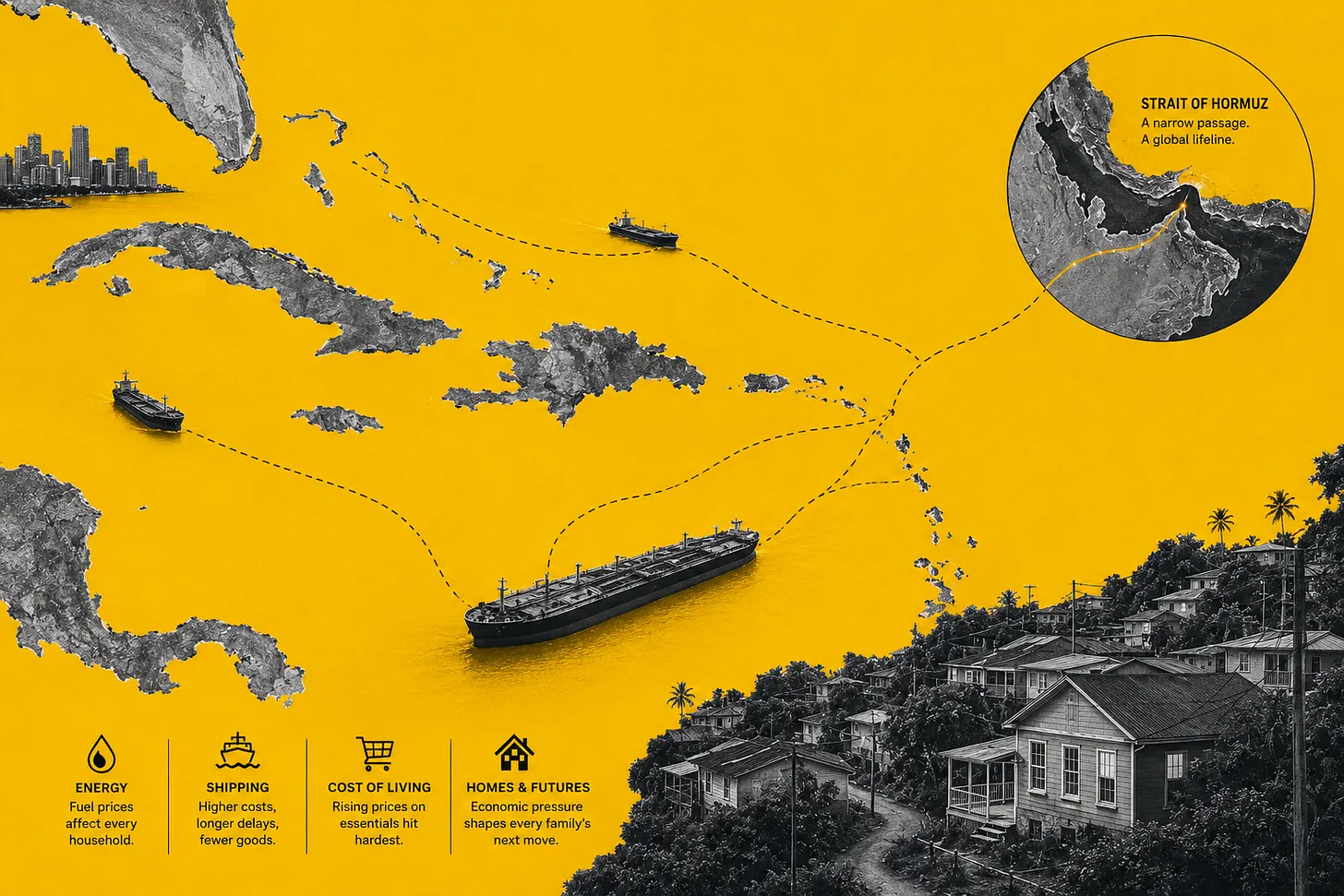
Iran’s decision to restart enrichment was simultaneously a technological step, a political statement and an economic calculation. The technological step was modest: Iran’s enrichment capacity at Natanz was limited and the distance between low-enriched uranium suitable for civilian power and highly enriched uranium suitable for weapons was measured in years of further work, not months. The political statement — that Iran would not be coerced by European diplomacy or American threats — was the more significant message. The economic calculation was that high oil prices, sustained by Middle Eastern instability in which Iran played a role, gave Tehran a financial cushion that made sanctions less immediately threatening. For the Caribbean, Iran’s nuclear confrontation was relevant primarily because it added a geopolitical risk premium to oil prices that were already stressing island economies heavily dependent on imported energy.
Looking Ahead
Iraq’s government formation will resolve itself, eventually; the sectarian violence it has unleashed will not so easily subside. Iran’s nuclear file will reach the Security Council; the pattern of negotiations, demands, partial concessions and resumed confrontation that has characterised the dispute since 2003 will continue until either a deal is reached or a military option is exercised. Hamas’s government will govern in Gaza and the West Bank without international aid; the humanitarian consequences will be blamed on Hamas by its opponents and on the blockade by its supporters. And the Caribbean enters the 2006 hurricane season with the experience of 2005’s record storms as a sobering reference point; preparedness investment has been made but the gap between need and capacity remains large.
Jamaica Homes Global Conflict & Caribbean Impact Review is published quarterly, examining how wars, geopolitical tensions and major international crises have shaped Jamaica, the Caribbean and their economies.
Follow Jamaica Homes on Youtube @jamaicahomes and Instagram @jamaica_homes and on Facebook @jamaicahomesnews Send us a message or email us at onlinefeedback@jamaica-homes.com or editor@jamaica-homes.com
Support independent Jamaican journalism.
- 1Our journalists cover housing, politics and community — stories that directly affect Jamaican lives.
- 2We have no billionaire owner and no advertisers calling the shots. Every story is decided by our editors.
- 3It costs less than a cup of coffee a week, and takes less time to subscribe than it took to read this article.
Support Jamaica Homes News today.
- Save 17% compared to monthly
- All articles unlocked
- Weekly newsletter
- Priority support
By subscribing you agree to our Privacy Policy and Terms.

Visit our YouTube Community ↗