


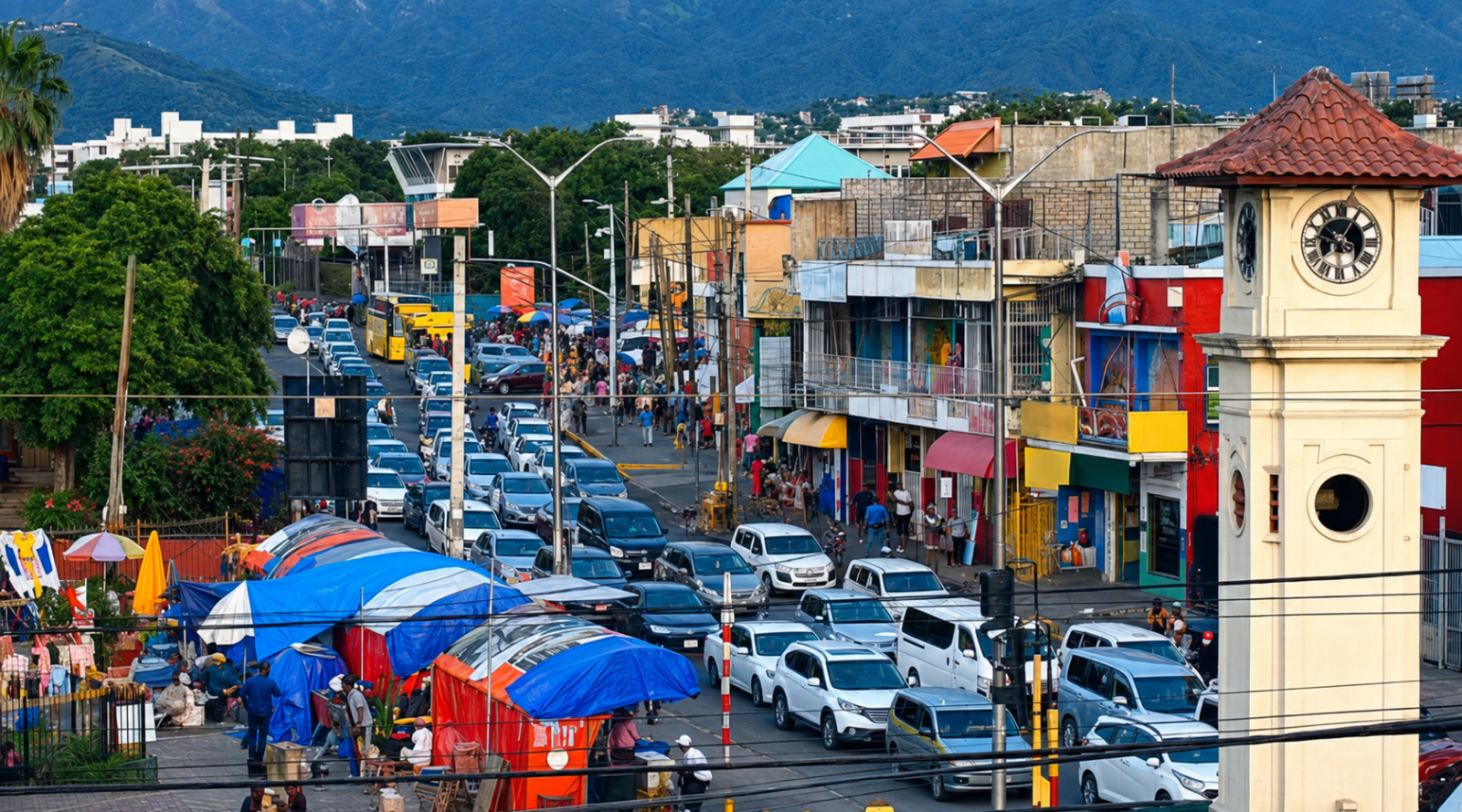
Reports of mounting tension between two gangs operating extortion rackets in Half-Way Tree have placed renewed attention on the security of one of Jamaica’s busiest commercial and transportation centres. Police have confirmed that they are aware of the situation, have taken individuals into custody and are monitoring developments.
The immediate concern is the possibility of violence between groups reportedly associated with Park Lane and Ambrook Lane. However, the wider threat is what sustained criminal pressure could do to Half-Way Tree itself, its businesses, commercial properties, transport services and reputation as a place in which to work, shop and invest.
Half-Way Tree is not simply another neighbourhood. It is one of the capital’s principal commercial centres and transport interchanges. Thousands of people move through the area each day, while retailers, banks, professional offices, restaurants, vendors and transport operators depend on its constant flow of activity.
If fear begins to interrupt that movement, the consequences could extend far beyond the individuals directly involved.
Extortion is an attack on the local economy
Information reported by the Jamaica Observer indicates that businesses, vendors and transport operators are being required to pay so-called protection money. The dispute reportedly arose after members of one group signalled an intention to collect money in territory controlled by another.
These reports remain matters for the police to investigate. Nevertheless, the economic implications of extortion are well understood. It functions as an illegal tax imposed on people who are already paying rent, wages, utilities, licences, transportation costs and legitimate government taxes.
For a large company, an additional criminal demand may be disruptive. For a small shopkeeper, street vendor, loader or transport operator, it can be ruinous.
The burden is rarely confined to a single payment. Once extortion becomes embedded, businesses may shorten their opening hours, increase prices, reduce staffing or abandon the area. Prospective entrepreneurs may decide not to open there at all.
That is how a thriving commercial district can begin to deteriorate, not necessarily through one dramatic event, but through hundreds of quiet decisions made by people who no longer feel secure.
Property values depend on confidence
Commercial property is supported by more than buildings, roads and location. It depends on confidence.
An office, shop or restaurant space has value because people believe customers will visit, employees can travel safely and businesses can operate without persistent disruption. When that confidence weakens, demand for space can fall.
Landlords may then face longer vacancies, greater tenant turnover and pressure to reduce rents. Property owners may postpone maintenance or redevelopment because the expected return no longer justifies the risk. Lenders and insurers may also become more cautious when assessing businesses operating in areas associated with repeated violence or extortion.
Half-Way Tree’s central location gives it considerable resilience. Its transport connections and established commercial base will not disappear overnight. But location alone cannot protect an area indefinitely if disorder is allowed to become part of its identity.
A commercial centre can remain crowded while becoming economically weaker. People may still pass through it because they have little choice, yet spend less time and less money there. Businesses may survive, but stop investing. Buildings may remain occupied, but gradually decline in quality.
This is how stagnation begins.
The risk of a divided city centre
One of the more troubling details in the reported situation is the suggestion that some people who regularly occupy particular corners are no longer staying there for long. Vendors are reportedly alert to the tension, while many members of the wider public remain unaware.
That creates an unsettling division between those who understand the danger and those who are simply moving through it.
For commuters, Half-Way Tree is often treated as a necessary point of connection. For vendors and small businesses, however, it is their livelihood. They cannot always avoid the area, close early or relocate without suffering serious financial consequences.
If violence occurs in a crowded transport and commercial district, the danger is not limited to gang members. Workers, shoppers, schoolchildren, motorists and passengers can be exposed within seconds. Even an incident that causes no widespread physical harm can have a lasting psychological and commercial effect.
People remember where gunshots were fired. Parents remember where their children were stranded. Employers remember where staff became afraid to work late. Investors remember where businesses had to close without warning.
Reputation can move through a city faster than capital, and it is considerably harder to call back.
Jamaica has seen the cost elsewhere
The threat should not be dismissed as an isolated Kingston dispute. Communities and commercial centres in St James have experienced their own periods of gang violence, extortion and insecurity. The lesson is not that decline is inevitable, but that criminal networks can become deeply embedded when they are permitted to develop alongside legitimate economic activity.
Once that happens, the problem becomes much more expensive to address.
Police operations are essential, but the long-term response also involves transport management, public lighting, surveillance, property maintenance, business cooperation and the consistent use of public spaces. An area that is poorly managed, dimly lit or filled with neglected corners can become easier for criminal activity to control.
This does not mean that buildings cause crime. It means that the condition and management of a place can either strengthen public confidence or weaken it.
Half-Way Tree’s significance makes early intervention particularly important. The district supports commerce well beyond its immediate boundaries. Disruption there can affect how workers reach offices, how students travel, how customers access businesses and how goods and services move across the Corporate Area.
What if people simply stop coming?
It may sound ridiculous to imagine Half-Way Tree becoming commercially hollow. It is busy, established and deeply woven into Kingston’s daily life. But Jamaica should not assume that any town centre is too important to decline.
Commercial districts rarely become empty all at once. First, people stop lingering. Then they avoid certain streets or travel at particular hours. Businesses begin closing earlier. Better-capitalised companies relocate. Vacant premises remain unoccupied for longer. Maintenance slows, informal activity increases and the area becomes less attractive to the very investment needed to reverse its decline.
Eventually, a place can remain physically crowded while losing its strongest businesses, safest public spaces and most reliable sources of employment.
“Property values are ultimately expressions of confidence. When people no longer feel secure enough to trade, travel or invest, the damage reaches far beyond the street where the trouble began,” Dean Jones, founder of Jamaica Homes, said.
The question is therefore not only whether a gang confrontation can be prevented. It is whether the conditions allowing businesses and transport operators to be targeted can be dismantled before extortion becomes accepted as part of doing business.
Half-Way Tree cannot be surrendered
The police confirmation that individuals are in custody and the situation is being monitored is significant. Visible policing may prevent an immediate escalation, but the longer test will be whether vendors, transport workers and business operators feel sufficiently protected to report demands and continue operating normally.
Authorities must also recognise the property and economic dimension of the threat. Protecting Half-Way Tree means protecting commercial occupancy, employment, public transport, investment and the value of surrounding land and buildings.
The area does not need panic, sensationalism or a narrative that it has already been lost. It needs sustained attention before fear begins reshaping how people use it.
Half-Way Tree has survived decades of change because it remains useful, connected and commercially important. Yet no district is indestructible. If extortion and threatened violence are allowed to determine who may trade, where transport operators may work and which streets people feel safe entering, the gangs will be controlling more than territory.
They will be influencing the future of the city itself.
Follow Jamaica Homes on Youtube @jamaicahomes and Instagram @jamaica_homes and on Facebook @jamaicahomesnews Send us a message or email us at onlinefeedback@jamaica-homes.com or editor@jamaica-homes.com

Visit our YouTube Community ↗