


Parts one of this discussion asked whether some of Jamaica’s church-owned land and buildings could work harder for the communities around them.
The next question is more difficult.
Before a church can build homes, lease land, enter a joint venture or even properly protect some of its property, it needs to establish something much more basic: exactly what it owns and whether it can prove it.
There is now compelling evidence that this is not a minor administrative problem.
One of Jamaica’s oldest denominations has already tried to count its property. What it found should change the national conversation about church land.
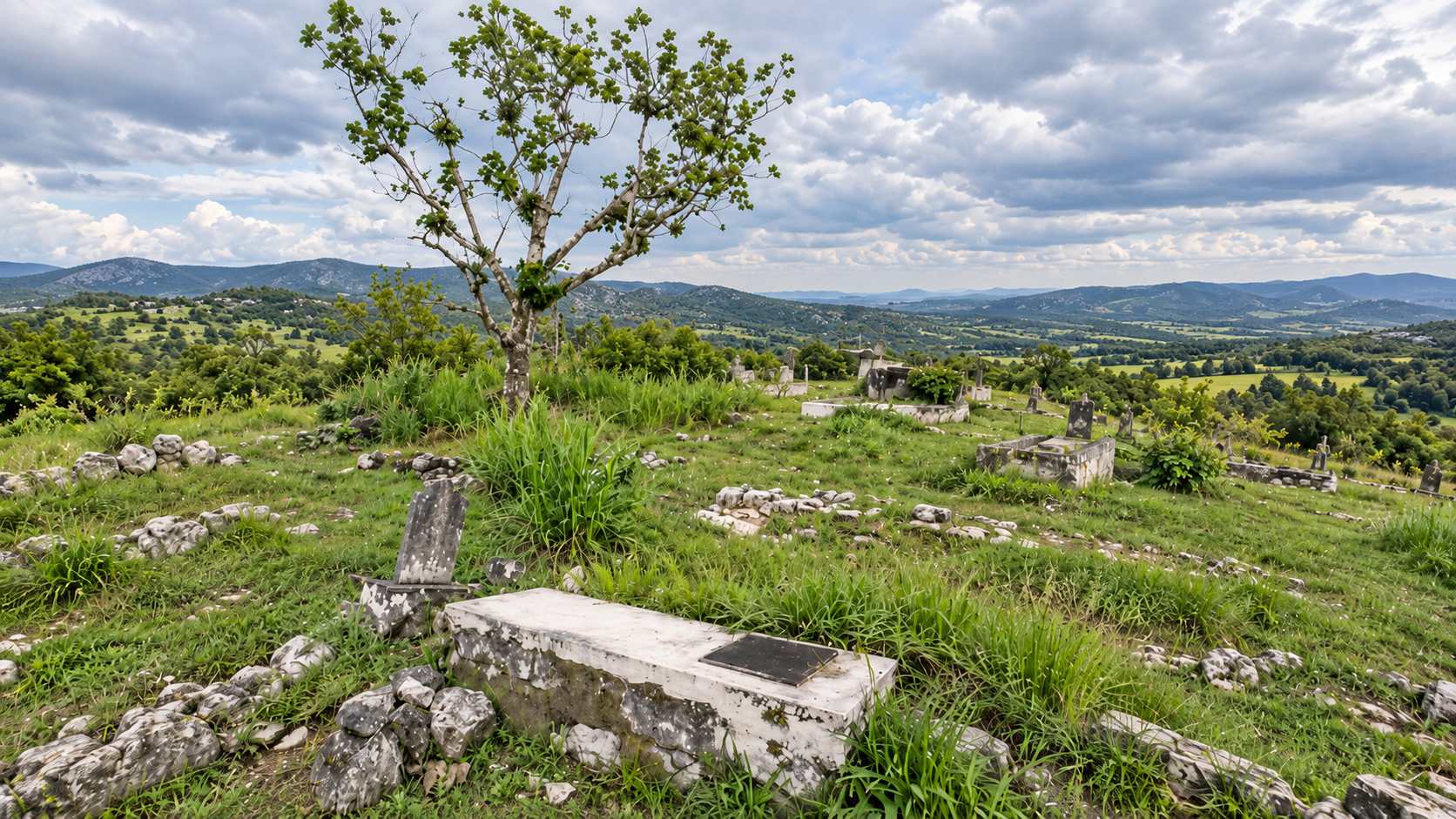
Records from the Anglican Diocese of Jamaica and the Cayman Islands show that in 2015 it had identified 889 parcels across Jamaica.
They included churches, rectories, church halls, cemeteries, school properties, missions and other lands.
But the remarkable figure was not 889.
It was the titles.
At the time, approximately 67 per cent of those properties did not have registered titles.
By 2023 the Diocese reported that its property database had identified 917 properties. Yet only around 33 per cent had registered titles.
That means the problem was not simply that churches owned property which was sitting unused. In many cases, institutions that had accumulated land over generations were still trying to bring their legal records into the modern land-registration system.
That distinction matters.
A church may have occupied a site for 100 years. Everybody in the district may know the land belongs to the church. Services may have been held there for generations.
But community knowledge is not the same thing as having a registered title capable of supporting a modern development transaction.
And without that certainty, the idea of simply telling churches to “build houses on the land” begins to look much less simple.
THIS IS STILL A 2026 PROBLEM
The problem has not disappeared.
In June this year, Minister with responsibility for Land Titling and Settlements Robert Montague told Parliament that the Government had been meeting with churches specifically about untitled church property.
According to Montague, church lawyers had been trained and parcels were being referred through an existing process to help bring untitled church lands into the registered system.
The properties involved were not only sanctuaries. They included church-owned schools, clinics and community playing fields.
That is significant.
More than a decade after one major denomination documented the scale of its own title problem, the Government is still working directly with churches to address it.
The wider Jamaican context helps explain why.
Government figures presented this year indicated that there are roughly 970,000 parcels on the valuation roll, but only about 550,000 registered titles.
Not every untitled property is informally occupied and not every land problem is the same. Jamaica has inherited a complicated mixture of old conveyances, informal subdivisions, family land, unregistered ownership, outdated records and occupation by people whose names do not appear on the registered title.
Churches exist inside that same history.
Some of their property was acquired in the 1800s.
Some was donated.
Some was bought by missionaries.
Some was vested in trustees whose names belong to another generation.
The church-land discussion therefore cannot begin with architects and developers.
It has to begin with the land register.
CHURCH PROPERTY IS ALREADY BEING DEVELOPED
There is another important discovery.
The question is no longer whether Jamaican churches are capable of developing real estate.
Some already have.
The Anglican Diocese has been professionally managing and developing parts of its property portfolio for years.
Its records describe Bailey’s Suites at Kensington Crescent, where 36 studio apartments were developed.
Later Diocesan reporting said the project contributed more than J$60 million within a year of construction.
At University Crescent, another 16 studio apartments were developed and retained as rental property. The Diocese subsequently reported that all were rented and generating more than J$2 million annually.
St Peter’s Court then moved into another phase involving 35 apartments intended to remain in Diocesan ownership.
Other properties under consideration included approximately 35 acres adjoining St Dorothy’s Church in Old Harbour and substantial acreage at Orolands in Westmoreland.
The Orolands discussions are particularly relevant because Diocesan records refer to proposed joint-venture partners and engagement with the National Housing Trust.
This is not a theoretical conversation imported from overseas.
Church land in Jamaica has already been used to create residential property, rental income and development opportunities.
That moves the debate forward.
The issue is not whether churches can participate in development.
They can.
The more interesting question is whether that experience can be extended beyond conventional income-producing property into housing that deliberately serves Jamaicans struggling to enter or remain in the housing market.
TITLE BEFORE CONCRETE
A registered title does more than confirm ownership.
It makes development easier to structure.
Developers, lenders, lawyers, investors and public agencies need to understand precisely what property is being offered, who is legally authorised to deal with it and what interests or restrictions affect it.
Planning applications also require evidence of ownership.
A piece of land may look ideal for 20 homes but become commercially useless if the ownership cannot be regularised, the access road is inadequate, drainage is impossible or somebody
Follow Jamaica Homes on Youtube @jamaicahomes and Instagram @jamaica_homes and on Facebook @jamaicahomesnews Send us a message or email us at onlinefeedback@jamaica-homes.com or editor@jamaica-homes.com

Visit our YouTube Community ↗