


Rastafari (often called Rastafarianism, though many adherents reject the “-ism”) is a religious, cultural and political movement that emerged among the Black poor of Jamaica in the early 1930s. It holds that Emperor Haile Selassie I of Ethiopia, crowned in November 1930, is the returned messiah or a living manifestation of God, whom Rastafari call Jah. Drawing on the Bible, the Pan-African teaching of Marcus Garvey and a long Afro-Caribbean tradition of “Ethiopianism”, the movement teaches that Africans in the Western hemisphere are exiles in Babylon (the oppressive Western system) and that their true home is Zion, identified with Ethiopia and Africa as a whole.
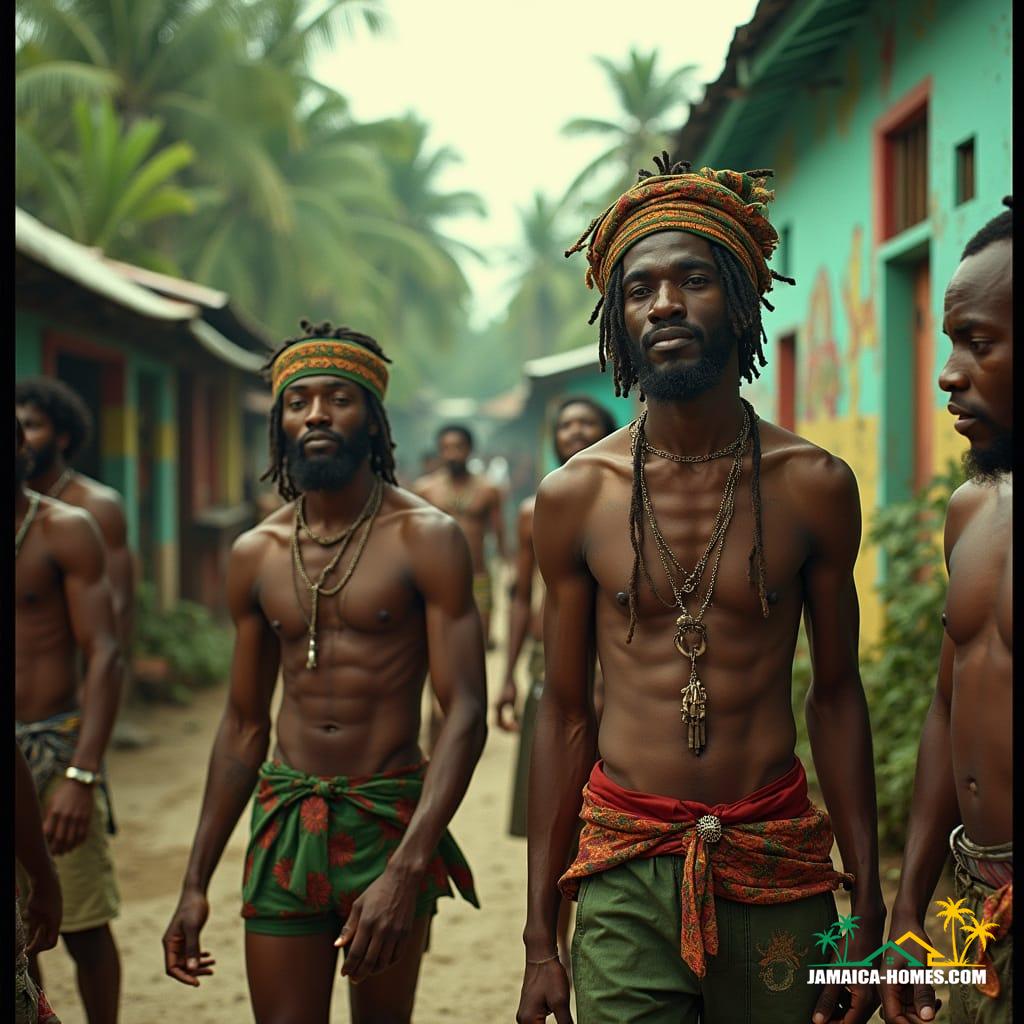
For its first three decades Rastafari was treated by the colonial and early post-independence Jamaican state as a subversive cult. Its founding preacher, Leonard P. Howell, was jailed for sedition, its first commune at Pinnacle in St Catherine was repeatedly raided and finally destroyed, and in 1963 the Coral Gardens crackdown in St James saw Rastafari rounded up, beaten and forcibly shorn. From the late 1960s onward, through the 1966 state visit of Haile Selassie, the rise of reggae and the global fame of Bob Marley, the movement moved from the margins to the centre of Jamaica’s cultural identity. In the 21st century the Jamaican government has apologised for Coral Gardens, legalised sacramental ganja use, and begun returning land to survivors, while Rastafari organisations continue to press for explicit legal recognition.
Rastafari has no single church, creed or leader. It is organised loosely into “houses” or mansions, the best known being the Nyahbinghi Order, the Bobo Ashanti (Ethiopia Africa Black International Congress) and the Twelve Tribes of Israel, alongside many unaffiliated individuals. Its outward signs, including dreadlocks, the red, gold and green colours, ital food and the sacramental use of ganja, have become some of the most widely recognised cultural symbols in the world.
At a glance
| Also known as | Rastafarianism, Ras Tafari, the Rastafari movement, Rasta; adherents are Rastafari, Rastas, Rastafarians or “Idren” |
| Origin | Kingston and St Thomas, Jamaica, from about 1930 to 1933 |
| Name derived from | Ras Tafari (“Head” or “Prince” Tafari), the title and given name of Tafari Makonnen before his coronation as Emperor Haile Selassie I |
| Early preachers | Leonard Percival Howell, Joseph Nathaniel Hibbert, Archibald Dunkley, Robert Hinds |
| Central figure | Haile Selassie I (1892 to 1975), Emperor of Ethiopia 1930 to 1974 |
| Regarded as prophet | Marcus Mosiah Garvey (1887 to 1940), Jamaican National Hero |
| Key texts | The Bible (especially the King James Version); the Kebra Nagast; The Holy Piby (1924); Howell’s The Promised Key (c. 1935); speeches of Haile Selassie I |
| Holy land | Ethiopia and Africa (Zion); Shashamane in Ethiopia is the main repatriation settlement |
| Main mansions | Nyahbinghi Order; Bobo Ashanti (EABIC); Twelve Tribes of Israel; Ethiopian Orthodox-affiliated Rastafari; many independent groups |
| Adherents in Jamaica | 29,026 declared in the 2011 census (about 1.1% of the population); scholars argue the true number is several times higher because many Rastafari avoid official surveys |
| Adherents worldwide | No reliable count; commonly estimated in the hundreds of thousands to about one million, with communities across the Caribbean, North America, Britain, Europe, Africa, the Pacific and Japan |
| Colours | Red, gold (yellow) and green, from the Ethiopian flag; red, black and green from Garvey’s movement |
| Major holy day | Grounation Day, 21 April, marking Haile Selassie’s 1966 arrival in Jamaica |
Contents
- Name and terminology
- Background: Ethiopianism and Garvey
- History
- Timeline
- Beliefs
- Practices and livity
- Mansions and organisations
- Symbols and colours
- Language (Iyaric)
- Women, family and gender
- Influence on Jamaican culture
- Land, settlement and property
- Legal status and recognition
- Rastafari around the world
- Criticism and debate
- Notable figures
Name and terminology
The movement takes its name from Ras Tafari Makonnen, the name by which Haile Selassie was known before his coronation. In Amharic, Ras is a noble rank roughly equivalent to “duke” or “head”, and Tafari means “one who is feared” or “revered”. On 2 November 1930 he was crowned Emperor and took the throne name Haile Selassie, “Power of the Trinity”, along with the imperial titles King of Kings, Lord of Lords, Conquering Lion of the Tribe of Judah and Elect of God. Those titles, echoing the Book of Revelation, were central to the first Jamaican preachers’ conviction that biblical prophecy had been fulfilled.
Outsiders, including governments, newspapers and encyclopaedias, have long used the term Rastafarianism. Many adherents dislike it, arguing that Rastafari is a way of life (livity) rather than a system of doctrine, and that “isms and schisms” belong to Babylon. Most scholars and Rastafari organisations now prefer Rastafari for both the movement and its members. This glossary uses “Rastafari” in the body of the text and keeps “Rastafarianism” in the title because it remains the term most readers search for.
Background: Ethiopianism and Garvey
Ethiopianism
Rastafari did not arise in a vacuum. Since the 18th century, enslaved and free Black Christians across the Atlantic world had read the Bible’s references to “Ethiopia” as references to Africa and its people. Psalm 68:31, which speaks of Ethiopia stretching out her hands to God, became a rallying text for independent Black churches in the United States, the Caribbean and southern Africa. This tradition, known as Ethiopianism, combined Christian faith with pride in African origins and hope for African redemption. In Jamaica it ran alongside the Native Baptist churches, Revivalism and the 1920s prophetic movement of Alexander Bedward in August Town, whose followers anticipated a dramatic reversal of the colonial order.
Ethiopia’s prestige grew enormously after 1896, when Emperor Menelik II defeated an invading Italian army at the Battle of Adwa. Ethiopia became, with Liberia, one of only two African states to remain independent through the European “Scramble for Africa”, and its ancient Christian monarchy, which claimed descent from King Solomon and the Queen of Sheba through the 14th-century chronicle Kebra Nagast (“Glory of the Kings”), seemed to many in the diaspora a living proof of Black civilisation and divine favour.
Marcus Garvey
The most direct influence was Marcus Mosiah Garvey, born in St Ann’s Bay in 1887. Garvey founded the Universal Negro Improvement Association (UNIA) in Kingston in 1914 and built it into a mass movement in the United States in the 1920s, preaching Black pride, economic self-reliance, African nationalism and the return of the African diaspora to Africa. His Black Star Line shipping venture, his red, black and green flag and his slogan of “Africa for the Africans” all fed directly into later Rastafari ideas of repatriation and redemption. Garvey also encouraged his followers to imagine God in their own image.
Rastafari tradition credits Garvey with a prophecy that Black people should look to Africa, where a Black king would be crowned as a sign that deliverance was near. Historians have found no reliable record of Garvey speaking those exact words, and Garvey himself later criticised Haile Selassie sharply, particularly after the Emperor fled Ethiopia during the Italian invasion of 1935 to 1936. Nonetheless, the belief that Garvey foretold the coronation became foundational, and most Rastafari regard him as a prophet, comparable to John the Baptist. Garvey was deported from the United States to Jamaica in 1927, died in London in 1940, and was named Jamaica’s first National Hero in 1964.
A further source was The Holy Piby (1924), a “Black man’s Bible” compiled by the Anguillan preacher Robert Athlyi Rogers for his Afro-Athlican Constructive Gaathly church, which presented Garvey as an apostle and Black people as God’s chosen. Passages from the Piby found their way into Howell’s later writings.
History
The founding preachers (1930 to 1940)
News of Haile Selassie’s coronation, reported in Jamaican newspapers and in the American press that circulated on the island, reached a population hit hard by the Great Depression, falling sugar prices, unemployment and the absence of any political voice under Crown Colony rule. Within about two years, several street preachers working independently in Kingston and St Thomas began to proclaim that the new Emperor was the returned Christ and the true sovereign of Black people, not the British king.
The most important of these was Leonard Percival Howell (1898 to 1981), born in Clarendon, who had travelled widely as a seaman and labourer and had lived in New York during the Garvey years. Returning to Jamaica in 1932, he began preaching in Kingston and then in St Thomas, selling photographs of Haile Selassie as “passports” to Ethiopia and urging listeners to give their allegiance to the Emperor rather than to King George V. Alongside him were Joseph Nathaniel Hibbert, who had lived in Costa Rica and drew on esoteric Masonic traditions; Archibald Dunkley, a former seaman who founded the King of Kings Ministry; and Robert Hinds, Howell’s deputy, who later led his own congregation.
The colonial authorities regarded the preaching as both blasphemous and politically dangerous. In 1934 Howell and Hinds were tried for sedition in Morant Bay; Howell was sentenced to two years in prison. While in or shortly after prison, Howell produced The Promised Key, a short tract published under the pen name G. G. Maragh, which set out his theology of Black divinity and anti-colonial resistance. Italy’s invasion of Ethiopia in October 1935 electrified Black communities worldwide and drew new sympathisers to the movement, as did the founding of the Ethiopian World Federation in New York in 1937, which soon opened branches in Jamaica.
Pinnacle and the commune era (1940 to 1954)
Around 1940, Howell and his Ethiopian Salvation Society acquired a former estate called Pinnacle, in the hills near Sligoville, St Catherine. Sligoville had itself been founded in 1835 as Jamaica’s first free village for emancipated people, giving the site an added symbolic weight. Pinnacle grew into the first Rastafari commune, home at its height to several hundred (some accounts say more than a thousand) people who farmed cash crops and provisions, ran a bakery and lived under Howell’s leadership. It was conceived as an “industrial mission” demonstrating Black self-reliance outside the plantation economy. Cultivation of ganja is also widely reported, and the commune came to be associated with it in the colonial press.
Neighbours’ complaints and official hostility led to a large police raid in July 1941, when dozens of residents were arrested and Howell was again imprisoned. The community survived and re-formed, but in 1954 the police raided Pinnacle once more and effectively destroyed it, dispersing its residents. Many moved into the West Kingston slum areas of Back-o-Wall, Trench Town, Dungle and Ackee Walk, where Rastafari ideas spread rapidly among the urban poor. Howell’s own later years were troubled: he was committed for a time to Bellevue psychiatric hospital in Kingston and lived largely out of public view until his death in February 1981. Many Rastafari today honour him as “the First Rasta” or “Gong Guru”.
The late 1940s and early 1950s also saw the rise of a younger, more militant current, often associated with a group called the Youth Black Faith. These “Dreadful” or “Dreadlocks” brethren adopted uncombed, matted hair as a sign of separation from Babylon and as a fulfilment of the Nazarite vow in Numbers 6:5, embraced ganja as a sacrament, and rejected the Revivalist practices and partial accommodation of some older preachers. Their style became the template for what the world now recognises as Rastafari.
Confrontation and study (1954 to 1966)
In 1958, Prince Emmanuel Charles Edwards convened a large Rastafari gathering at Back-o-Wall, sometimes called the first universal Rastafari convention; at its close some participants attempted to “capture” Kingston symbolically for the Emperor, leading to arrests. The following year, the Rev. Claudius Henry, leader of the African Reform Church, sold thousands of cards that he said would serve as passage for a repatriation voyage to Africa on 5 October 1959. No ships came, and many followers who had sold their belongings were left destitute. In 1960 police found weapons at Henry’s headquarters; he was convicted of treason felony, and a guerrilla band led by his son killed two British soldiers before being captured. Members were later executed. The Henry affair hardened public fear of Rastafari, even though most adherents had no connection with it.
Partly at the request of Rastafari leaders themselves, the University College of the West Indies in 1960 commissioned a study by M. G. Smith, Roy Augier and Rex Nettleford. Their Report on the Rastafari Movement in Kingston, Jamaica found the movement overwhelmingly peaceful, described its roots in poverty and racial exclusion, and recommended that the government take repatriation seriously, improve housing and services in West Kingston, and end police harassment. In response, the government sent an official mission to Africa in 1961, which included Rastafari delegates such as Mortimo Planno, Douglas Mack and Filmore Alvaranga, to explore resettlement in Ethiopia, Nigeria, Ghana, Liberia and Sierra Leone. Jamaica gained independence on 6 August 1962, but no large-scale repatriation followed.
Coral Gardens, 1963
The worst episode of state violence against Rastafari began on Holy Thursday, 11 April 1963, at Coral Gardens near Montego Bay in St James. A dispute linked to land and police harassment ended in an attack on a gas station and a nearby motel by a small group of men, and in the clashes that followed several people were killed, including police officers and civilians. The state’s response over the Easter weekend was a sweeping crackdown on Rastafari across western Jamaica. Hundreds were rounded up, many were beaten, and numbers were forcibly shaved of their locks; survivors also described torture and killings. Rastafari remember the event as “Bad Friday”. Human rights groups have called it the gravest abuse of human rights in independent Jamaica. A 2015 report by the Public Defender documented the atrocities and recommended reparations, leading to the government’s formal apology in 2017 (see Legal status).
The Emperor in Jamaica, 1966
On 21 April 1966, Haile Selassie arrived at Palisadoes Airport, Kingston, for a three-day state visit at the invitation of the Jamaican government. A crowd widely estimated at around 100,000 people, many of them Rastafari who had travelled from across the island, surged onto the tarmac with drums, flags and chalices. The Emperor reportedly remained in the aircraft for some time until the Rastafari elder Mortimo Planno was asked to calm the crowd. The visit gave Rastafari unprecedented public standing; the Emperor received Rastafari elders and was seen to treat them with courtesy. The anniversary, Grounation Day, is the most important Rastafari holy day after the Emperor’s coronation and birthday. In 2026 Rastafari and the state marked its 60th anniversary.
Many accounts say that, through Planno and others, the Emperor advised Rastafari to seek the liberation of the people of Jamaica before seeking repatriation, a teaching often summarised as “liberation before repatriation”. This encouraged many Rastafari to engage more directly with Jamaican social and political life. In the same year, the government bulldozed much of Back-o-Wall, a major Rastafari stronghold in West Kingston, clearing the way for the Tivoli Gardens housing scheme.
Reggae and global expansion (1966 to 1981)
Rastafari drumming had already shaped Jamaican popular music through the work of Count Ossie and the musicians around his camp in the Wareika Hills, whose Nyahbinghi rhythms featured on early ska recordings. In the late 1960s and 1970s, as ska and rocksteady gave way to reggae, Rastafari themes of exile, redemption, Babylon and Jah became the dominant voice of Jamaican music. The Wailers (Bob Marley, Peter Tosh and Bunny Wailer), Burning Spear, Culture, the Abyssinians, Big Youth, Third World, Black Uhuru, Israel Vibration and many others carried Rastafari to international audiences. Marley’s signing with Island Records in 1972 and albums such as Catch a Fire, Natty Dread, Exodus and Survival made him the world’s best-known Rastafari.
Politics also took notice. The Twelve Tribes of Israel was founded in 1968 by Vernon Carrington, known as Prophet Gad, attracting many middle-class Jamaicans and musicians. In 1968 the government’s banning of Guyanese historian Walter Rodney, who had held “groundings” with Rastafari in Kingston, sparked riots. In the 1972 general election, Michael Manley of the People’s National Party campaigned with a walking stick he called the “Rod of Correction”, said to have been a gift from Haile Selassie, and used Rastafari and reggae imagery to court young voters. In 1970 the Ethiopian Orthodox Church established a branch in Jamaica under Archbishop Abuna Yesehaq, and many Rastafari were baptised into it.
On 12 September 1974 Haile Selassie was deposed by a Marxist military junta, the Derg, and on 27 August 1975 the Ethiopian government announced his death. Many Rastafari rejected the report as Babylonian propaganda, and some still hold that he is alive or that a divine being cannot die; others came to understand his presence in spiritual terms. Marley’s 1975 song “Jah Live” was a direct response. The Emperor’s remains were found and given a formal burial at Holy Trinity Cathedral in Addis Ababa in November 2000.
By the late 1970s, Rastafari communities had taken root among Caribbean migrants in Britain, the United States and Canada, and among Indigenous and Pacific Island peoples in New Zealand, Australia and elsewhere. Marley’s appearance at the One Love Peace Concert in Kingston in April 1978, where he brought the rival party leaders Michael Manley and Edward Seaga onto the stage, and his 1980 performance at Zimbabwe’s independence celebrations, became emblems of the movement’s international reach. Marley was baptised into the Ethiopian Orthodox Church in 1980, received Jamaica’s Order of Merit, and died on 11 May 1981. Leonard Howell had died three months earlier.
Mainstreaming, redress and recognition (1981 to present)
From the 1980s, Rastafari became steadily more accepted in Jamaican life. Dreadlocked Jamaicans entered the professions, academia and, from 2011, Parliament; dancehall artists such as Garnett Silk, Luciano, Sizzla, Capleton, Anthony B and later Chronixx and Protoje revived “conscious” Rastafari themes; and scholars such as Barry Chevannes and Jahlani Niaah built Rastafari studies into a recognised academic field. Discrimination persisted, however, in schools, employment, policing and the security forces.
The 2010s and 2020s brought a series of landmark steps. In 2015 Parliament amended the Dangerous Drugs Act to decriminalise possession of small amounts of ganja and to permit its sacramental use by Rastafari. In 2017 Prime Minister Andrew Holness formally apologised for Coral Gardens and committed to a reparations trust fund and other measures. In 2018 UNESCO inscribed reggae music of Jamaica on its list of the Intangible Cultural Heritage of Humanity, citing Rastafari among its roots. In 2024 the Court of Appeal ruled that a primary school’s exclusion of a child with dreadlocks had breached her constitutional rights. Between 2025 and 2026 the state transferred land in Albion, St James, and handed over titles to the Rastafari Coral Gardens Benevolent Society. In 2026 a regional debate erupted after St Kitts and Nevis described itself as the first Caribbean country to recognise Rastafari in law, prompting renewed calls in Jamaica for a dedicated Rastafari rights act.
Timeline
| Date | Event |
|---|---|
| 1887 | Marcus Garvey born in St Ann’s Bay, Jamaica (17 August) |
| 1892 | Tafari Makonnen, the future Haile Selassie I, born in Ethiopia (23 July) |
| 1896 | Ethiopia defeats Italy at the Battle of Adwa, securing its independence |
| 1898 | Leonard Percival Howell born in Clarendon, Jamaica (16 June) |
| 1914 | Garvey founds the Universal Negro Improvement Association in Kingston |
| 1916 | Ras Tafari becomes regent and heir to the Ethiopian throne |
| 1920s | Alexander Bedward’s revival movement in August Town; Garveyism at its height in the United States |
| 1924 | The Holy Piby published by Robert Athlyi Rogers |
| 1927 | Garvey deported from the United States to Jamaica |
| 1930 | Ras Tafari crowned Emperor Haile Selassie I in Addis Ababa (2 November) |
| 1932 to 1933 | Howell, Hibbert, Dunkley and Hinds begin preaching the divinity of Haile Selassie in Kingston and St Thomas |
| 1934 | Howell and Hinds tried for sedition; Howell jailed for two years |
| c. 1935 | Howell’s The Promised Key circulates |
| 1935 to 1936 | Italy invades Ethiopia; Haile Selassie goes into exile in Bath, England |
| 1937 | Ethiopian World Federation founded in New York; Jamaican branches follow |
| 1938 | Labour rebellion across Jamaica, leading to trade unions, the PNP and the JLP |
| 1940 | Howell establishes the Pinnacle commune near Sligoville, St Catherine; Garvey dies in London (10 June) |
| 1941 | Haile Selassie restored to his throne; police raid Pinnacle and arrest dozens, Howell jailed again |
| 1944 | Universal adult suffrage introduced in Jamaica |
| Late 1940s | Youth Black Faith and “Dreadlocks” brethren emerge; locks and ganja become defining marks |
| c. 1948 | Haile Selassie grants land at Shashamane, Ethiopia, for diaspora Africans who supported Ethiopia during the war |
| 1954 | Police destroy Pinnacle; residents scatter to West Kingston |
| 1958 | Prince Emmanuel Charles Edwards holds a mass Rastafari convention at Back-o-Wall; the Bobo Ashanti (EABIC) takes shape |
| 1959 | Claudius Henry’s failed “repatriation” date of 5 October |
| 1960 | Henry convicted; armed group led by his son defeated. University College of the West Indies publishes the Smith, Augier and Nettleford report |
| 1961 | Government mission to Africa, including Rastafari delegates |
| 1962 | Jamaica gains independence (6 August) |
| 1963 | Coral Gardens incident and crackdown in St James (“Bad Friday”, 11 to 12 April) |
| 1964 | Garvey’s remains returned to Jamaica; he is named the first National Hero |
| 1966 | Haile Selassie visits Jamaica (21 April), now Grounation Day; Back-o-Wall demolished |
| 1968 | Twelve Tribes of Israel founded by Vernon “Prophet Gad” Carrington; Walter Rodney riots in Kingston |
| 1970 | Ethiopian Orthodox Church established in Jamaica under Abuna Yesehaq |
| 1972 | Michael Manley’s “Rod of Correction” campaign; Bob Marley and the Wailers sign with Island Records |
| 1974 | Haile Selassie deposed by the Derg (12 September) |
| 1975 | Death of Haile Selassie announced (27 August); Marley releases “Jah Live” |
| 1978 | One Love Peace Concert, Kingston (22 April) |
| 1980 | Marley performs at Zimbabwe’s independence; baptised into the Ethiopian Orthodox Church |
| 1981 | Leonard Howell dies (25 February); Bob Marley dies (11 May) after receiving the Order of Merit |
| 1994 | Death of Prince Emmanuel Charles Edwards, founder of the Bobo Ashanti |
| 2000 | Haile Selassie’s remains formally interred at Holy Trinity Cathedral, Addis Ababa |
| 2005 | Death of Vernon Carrington, founder of the Twelve Tribes of Israel |
| 2011 | Census records 29,026 Rastafari in Jamaica; first dreadlocked member elected to Jamaica’s Parliament |
| 2013 to 2016 | Dispute over private development of the Pinnacle lands; a lot is declared a national monument and the government commits to acquiring further lots as a heritage site |
| 2015 | Dangerous Drugs (Amendment) Act permits sacramental ganja use by Rastafari; Public Defender reports on Coral Gardens |
| 2017 | Prime Minister Andrew Holness apologises for Coral Gardens and announces a survivors’ trust fund |
| 2018 | UNESCO inscribes reggae music of Jamaica as Intangible Cultural Heritage of Humanity |
| 2019 | Rastafari Coral Gardens Trust formally established |
| 2020 | Supreme Court upholds a school’s exclusion of a child with dreadlocks (Virgo case) |
| 2021 | Rastafari Coral Gardens Elders Home opens (1 April) |
| 2023 | St Kitts and Nevis passes the Rastafari Rights Recognition Act and Freedom of Conscience (Cannabis) Act |
| 2024 | Court of Appeal rules the Kensington Primary dreadlocks policy breached the child’s constitutional rights |
| 2025 | Crown land at Albion, St James, transferred to the Rastafari Coral Gardens Benevolent Society (August) |
| 2026 | Land titles handed over at the Coral Gardens commemoration (April); regional debate over legal recognition after St Kitts and Nevis’ announcement; 60th anniversary of Grounation Day; Rev. Clinton Chisholm publishes Rastafari Beliefs: A Critical Analysis |
Beliefs
Because Rastafari has no central authority, belief varies between mansions and individuals. The movement prizes personal revelation and “reasoning” over fixed doctrine, and a Rasta is often said to “know” rather than merely “believe”. Nonetheless, the following ideas are widely shared.
Jah and Haile Selassie I
Rastafari call God Jah, a shortened form of the divine name found in Psalm 68:4 of the King James Bible. Most Rastafari hold that Haile Selassie I is Jah incarnate, the returned Christ in his kingly character, or at minimum a divinely chosen figure through whom God was revealed. His imperial titles and claimed Solomonic descent are read as fulfilment of Revelation 5:5 and 19:16. Some Rastafari, particularly those who have joined the Ethiopian Orthodox Church, regard him instead as a holy king and a model of Christian faith while worshipping Jesus Christ as God, which was Haile Selassie’s own position as a devout Orthodox Christian. Many Rastafari also honour Empress Menen Asfaw, his consort, as a divine or royal mother figure.
The divinity within: I and I
A core Rastafari teaching is that God dwells in every person. The expression “I and I” (often written InI) replaces “we”, “us” and sometimes “me”, expressing both the unity of the speaker with God and the unity of all people. It also asserts a dignified, sovereign self against a history in which enslaved Africans were treated as objects. Because God is understood as living and present, many Rastafari reject belief in a heavenly afterlife and stress “everliving” life on earth.
Babylon and Zion
Babylon is the Rastafari name for the corrupt and oppressive world system built on slavery, colonialism, capitalism and Western cultural domination, including its police, politicians, churches and institutions. The term recalls the biblical captivity of the Israelites. Zion, its opposite, is the promised land of freedom and righteousness, identified with Ethiopia in particular and Africa in general. Rastafari often describe their task as “chanting down Babylon” through righteous living, music and truth rather than through violence.
Black people as a chosen people
Early Rastafari theology held that Black Africans are the true descendants of the ancient Israelites, scattered into slavery as punishment and now awaiting redemption. This identification allows Rastafari to read the Old Testament as their own history. Interpretations differ: some mansions have stressed Black superiority, while most contemporary Rastafari emphasise African dignity and redemption alongside a universal message open to people of any race, consistent with Haile Selassie’s own public teaching against racial discrimination.
Repatriation
The return of Africans in the diaspora to Africa is a central hope. For the Bobo Ashanti and many Nyahbinghi elders, physical repatriation, ideally financed as part of reparations for slavery, remains an essential demand. Others understand repatriation primarily as a spiritual or cultural return to African identity, or as something that must follow the liberation of Jamaica itself. The settlement at Shashamane in Ethiopia is the most important practical expression of repatriation.
Scripture
Rastafari read the Bible closely but critically, holding that it was mistranslated and manipulated by European churches to justify slavery, and that its true meaning must be recovered through inspired reading. Favourite books include Genesis, Exodus, Leviticus, Numbers, the Psalms, Isaiah and Revelation. The Ethiopian Kebra Nagast, the Holy Piby, Howell’s Promised Key, Garvey’s writings and the speeches of Haile Selassie, especially his 1963 address to the United Nations later adapted in Bob Marley’s song “War”, also carry great authority.
Practices and livity
Livity is the Rastafari term for a righteous, natural way of living in harmony with Jah, the earth and other people. It shapes how Rastafari eat, dress, speak, wear their hair, earn a living and organise family life.
Dreadlocks
Uncut, uncombed hair allowed to form locks is the most visible sign of Rastafari. It is justified by the Nazarite vow (Numbers 6:5) and by Leviticus 21:5, and is often likened to the mane of the Lion of Judah. Early on, the word “dread” carried the sense of fear and awe the locks inspired in respectable society, a meaning Rastafari turned into a badge of honour. Not every Rastafari wears locks; Twelve Tribes members and some others regard them as a matter of personal conscience. Many Rastafari men also leave their beards untrimmed, and many women and Bobo Ashanti men cover their locks with wraps or turbans.
Ital food
Ital (from “vital”, with the initial letter replaced by the Rastafari “I”) describes food that is natural, pure and life-giving. In practice most Rastafari avoid pork and shellfish, in line with Levitical law; many are vegetarian or vegan; and stricter observers avoid salt, processed food, chemical additives, alcohol and food cooked in metal pots. Ital cooking, built on ground provisions, callaloo, ackee, coconut, peas, fruits and herbs, has had a lasting influence on Jamaican cuisine and on the island’s growing vegan restaurant scene.
Ganja as sacrament
Many, though not all, Rastafari use cannabis, called ganja, the “herb” or the “holy herb”, as a sacrament that clears the mind for meditation and reasoning and brings the user closer to Jah. Rastafari cite biblical verses that speak of herbs given for human use, such as Genesis 1:29, Psalm 104:14 and Revelation 22:2. It is usually smoked in a communal pipe called a chalice or chillum, blessed with a prayer before use, or taken as tea or in food. Rastafari distinguish this ritual use from recreational smoking. The Bobo Ashanti, for example, restrict ganja to worship. Rastafari have been leaders in the campaign for cannabis law reform in Jamaica and across the Caribbean, and medicinal knowledge of other herbs, once confined to rural “bush doctors”, has spread through the movement.
Reasoning and Nyahbinghi gatherings
Rastafari worship is less about buildings than about gathering. A reasoning is an informal, often lengthy, discussion among brethren and sistren, usually accompanied by the chalice, in which scripture, history and current events are debated until a shared understanding, or “overstanding”, emerges. The largest ceremonies are Nyahbinghi or Binghi gatherings, also called groundations or issemblies, which can last days and nights. Participants chant, pray and dance to a three-drum ensemble: the large bass drum, the funde, which keeps a steady heartbeat rhythm, and the higher-pitched repeater or kete, which improvises. Nyahbinghi music, popularised by Count Ossie and the Mystic Revelation of Rastafari, is the root of the reggae “one drop” rhythm.
Holy days
| Date | Observance |
|---|---|
| 7 January | Ethiopian Christmas (Genna) |
| 6 February | Birthday of Bob Marley, widely celebrated though not a formal Nyahbinghi date |
| 21 April | Grounation Day, anniversary of Haile Selassie’s 1966 visit to Jamaica |
| 16 June | Birthday of Leonard P. Howell, observed especially by Pinnacle-aligned groups |
| 23 July | Birthday (“Earthday”) of Haile Selassie I |
| 1 August | Emancipation Day, marking the end of slavery in the British Caribbean in 1834 and 1838 |
| 17 August | Birthday of Marcus Garvey |
| 11 September | Ethiopian New Year (Enkutatash) |
| 2 November | Coronation Day of Haile Selassie I and Empress Menen |
Mansions and organisations
Rastafari groups are known as houses or mansions, a reference to John 14:2, “In my Father’s house are many mansions.” The three most prominent agree on the exalted status of Haile Selassie and the rejection of white, European images of the divine, but differ in leadership, ritual, dress and attitudes towards wider society. Many Rastafari belong to no mansion at all.
Nyahbinghi Order (Theocratic Priesthood)
The oldest and most traditional mansion, from which the others are often said to have emerged, the Nyahbinghi Order has no single leader and is governed by councils of elders. Its name is generally traced to an anti-colonial spirit-possession movement in early 20th-century Uganda and Rwanda associated with a female figure, Nyabinghi, and was adopted in Jamaica in the 1930s after press reports linked the word with resistance to white rule. Members focus devotion on Haile Selassie as the living God, stress repatriation to Ethiopia, and gather at tabernacles for the drumming and chanting ceremonies that bear the order’s name. Its flag places green at the top, gold in the middle and red at the bottom, following the Ethiopian imperial flag.
Bobo Ashanti (Ethiopia Africa Black International Congress)
Founded in the 1950s by Prince Emmanuel Charles Edwards (died 1994), the Bobo Ashanti, also spelled Bobo Shanti, take their name from bobo, “black”, and the Ashanti people of present-day Ghana, from whom many enslaved Jamaicans were descended. They venerate a trinity in which Haile Selassie is King, Prince Emmanuel is Priest (the Black Christ in the order of Melchizedek) and Marcus Garvey is Prophet. Their community, often called Bobo Hill, is based at Nine Miles, Bull Bay, in St Andrew, and functions almost as a self-governing village. Members wear long robes and tightly wrapped turbans, observe a Saturday Sabbath from Friday sundown, follow strict purity laws, especially concerning women during menstruation, avoid salt and oil, and support themselves by making and selling brooms and straw goods. They call for repatriation to Africa and reparations for slavery.
Twelve Tribes of Israel
Founded in Kingston in 1968 by Vernon Carrington (1936 to 2005), known as Prophet Gad, the Twelve Tribes of Israel is the most open and organisationally modern mansion. It accepts members of any race, allows them to worship in any church or at home, regards Jesus Christ as central and Haile Selassie as his representative in kingly character, and encourages daily Bible reading, one chapter a day. Locks are optional. Members are assigned to one of the twelve tribes of Israel, the sons of Jacob, according to their month of birth, each with an associated colour. The order attracted many middle-class Jamaicans and some of reggae’s biggest names, including Bob Marley, Dennis Brown and Freddie McGregor, and has branches in North America, Britain, the Caribbean, Africa and New Zealand.
| Birth month | Tribe | Colour |
|---|---|---|
| January | Naphtali | Green |
| February | Joseph | White |
| March | Benjamin | Black |
| April | Reuben | Silver |
| May | Simeon | Gold |
| June | Levi | Purple |
| July | Judah | Brown |
| August | Issachar | Yellow |
| September | Zebulun | Pink |
| October | Dan | Blue |
| November | Gad | Red |
| December | Asher | Grey |
Other groups
Since 1970 many Rastafari have been baptised into the Ethiopian Orthodox Tewahedo Church, which shares Haile Selassie’s faith but does not accept his divinity, creating a bridge between Rastafari and Orthodox Christianity. The Ethiopian World Federation, founded in 1937, remains an important Pan-African organisation with Rastafari membership. Groups honouring Leonard Howell’s legacy campaign around Pinnacle. Umbrella bodies, including the Rastafari Millennium Council and, more recently, the Rastafari Mansions and Organisations (RMO), represent the movement in dealings with government. The Rastafari Coral Gardens Benevolent Society represents survivors of 1963.
Symbols and colours
- Red, gold and green. Taken from the Ethiopian flag, these colours are the most recognised emblem of Rastafari. Common interpretations are red for the blood of martyrs, gold for the wealth of Africa, and green for its land and vegetation. Many visitors mistakenly assume they are Jamaica’s national colours, which are black, green and gold.
- Red, black and green. Garvey’s Pan-African colours, used by the earliest Rastafari and still used alongside the Ethiopian palette.
- The Lion of Judah. A crowned lion carrying a staff or cross, taken from the Ethiopian imperial standard, representing Haile Selassie as the Conquering Lion of the Tribe of Judah. Locks are sometimes compared to its mane.
- The Star of David. Used by some groups to reflect the claimed Solomonic descent of the Ethiopian monarchy and Rastafari identification with ancient Israel.
- Images of Haile Selassie and Empress Menen. Displayed in homes, tabernacles, shops and vehicles.
- The tam. A knitted cap, often in red, gold and green, worn to cover locks.
Language (Iyaric)
Rastafari speech, called Iyaric, “Dread Talk” or “I-talk”, is a deliberate reshaping of Jamaican Creole and English. Its principle is that words should reflect reality and carry positive vibrations. Syllables that sound negative are replaced (for example, oppress becomes downpress, since oppression pushes people down), and the pronoun I, standing for the divine self, replaces initial sounds in many words. Linguists such as Velma Pollard have documented how this vocabulary spread from Rastafari into everyday Jamaican speech and, through reggae, around the world.
| Term | Meaning |
|---|---|
| Jah | God; Haile Selassie I |
| I and I / InI | We, us, me; the self united with God and with others |
| Babylon | The oppressive Western system; also the police |
| Zion | Ethiopia, Africa, the promised land |
| Livity | The righteous Rastafari way of life |
| Ital | Natural, pure, vital; especially food |
| Irie | Good, peaceful, positive |
| Overstand | To understand fully (replacing “understand”) |
| Downpression | Oppression |
| Idren / Bredren / Sistren | Brethren, fellow Rastafari; brothers; sisters |
| Iyah / Ites | Greeting; the heights, or the colour red |
| Iration | Creation |
| Livicate | To dedicate (replacing “dead” with “live”) |
| Politricks | Politics, seen as deceptive |
| Bald-head | A non-Rastafari, or one who conforms to Babylon |
| Grounation | A large spiritual gathering; also Grounation Day |
| Reasoning | Ritual discussion among Rastafari |
| Chalice | The communal pipe used for sacramental ganja |
| Natty / Dread | A Rastafari with locks; also awe-inspiring |
| Sufferah | The poor and oppressed |
Women, family and gender
Early Rastafari was strongly patriarchal. Men, known as Kingmen, were regarded as heads of household and spiritual leaders, while women, called queens, daughters or empresses, were expected to dress modestly, cover their heads, avoid cosmetics and defer to male authority. Some mansions, notably the Bobo Ashanti, impose seclusion during menstruation based on Levitical law. Since the 1970s, Rastafari women have built their own organisations, published scholarship and taken visible leadership roles in music, education and activism; singers such as Rita Marley, Judy Mowatt and Marcia Griffiths, and later Queen Ifrica, gave women’s voices prominence within roots reggae. Many contemporary Rastafari describe gender relations in terms of complementarity, and debates about equality remain active within the movement. Rastafari generally hold conservative views on family and sexuality rooted in their reading of the Old Testament, although attitudes vary.
Influence on Jamaican culture
Rastafari’s cultural influence on Jamaica far exceeds its numbers. Reggae, the island’s best-known export and a UNESCO-listed heritage, was shaped decisively by Rastafari musicians, rhythms and themes. In the visual arts, painters and sculptors influenced by Rastafari, among them self-taught “intuitive” artists, have produced a major strand of Jamaican art. Rastafari vocabulary has permeated everyday Jamaican speech, and the movement helped give Jamaican Patois a new prestige as a language of authenticity and resistance, alongside the work of Louise Bennett-Coverley. Dreadlocks, once a mark of stigma, are now worn by Jamaicans of every faith and class. Ital cooking has influenced the island’s cuisine, and Rastafari herbal knowledge has fed into scientific and commercial interest in Jamaican medicinal plants. Above all, Rastafari is widely credited with transforming Jamaican attitudes to Africa and to Blackness itself, encouraging pride in African ancestry in a society long shaped by colonial hierarchies of colour.
Rastafari imagery is also heavily used in Jamaica’s tourism marketing and souvenir trade, a commercialisation that many Rastafari criticise as Babylon profiting from a culture it once persecuted. Rastafari-led cultural tourism enterprises, such as community villages and heritage tours, have emerged partly in response.
Land, settlement and property
Land has been at the heart of the Rastafari story, and many of the movement’s defining moments are disputes over where Rastafari could live. Rastafari thought favours living close to the earth, growing one’s own food and achieving economic independence from Babylon, and many Rastafari households combine homes with small farms, workshops and craft production. At the same time, the movement’s history illustrates how insecure land tenure, informal settlement and state clearance have shaped Jamaican communities.
- Pinnacle, Sligoville (St Catherine). Acquired by Howell’s movement around 1940, Pinnacle covered several hundred acres. After its destruction in 1954 the lands passed into other hands, and parts were later subdivided for the St Jago Hills residential development. Protests by Rastafari against construction in 2013 and 2014 led the Jamaica National Heritage Trust to declare one lot a national monument, and in 2016 the government committed to acquiring six lots for a Rastafari heritage site. Progress has been slow, and Rastafari groups continue to campaign for the site’s protection. See also the Jamaica Homes guide Why Did Pinnacle, the Birthplace of Rastafarianism, Collapse?
- Back-o-Wall and West Kingston. After Pinnacle, Rastafari concentrated in informal settlements in West Kingston. The 1966 demolition of Back-o-Wall to build Tivoli Gardens displaced many, an early example of the link between public housing, urban renewal and political patronage in Kingston.
- Bobo Hill, Bull Bay (St Andrew). The Bobo Ashanti community at Nine Miles, Bull Bay, is one of the best-known Rastafari settlements, operating as a largely self-governing village on a hillside overlooking the sea.
- Wareika Hills and rural camps. From the 1940s, Rastafari camps in the hills east of Kingston, notably Count Ossie’s, served as centres of drumming and reasoning. Rural Nyahbinghi tabernacles are found across the island, including in Clarendon and St Thomas.
- Albion, St James. As part of the Coral Gardens reparations programme, the state transferred Crown land at Albion to the Rastafari Coral Gardens Benevolent Society in August 2025 and handed over titles in April 2026, intended for community and farming use. The ministry has also funded an elders’ home for survivors.
- Shashamane, Ethiopia. Around 1948 Haile Selassie granted land at Shashamane, south of Addis Ababa, for Black people of the diaspora. Jamaican Rastafari began settling there in the 1960s. Much of the land was redistributed after the 1974 revolution, but a community of several hundred people remains. Their legal status was long uncertain; from 2017 Ethiopian authorities began issuing residency identification cards to settlers.
- Places of worship and ganja law. Under the 2015 amendments to the Dangerous Drugs Act, sacramental use of ganja is permitted for Rastafari in places registered for Rastafari worship, which has practical implications for tabernacles, community centres and private land used for ceremonies.
Legal status and recognition
Jamaica
Jamaica’s Charter of Fundamental Rights and Freedoms (2011) guarantees freedom of religion and prohibits discrimination on the basis of belief, protections the government says apply fully to Rastafari. The only legislation that names Rastafari specifically is the 2015 amendment to the Dangerous Drugs Act, which decriminalised possession of up to two ounces of ganja and permitted its sacramental use by Rastafari. Several Rastafari organisations have been incorporated through Parliament.
The state has also taken steps towards redress. Following the Public Defender’s 2015 report on Coral Gardens, Prime Minister Andrew Holness issued a formal apology in 2017 and committed to a trust fund for survivors. The trust was formally established in 2019 under the Administrator General and, according to the Ministry of Culture, Gender, Entertainment and Sport, had received well over J$100 million by 2025, benefiting more than 30 survivors. Survivors initially resisted the trust model, preferring direct compensation, and campaigners criticised delays. The Coral Gardens Elders Home opened in 2021, and land at Albion followed in 2025 and 2026.
Discrimination over dreadlocks has been tested in the courts. In 2020 the Supreme Court upheld Kensington Primary School’s refusal to admit a five-year-old girl with locks unless her hair was cut, on the grounds that the school had not been told the hairstyle was religious. In July 2024 the Court of Appeal reversed course and declared that the school’s policy had breached the child’s constitutional rights. Rastafari have also reported continued barriers to employment and to service in the Jamaica Defence Force.
In April 2026, after St Kitts and Nevis described itself as the first Caribbean country to recognise Rastafari in law, Culture Minister Olivia Grange responded that Jamaica’s Charter has always protected Rastafari as a religion. The Rastafari Mansions and Organisations countered that general guarantees of religious freedom are not the same as formal recognition of Rastafari as a distinct faith and indigenous cultural group, pointed to continuing ganja prosecutions, and renewed calls for a comprehensive Rastafari Rights and Justice Act and for explicit constitutional recognition. The minister later said the government remained open to discussion.
Elsewhere in the Caribbean
St Kitts and Nevis passed the Rastafari Rights Recognition Act, 2023, providing for the registration of Rastafari groups and places of assembly, alongside the Freedom of Conscience (Cannabis) Act, 2023; the government publicised the measures in 2026 as the first legal recognition of Rastafari in the region. Antigua and Barbuda’s cannabis legislation includes sacramental protections for Rastafari. Rastafari communities across the Eastern Caribbean, Barbados, Trinidad and Tobago and Guyana continue to press for similar measures, particularly on cannabis, hair and access to education.
Rastafari around the world
Migration from Jamaica and the global reach of reggae carried Rastafari far beyond the island. In Britain, Rastafari became a powerful identity for the children of the Windrush generation facing racism in the 1970s and 1980s, influencing British reggae, sound-system culture and Black British politics. In the United States and Canada, communities formed in New York, Miami, Toronto and other cities with large Caribbean populations. In Africa, Rastafari groups exist in Ethiopia, Ghana, South Africa, Zimbabwe, Malawi, Kenya and elsewhere, sometimes interacting uneasily with local religious traditions. Rastafari has been embraced by Māori and Pacific Islanders in New Zealand, by Aboriginal Australians, by young people in Brazil and across Latin America, and by followers in Japan and Europe. Because no global body keeps records, estimates of the worldwide number of Rastafari vary widely.
Criticism and debate
Rastafari has attracted criticism from several directions, and debates within the movement are lively.
- Theological objections. Jamaican churches have historically rejected the divinity of Haile Selassie as heretical. In 2026 the Rev. Clinton Chisholm published Rastafari Beliefs: A Critical Analysis, a 142-page study, with a foreword by broadcaster Billy Hall, that challenges the movement’s claims to historical authenticity, including Rastafari readings of the Kebra Nagast, the identification of modern Ethiopia with the biblical Ethiopia, the pronunciation of “Jah”, and the racial identity of biblical monarchs and of Haile Selassie. Chisholm nonetheless credits the movement with fostering pride in African ancestry among Jamaicans.
- Haile Selassie’s own faith and record. The Emperor was a lifelong Ethiopian Orthodox Christian who never claimed divinity. Critics also point to the autocratic character of his rule and the famine in Wollo in the early 1970s. Rastafari responses range from reinterpretation of his role to the view that his humility was itself a sign of divinity.
- Garvey’s prophecy. Historians note that the prophecy attributed to Garvey is undocumented and that Garvey criticised Haile Selassie after 1936.
- Gender. Feminist scholars and many Rastafari women have challenged patriarchal teachings and practices, especially purity rules.
- Commercialisation and appropriation. Rastafari elders object to the use of their symbols in tourism, fashion and cannabis marketing, and to the adoption of locks and “Rasta” style without the livity behind them.
- Ganja. Public health advocates raise concerns about cannabis use, particularly among young people, while Rastafari argue that sacramental use is distinct from recreational smoking and that prohibition was a tool of persecution.
Notable figures
| Name | Significance |
|---|---|
| Leonard P. Howell (1898 to 1981) | Leading founding preacher; author of The Promised Key; founder of Pinnacle |
| Joseph Hibbert | Founding preacher; Ethiopian Coptic Faith |
| Archibald Dunkley | Founding preacher; King of Kings Ministry |
| Robert Hinds | Howell’s deputy; leader of an early congregation |
| Mortimo Planno (1929 to 2006) | Elder, 1961 Africa mission delegate, intermediary during the 1966 visit; mentor to Bob Marley |
| Prince Emmanuel Charles Edwards (died 1994) | Founder of the Bobo Ashanti (EABIC) |
| Vernon “Prophet Gad” Carrington (1936 to 2005) | Founder of the Twelve Tribes of Israel |
| Count Ossie (Oswald Williams, 1926 to 1976) | Master drummer; brought Nyahbinghi rhythms into Jamaican popular music |
| Bob Marley (1945 to 1981) | Reggae superstar and the world’s best-known Rastafari |
| Peter Tosh (1944 to 1987) | Founding Wailer; outspoken advocate of ganja legalisation and equal rights |
| Bunny Wailer (1947 to 2021) | Founding Wailer; Order of Jamaica recipient |
| Burning Spear (Winston Rodney) | Roots reggae artist known for songs honouring Garvey |
| Rita Marley, Judy Mowatt, Marcia Griffiths | The I-Threes; leading female voices of Rastafari reggae |
| Mutabaruka | Dub poet, broadcaster and public intellectual |
| Barry Chevannes (1940 to 2010) | Anthropologist; author of Rastafari: Roots and Ideology |
