


Negril, Westmoreland
Negril holds an unusual distinction among Jamaica’s resort towns: it sits on more government-owned land than almost any other comparable area in the country. That abundance, which might have been an asset for planned, sustainable development, has instead become a source of chronic difficulty. Unmanaged, unplanned, and under-enforced, the town’s Crown lands have been progressively occupied by informal settlers drawn by the prospect of work in a tourism economy that generates substantial wealth for others but distributes little of it to those at the margins.
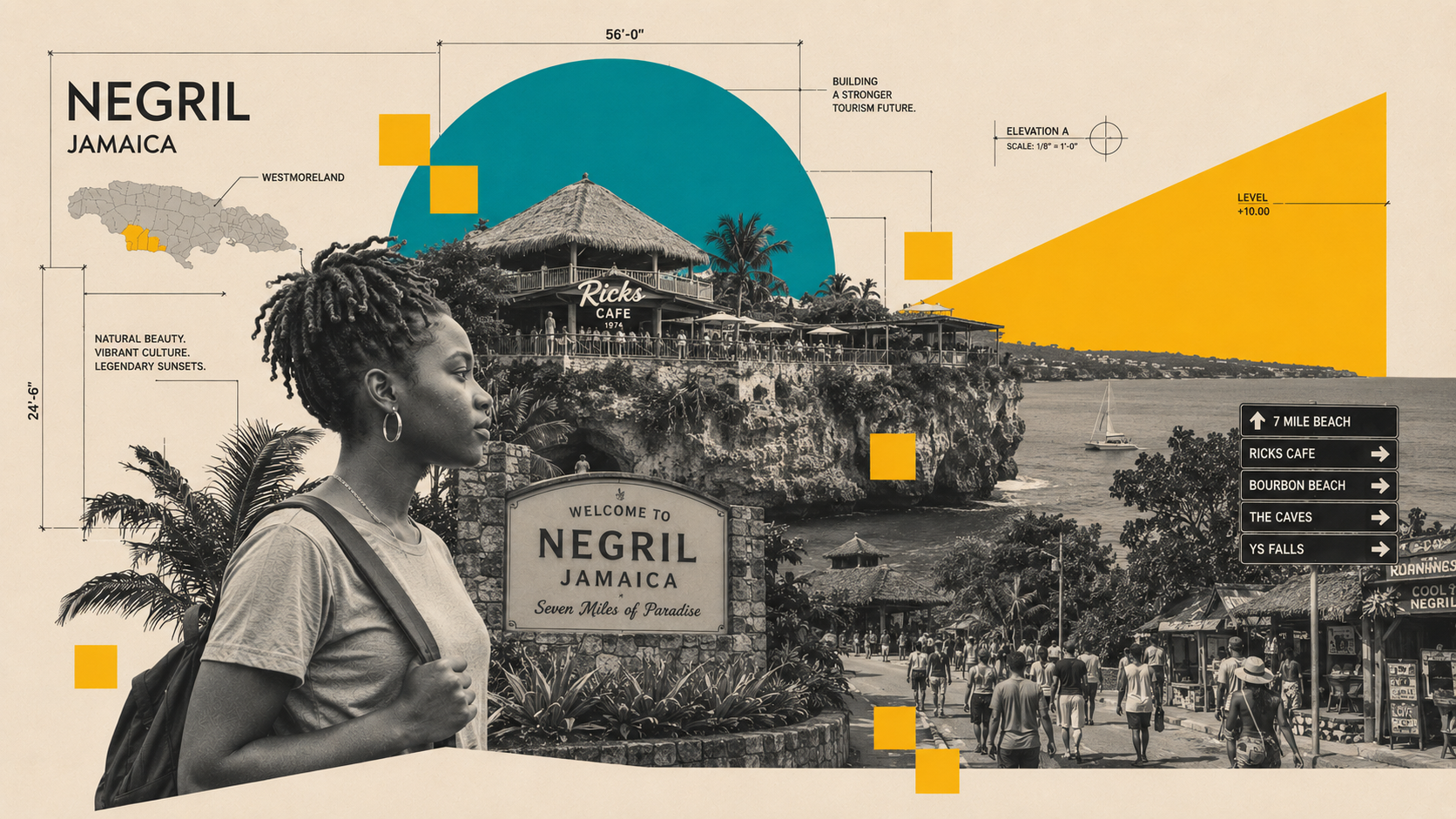
The Scale of Informal Settlement
By 2016, informal settlements in Negril had grown to include thousands of households, spread across areas well beyond the visible resort strip. Settlers had come from Clarendon, St Mary, and other parishes, drawn by employment in the hospitality sector and the absence of any effective barrier to occupation of unmanaged Crown land. The Negril Green Island Planning Authority, nominally responsible for overseeing development, had limited capacity and limited enforcement power. The result was a pattern of incremental occupation that was years in the making and would take years to address.
The impact on land management was direct. Lands identified for a town market had been captured by settlers. Roads into informal areas were often inaccessible to emergency services. Property tax was not collected from households without legal title. Electricity was irregular. None of these conditions are conducive to a functioning real estate market or to the kind of civic infrastructure a growing resort town requires.
The Governance Diagnosis
The president of the Negril Chamber of Commerce put the structural problem clearly: the town could not manage its land problem because it had no single authority capable of making and enforcing decisions. Divided between Westmoreland Parish Council and the Hanover Municipal Corporation, with a planning authority operating across both, Negril lacked the institutional coherence to act decisively. His argument, that the resort needed to control its own destiny through some form of autonomous governance, would echo through subsequent years of discussion about municipal status.
Why This Matters for Property
Informal settlement has measurable effects on surrounding property values. Research across Caribbean and broader developing economy markets consistently shows that unplanned settlements adjacent to formal residential or commercial areas reduce values in those areas, deter investment, and increase the cost of provision for services. In Negril’s case, the concentration of informal housing close to the resort corridor is not a distant problem. It is woven into the fabric of the town.
Resolving it requires more than enforcement. It requires an approach that acknowledges the housing deficit driving the settlements, the absence of affordable formal alternatives, and the need for a resettlement programme that provides genuine shelter rather than displacement. That is a complex, expensive, multi-agency undertaking. The 2016 conversation in Negril made clear that the problem was understood. The years since have tested whether understanding alone is sufficient to generate action.
Unfinished Business
The land governance challenge in Negril is not one that a single government announcement or a single development project can resolve. It is systemic, accumulated over decades, and intertwined with questions of poverty, housing supply, and public administration. What is clear is that so long as it remains unresolved, Negril’s property market will carry risks that are not present in destinations where land tenure, planning, and public services function coherently. The appeal of the resort is real. The underlying land story is more complicated.
Follow Jamaica Homes on Youtube @jamaicahomes and Instagram @jamaica_homes and on Facebook @jamaicahomesnews Send us a message or email us at onlinefeedback@jamaica-homes.com or editor@jamaica-homes.com

Visit our YouTube Community ↗