


Negril, Westmoreland
Negril generated approximately US$1 billion in tourism earnings in 2021 alone. It employs around 12,000 workers directly in the hospitality industry, accounting for nearly a quarter of all direct tourism employment in Jamaica. It has consistently featured among the top-ranked beaches in the Caribbean and the world. And it has been asking, for years, for the government to fix its roads, improve its water supply, and invest the returns from its own tourism economy back into the town. The conversation in 2023 had not changed substantially from the one being had in 2019, or in 2016. The numbers had grown. The frustration had not diminished.
The Revenue Case
Business leaders in Negril have made the argument in straightforward terms. The resort contributes approximately 30 per cent of Jamaica’s total tourism revenue. The Tourism Enhancement Fund, which collects a levy on hotel room revenue specifically to reinvest in the tourism product, has directed significant resources to other parts of the island. The Negril chamber’s position is that a town generating a third of a multi-billion-dollar national industry should see a proportionate share of public investment returned to it: roads resurfaced, water supply improved, safety and security resources increased, and public spaces upgraded.
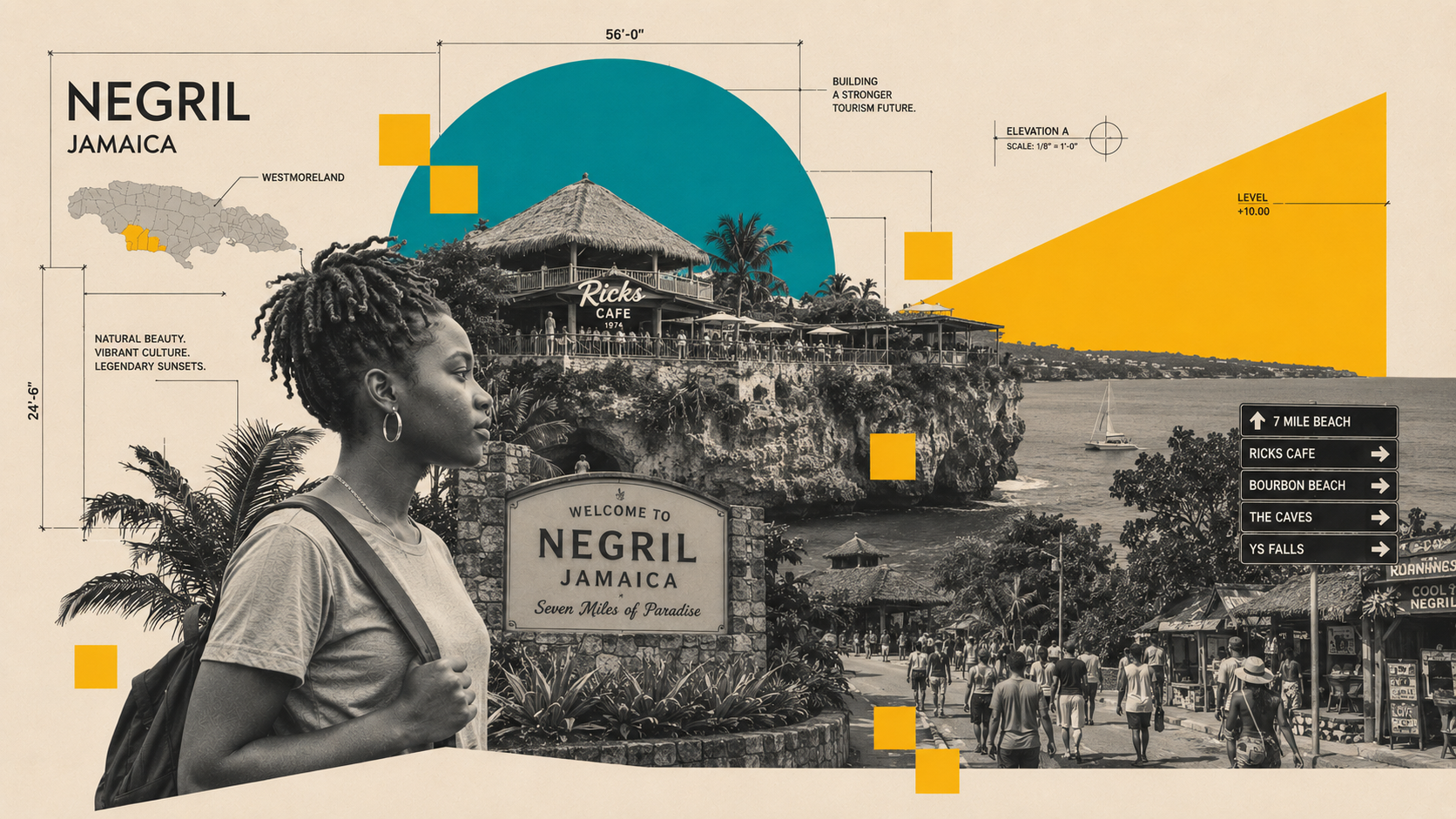
The 2022 unveiling of a $12-million welcome sign was welcomed as a symbolic gesture but characterised by local stakeholders as insufficient against the scale of the resort’s needs. The Norman Manley Boulevard was cited for resurfacing. Road widening and pavement improvements on the West End were identified as priorities. The roundabout at Negril was scheduled for reconstruction. These are not ambitious projects. They are basic infrastructure maintenance for a town generating hundreds of millions of dollars in foreign exchange annually.
The Property Market Cost of Neglect
Infrastructure underinvestment in a resort area has measurable costs for property values and investor confidence. Buyers considering residential or commercial property in Negril factor road conditions, utility reliability, and public safety into their assessments. When those factors are poor, the discount applied to Negril land and property values relative to comparable Caribbean destinations with better infrastructure is real and persistent.
The resort’s natural endowments, a world-class beach, a distinctive character, a globally recognised identity, command a premium. That premium is partially eroded by the friction of roads that damage vehicles, water supply that requires private backup provision, and a public realm that reflects decades of underinvestment. The gap between what Negril could command as a real estate market and what it actually does command is, in significant part, an infrastructure gap.
A Structural Argument
The repeated cycle of announcements and deferred delivery in Negril points to something structural, not incidental. A resort town governed across two parishes, served by multiple agencies with overlapping and sometimes competing mandates, and without the governance autonomy to prioritise and execute its own investment programme, will consistently underperform its potential. The case for infrastructure investment in Negril is also, therefore, the case for municipal status, for a single planning authority, and for an accountable governance framework that can translate the resort’s earnings into the physical environment those earnings deserve.

Visit our YouTube Community ↗