


Mortgage payments are rising, household budgets are shrinking and the dream of owning a home is being pushed further out of reach. Britain’s housing market offers a warning, but Jamaica faces an even more complicated challenge. The real question is no longer simply whether people can afford to buy a property. It is whether they can afford to keep it.
KINGSTON, Jamaica — Five years ago, the conversation around homeownership was relatively straightforward. Find a property, save a deposit, secure a mortgage and begin building a future.
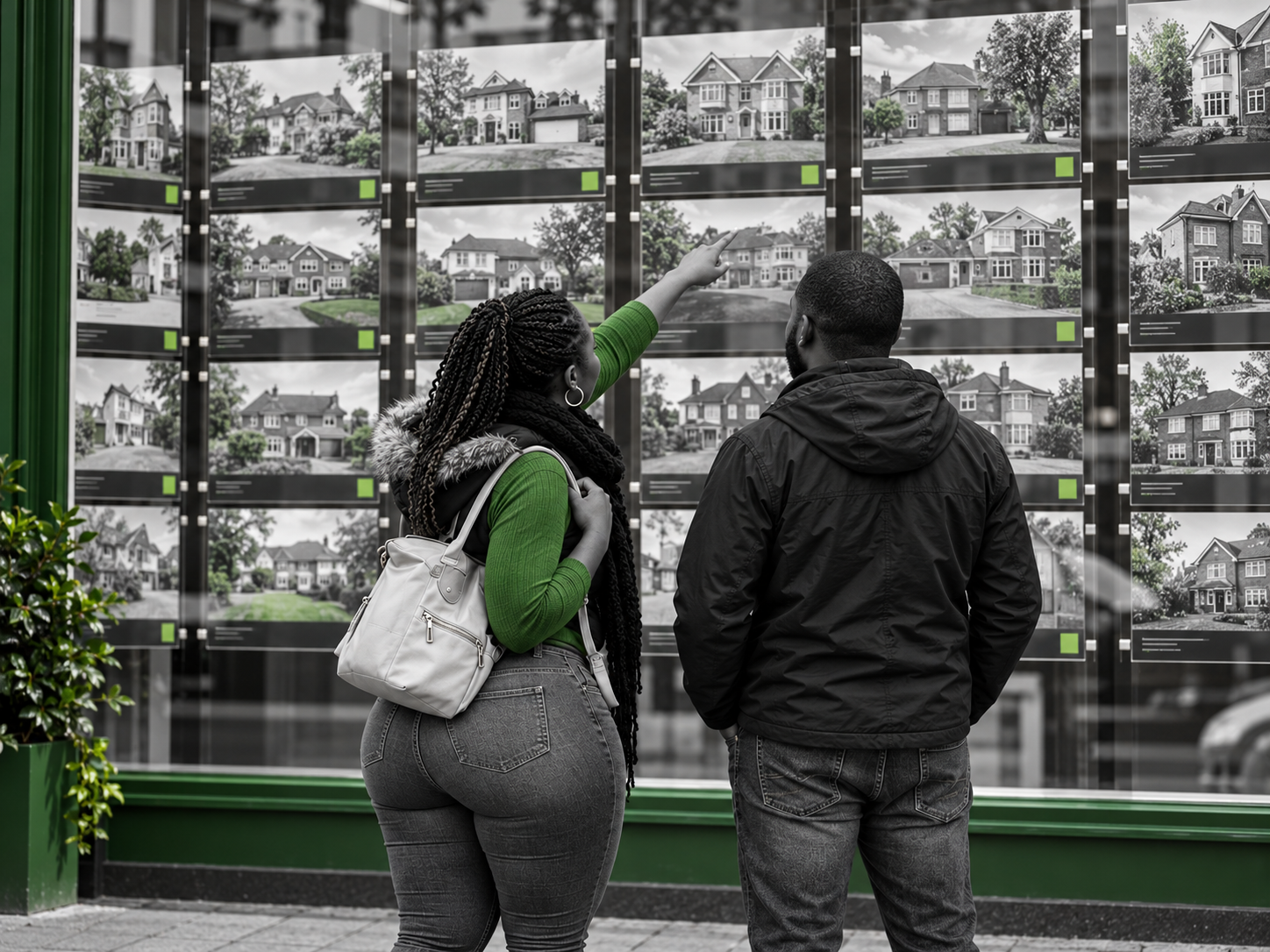
Today, that conversation has changed.
In Britain, homebuyers are discovering that properties which appeared affordable in 2021 can now cost hundreds, sometimes thousands, of pounds more each month to finance. In Jamaica, prospective homeowners face their own uncomfortable arithmetic, with property prices, borrowing costs, construction expenses and household incomes increasingly pulling in different directions.
The countries have different economies, lending systems and housing policies. Yet the underlying problem is remarkably similar.
The price of a house is only part of the cost of owning it. The real burden is what it takes to finance that house over the next 20, 25 or 30 years.
For many families, that distinction is becoming painfully clear.
Britain’s Warning
The scale of Britain’s affordability problem is striking.
An analysis published by This is Money on October 20, 2026, estimates that financing a home with a 20 per cent deposit can cost approximately 64 per cent more each month than purchasing an equivalent property five years earlier.
According to Lloyds Bank figures cited in that analysis, the average UK property increased in value by 11.5 per cent over the five-year period, from £267,587 to £298,441.
That increase alone would make buying more expensive. But the greater damage has come from mortgage interest rates.
In October 2021, some British borrowers with substantial deposits could secure five-year fixed mortgages below 1 per cent. By October 2026, comparable leading deals were approaching or exceeding 5 per cent.
Consider a property that cost £300,000 in 2021.
With a 20 per cent deposit and a mortgage at 1.49 per cent over 25 years, the monthly repayment would have been approximately £959.
Apply the reported 11.5 per cent increase in property values, and the same home would now cost £334,500.
The required mortgage rises from £240,000 to £267,600. At an interest rate of 5.05 per cent over 25 years, monthly repayments increase to approximately £1,572.
That represents an additional £613 every month, or £7,356 annually.
The buyer is not purchasing a larger home, a better neighbourhood or a more luxurious lifestyle.
They are paying considerably more for essentially the same property.
Recent British market indicators reinforce the pressure. Rightmove reported in October that asking prices increased by 1 per cent over the month, below the usual seasonal rise, as higher mortgage rates weighed on affordability.
Jamaica’s Reality
Jamaica’s housing market cannot be measured simply by applying British price movements or interest-rate trends.
Its structure is different.
Britain has a comparatively deep mortgage market, substantial transaction data and a well-established system of fixed-rate mortgage products.
Jamaica has a smaller market, a significant cash-purchasing segment, substantial overseas buyer participation and a mortgage system in which National Housing Trust financing plays an important role.
Nonetheless, the pressure on ordinary buyers is real.
In September 2026, the Bank of Jamaica increased its policy interest rate by half a percentage point to 6 per cent, responding to persistent inflationary pressures, rising commodity prices and tighter global financial conditions.
By September, Jamaica’s annual inflation rate had reached 8.6 per cent, above the central bank’s target range of 4 to 6 per cent.
These figures matter because households do not purchase property in isolation.
They must buy food, pay electricity bills, cover transportation, manage school expenses, purchase insurance and maintain their homes.
When these costs rise faster than disposable income, the amount available for a mortgage becomes smaller.
A bank may be prepared to lend a certain amount based on its affordability assessment. But a family must still decide whether that borrowing is sustainable when confronted with the unpredictable expenses of everyday life.
There is a difference between qualifying for a mortgage and being comfortable paying it.
That difference is where financial vulnerability often begins.
The Real Numbers
Consider a Jamaican family purchasing a home for J$25 million.
Assume the buyer provides a J$5 million deposit and borrows the remaining J$20 million over 25 years.
The effect of different interest rates is substantial.
| Illustrative mortgage rate | Monthly repayment |
|---|---|
| 8% | J$154,363 |
| 9% | J$167,839 |
| 10% | J$181,740 |
| 11% | J$196,023 |
| 12% | J$210,645 |
Illustrative calculations based on a J$20 million capital-and-interest mortgage over 25 years. These are not quotations of current lender rates. They exclude insurance, bank fees and other ownership expenses.
At 8 per cent, the borrower pays approximately J$154,000 monthly. At 12 per cent, that increases to more than J$210,000.
That is an additional J$56,000 every month, or approximately J$675,000 annually, for the same property and the same original loan.
Over 25 years, assuming the respective rates remain constant, the difference in total repayments approaches J$16.9 million.
That is money that could otherwise support children’s education, retirement savings, home improvements or simply provide a cushion against unexpected financial difficulties.
The lesson from Britain is unmistakable. A relatively modest increase in property prices, combined with more expensive borrowing, can fundamentally change who is able to purchase a home.
Jamaican households are exposed to the same mathematical reality, even though their mortgage products, borrowing costs and economic circumstances differ.
The NHT Difference
Jamaica does possess one important advantage over Britain: the National Housing Trust.
The NHT provides qualifying contributors with access to subsidised mortgage financing, allowing some borrowers to obtain rates significantly below those typically available through ordinary commercial lending.
Its published arrangements include interest rates starting at zero per cent for qualifying lower-income contributors and loan limits that vary according to the type of purchase, number of applicants and affordability assessment.
The NHT’s published open-market limits include J$9 million for a single qualifying applicant, with a higher J$12 million limit for qualifying properties costing J$14 million or less. Two contributors may access up to J$17 million, while three qualifying contributors may access up to J$23 million, subject to the relevant conditions.
Changes introduced in July 2026 also sought to improve access for younger contributors and selected public-sector workers. At least 20 per cent of housing solutions in NHT developments are to be reserved for contributors aged 35 and under, while eligible teachers, nurses, firefighters and members of the security and defence forces can benefit from interest-rate reductions linked to their years of service.
These measures are significant.
However, subsidised financing does not automatically make an expensive property affordable.
A household purchasing a J$35 million apartment may still need to secure a substantial amount through a commercial lender after applying its available NHT benefit.
That introduces the possibility of different interest rates, repayment arrangements and lending conditions operating within the same home purchase.
The NHT provides an important bridge into ownership, but the bridge does not necessarily reach every property on the market.
A Divided Market
One of the greatest differences between Jamaica and Britain is the influence of buyers whose financial circumstances are not directly linked to local wages.
Jamaica’s property market serves several distinct groups: first-time local purchasers, established homeowners, investors, returning residents and members of the diaspora.
A Jamaican earning locally and trying to purchase a J$40 million apartment may confront a very different affordability calculation from an overseas buyer using savings accumulated in Britain, Canada or the United States.
Neither buyer is necessarily behaving irrationally. They simply have different financial resources.
This becomes particularly important when new residential developments are priced in US dollars or marketed to international purchasers.
A development may be commercially successful while remaining financially inaccessible to many of the households living and working nearby.
Such activity should not automatically be interpreted as evidence that the wider population can afford comparable property.
Research and commentary on Jamaica’s market in 2026 point towards increasingly selective purchasers, with pricing, location and demonstrable value playing a greater role in buying decisions.
However, Jamaica does not have a comprehensive, publicly accessible national house-price index equivalent to the UK’s official housing data.
It would therefore be misleading to claim that Jamaican property prices have risen by the same percentage as British prices over the past five years, or that mortgage payments have increased nationally by an identical proportion.
Different sections of Jamaica’s market are moving at different speeds.
The premium apartment market in Kingston cannot be treated as interchangeable with ordinary family housing in Clarendon, St Mary or St Elizabeth.
Nor should luxury coastal development be used as a measure of affordable homeownership across the island.
The Hidden Bill
There is another issue that deserves greater attention.
A property purchase does not end when the keys are handed over.
In Britain, buyers must consider council tax, building insurance, maintenance costs and, where applicable, leasehold service charges and ground rent.
In Jamaica, homeowners face property tax, insurance, repairs, utilities, security costs and, in some apartment developments, substantial strata maintenance fees.
The structure may differ, but the obligation remains.
And in Jamaica, the physical demands of maintaining a property can be especially significant.
Roofs, drainage systems, retaining walls, external finishes and electrical installations need to withstand a tropical environment where prolonged rainfall, intense heat, high humidity and severe weather can create significant maintenance burdens.
Following a period of major national rebuilding, these are not abstract risks. They are practical considerations for households already managing considerable pressures.
A house that appears affordable based on its monthly mortgage payment may become much less affordable when insurance premiums, strata fees, maintenance reserves and emergency repairs are included.
For older properties, deferred maintenance can create liabilities that buyers fail to recognise during the excitement of acquiring their first home.
For newer developments, purchasers must understand what is covered by maintenance charges, how reserve funds are managed and whether future increases are likely.
The cheapest mortgage is not necessarily attached to the cheapest home to own.
Britain’s Advantage
Despite its present difficulties, the British market offers purchasers certain advantages.
There is extensive public information about property transactions, mortgage products and housing-market performance.
Buyers can examine historical sold prices, compare mortgage deals and assess local market conditions with considerably more publicly available data.
In England and Northern Ireland, qualifying first-time buyers can also receive Stamp Duty Land Tax relief, paying no SDLT on the first £300,000 of a property costing no more than £500,000. Different property transaction taxes apply in Scotland and Wales.
This does not make British housing inexpensive. It does, however, give purchasers clearer benchmarks when calculating certain acquisition costs.
In Jamaica, transaction expenses and associated legal requirements must also be understood carefully. These can include stamp duty, transfer tax, registration charges, legal fees and mortgage-related costs, with liability depending on the transaction and contractual arrangements.
A buyer should establish at the outset which charges fall to them, rather than assuming that the advertised price represents the total cost of acquiring the property.
There is also a strong case for improving the accessibility and consistency of Jamaican property-market data.
Without reliable information about completed transactions, local price movements and market supply, buyers can struggle to distinguish realistic valuations from ambitious asking prices.
That information would benefit mortgage lenders, developers, homeowners, investors and policymakers alike.
Buyers Push Back
A particularly interesting development in Britain is that expensive mortgages are changing the balance of negotiating power.
Despite sustained affordability pressures, some purchasers are securing meaningful reductions against asking prices.
The October 2026 This is Money analysis cites Knight Frank data indicating that the average property was selling for approximately 90.6 per cent of its original asking price.
That is a substantial difference between what sellers initially request and what buyers ultimately pay.
But asking-price reductions are not evidence of a uniform housing crash. They may also reflect properties being listed above market value in the first place.
Jamaica has its own version of this challenge.
Some vendors continue to expect prices based on stronger market conditions, neighbouring advertisements or the amounts achieved by exceptional properties.
Yet an asking price is an invitation to negotiate, not proof of market value.
A well-presented home with good access, clear title, reliable infrastructure and realistic pricing may still attract serious competition.
An overpriced property with maintenance difficulties, complicated ownership arrangements or weak demand may remain unsold for a considerable period.
The increasingly important distinction is between a property that is advertised and a property that is genuinely saleable.
Sellers who understand that distinction will generally be better positioned than those who assume every year must produce another significant price increase.
The Waiting Game
Should Jamaican buyers delay purchasing in the hope that mortgage rates will fall?
It is a reasonable question, particularly following the Bank of Jamaica’s September decision to increase its policy rate.
But waiting involves uncertainty.
Policy interest rates do not translate automatically or immediately into equivalent changes in mortgage rates. Commercial banks consider funding costs, credit risks, competition, operating expenses and their own lending strategies.
Similarly, lower interest rates do not guarantee falling property prices.
If borrowing becomes cheaper and demand strengthens, sellers may gain confidence and adjust their expectations upwards.
Britain offers a timely illustration of how quickly the outlook can change. As of October 20, financial markets were anticipating a possible Bank of England rate increase at its November meeting, amid renewed inflation concerns. Such expectations remain forecasts rather than confirmed decisions.
For Jamaican buyers, the more sensible approach is not to attempt to predict the perfect moment to enter the market.
It is to understand what they can safely afford under different circumstances.
A borrower considering a variable-rate mortgage should calculate what happens if repayments increase. A purchaser relying on two household incomes should consider the consequences if one income is interrupted.
And anyone considering a large mortgage commitment should retain sufficient savings to manage repairs, emergencies and short-term financial difficulties.
Purchasing at the absolute limit of what a lender is willing to advance leaves little room for life to happen.
Rethinking Ownership
There is an uncomfortable question at the centre of Jamaica’s affordability debate.
Have we become too focused on helping people purchase expensive houses, rather than making it genuinely less expensive to create and own a home?
The answer may lie partly in a different approach to development.
Smaller, efficiently designed houses, incremental construction, shared infrastructure, sensible density, properly planned subdivisions and better use of available residential land can all contribute to reducing the financial burden.
A modest house that can be extended over time may offer greater long-term security than a heavily mortgaged property purchased primarily to satisfy expectations about status.
The same principle applies to construction quality.
A home designed to minimise maintenance, reduce energy consumption, collect and store water, improve natural ventilation and accommodate changing family needs may deliver substantial savings over its lifetime.
These design decisions are not merely architectural preferences. They are economic decisions.
Yet lower construction costs cannot be achieved through design alone. Affordable serviced land, efficient planning approvals, infrastructure investment, access to finance and the availability of skilled labour are all essential.
Jamaica needs a housing conversation that extends beyond the number of units announced or completed.
The more meaningful measure is how many working households can purchase, maintain and eventually own those properties outright without being placed under unreasonable financial strain.
A New Test
For both Britain and Jamaica, the next phase of the housing market may be defined less by how quickly property values rise and more by whether ordinary household incomes can support the cost of ownership.
The two countries are experiencing different versions of the same problem.
British buyers are contending with the sharp contrast between unusually cheap mortgages five years ago and substantially more expensive borrowing today.
Jamaican buyers face elevated household expenses, constrained purchasing power, differing access to subsidised finance and a property market in which desirable homes can be priced well beyond ordinary earnings.
There is no single solution.
Lower interest rates would help some borrowers, but would not resolve land scarcity or inadequate incomes. More construction could expand supply, but would not automatically deliver affordability if new units remain concentrated at the upper end of the market.
Government policy, financial institutions and developers all have roles to play. So do buyers, who must distinguish between what they want and what they can reasonably sustain.
For sellers, realistic pricing and an understanding of financing constraints will become increasingly important.
And for policymakers, affordability should be measured against the entire cost of ownership, not simply the size of a deposit or the availability of a mortgage.
The ultimate measure of a successful housing market is not whether property prices continue rising.
It is whether the next generation can establish a secure home without sacrificing its financial future.
A country can build thousands of houses and still fail to make homeownership affordable. Britain is discovering how quickly the cost of borrowing can change the equation. Jamaica must ensure that its own housing ambitions do not outrun the ability of its people to pay for them.
Follow Jamaica Homes on Youtube @jamaicahomes and Instagram @jamaica_homes and on Facebook @jamaicahomesnews Send us a message or email us at onlinefeedback@jamaica-homes.com or editor@jamaica-homes.com

Visit our YouTube Community ↗