


A plan to protect more than 14 kilometres of the Palisadoes coastline, which carries the main road to Kingston’s airport and Port Royal, has been approved for the new reconstruction authority’s programme, as the government insists the agency will be properly scrutinised.
Cabinet has approved a shoreline protection plan for the Palisadoes Peninsula and Port Royal for inclusion in the work programme of the National Reconstruction and Resilience Authority (NaRRA), bringing one of Kingston’s most exposed pieces of infrastructure under the new agency’s oversight. The plan was outlined at Wednesday’s post-Cabinet press briefing by the minister with responsibility for transport, who said Hurricane Melissa had shown how vulnerable the corridor remains. Had the storm passed closer to Kingston, he said, according to the Gleaner, access to Norman Manley International Airport and Port Royal could have been lost.
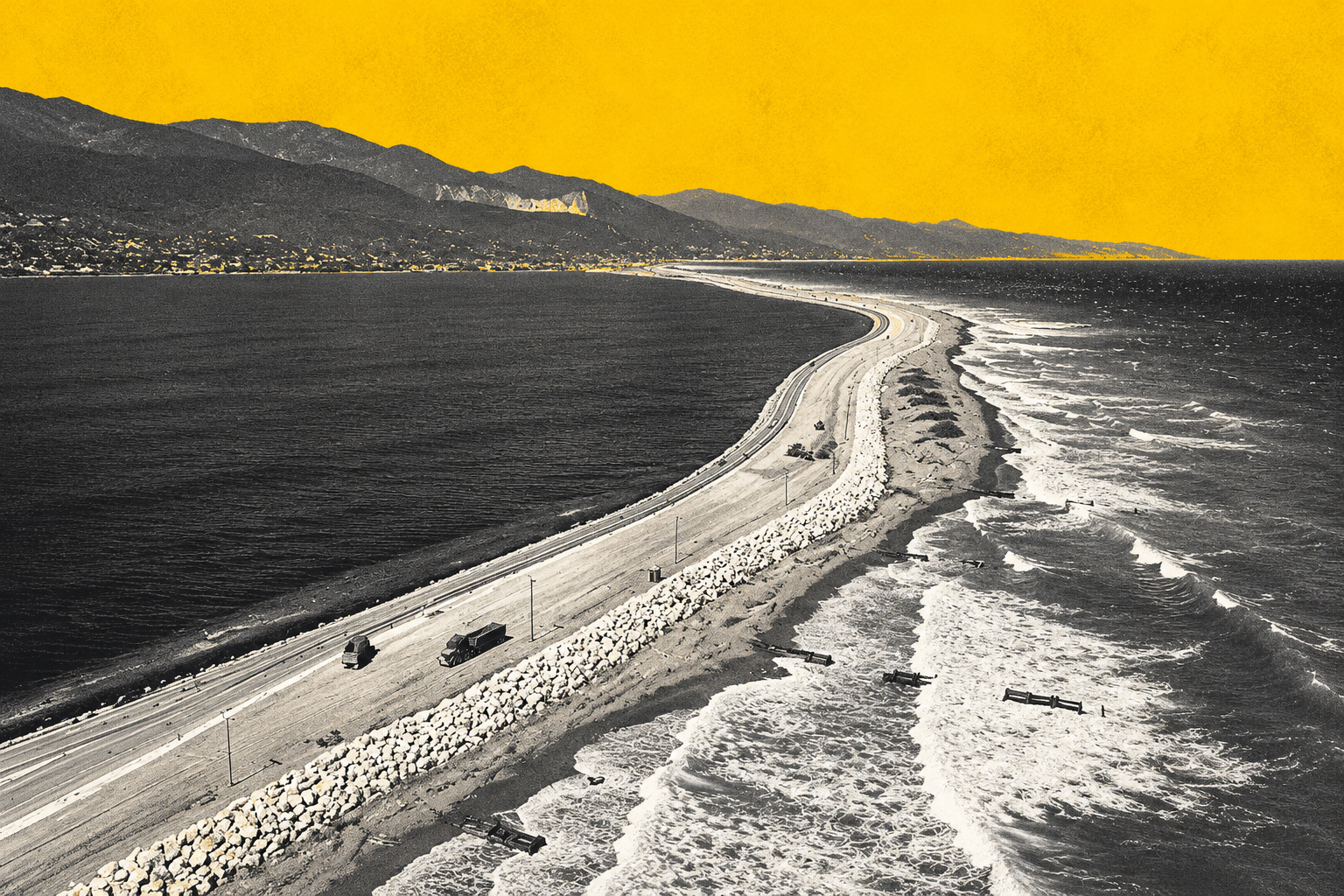
What the plan covers
The works described at the briefing span about 14.2 kilometres of coastline, including some 12.1 kilometres of dunes. They include strengthening existing revetments, the rock barriers that absorb wave energy, rehabilitating dunes and mangroves, replanting vegetation, improving vulnerable sections of the road and installing coastal monitoring systems. Funding is expected to come from the authority’s designated project pool. No start date or completion schedule was given.
The Palisadoes has been reinforced before. Protection of the corridor began in 2007, when boulders were placed along parts of the shoreline. The larger Palisadoes Shoreline Protection Project, carried out by China Harbour Engineering Company, began in September 2010 and was completed in December 2012 within its contracted price of US$65.4 million, the Jamaica Information Service reported in 2013. At the time, the then minister noted that further erosion work might be needed beyond the airport roundabout towards Port Royal, which lay outside that project’s scope. The minister said about 4,500 metres of revetment had been built over the past few years, the Gleaner reported. The new plan is presented as a more complete answer: in the minister’s words, a project that would “once and for all protect the airport”.
NaRRA’s widening remit
The announcement adds to an already substantial load for the authority. NaRRA oversees about J$30 billion of the government’s J$99.7 billion capital budget, according to Radio Jamaica News, and its mandate stretches from rebuilding hurricane-hit communities in western Jamaica to upgrading critical national infrastructure. It is still assembling its staff, and was described on Wednesday as just over two weeks from starting operations. At the same briefing, the Minister of Education, Skills, Youth and Information said recruitment was at an early stage, with seven posts advertised on the Office of the Prime Minister’s website and applications closing on 25 October.
The authority has also drawn sustained criticism over cost and accountability. Last week the government said the authority would initially take significantly less space at its planned downtown Kingston headquarters after public objections to the cost of the lease, and protesters at a civil society demonstration reported by the Jamaica Observer this week questioned its spending. Responding to concerns from the opposition and independent observers, the minister said the authority was subject to “multiple layers of accountability”, pointing to the publication of Cabinet-approved projects, review by the Auditor General, annual performance reports and periodic reports from the Jamaica Reconstruction and Resilience Oversight Committee. The authority’s immediate priority, she said, was publishing its list of approved projects.
Why the strip matters
The Palisadoes is a narrow sand spit, but it carries a disproportionate share of Kingston’s economic weight. It holds the main road to the international airport and the route into Port Royal and its surrounding communities, and it acts as a natural barrier sheltering Kingston Harbour. For the capital’s property market, that matters in ways that are easy to overlook. Investors, hotel operators and businesses weighing Kingston look for dependable access to the airport, and a single storm that cut the road would be felt far beyond the peninsula, in delayed travel, disrupted logistics and a harder conversation about risk.
Port Royal’s case is more local and more fragile. A small community with deep historical significance, its future as a place to live and visit depends on a road that the sea has repeatedly tested. Protecting the strip is, in effect, protecting the value and viability of everything at the far end of it.
There is also a quieter lesson in the plan’s design. Its mix of hard engineering, in the form of revetments, and natural defences, in the form of dunes and mangroves, reflects a broader shift in how coastal resilience is approached. Mangroves and dunes cannot replace rock barriers on a coast this exposed, but they can help absorb storm energy and recover after damage in a way that concrete and stone alone do not.
What comes next
The test now is delivery and disclosure. Once NaRRA publishes its list of Cabinet-approved projects, it may become clearer where the Palisadoes works sit in its priorities, what they will cost and when construction is expected to begin. For Kingston, a secure airport corridor is part of the foundation on which investment, tourism and property values rest. For the authority, a high-profile coastal project offers an early chance to show that speed and scrutiny can work together, at a moment when its critics are watching closely for proof of both.
Follow Jamaica Homes on Youtube @jamaicahomes and Instagram @jamaica_homes and on Facebook @jamaicahomesnews Send us a message or email us at onlinefeedback@jamaica-homes.com or editor@jamaica-homes.com

Visit our YouTube Community ↗