


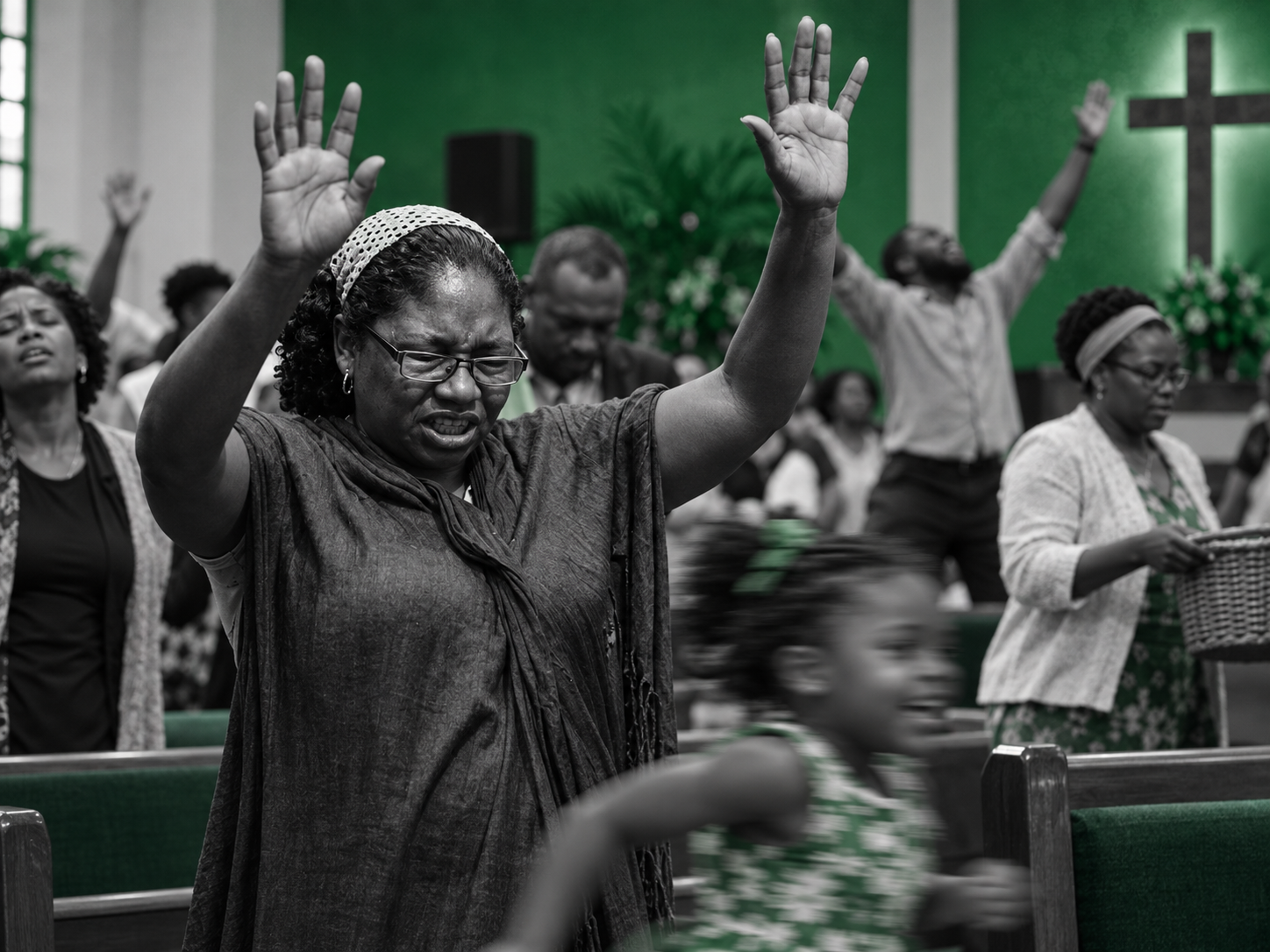
Christianity, money and why decolonising the Jamaican mind must include learning how to build wealth
There is an uncomfortable conversation that Christians in Jamaica should be willing to have. Christianity has, at different points in history, been weaponised. Scripture has been selectively interpreted, and religion has sometimes been used not simply to save souls, but to encourage obedience, discourage questioning and reinforce existing structures of power. That history should not be dismissed.
The colonial experience in Jamaica included periods when Christianity and education were intertwined with a wider “civilising” project aimed at reshaping formerly enslaved people and their descendants. Critics have argued that education often emphasised discipline, religious instruction and conformity rather than the kind of intellectual and economic liberation that might have challenged the established order.
But recognising that history does not require Christianity to be rejected. It requires Christianity to be understood properly. As a Christian and a Seventh-day Adventist, the conclusion reached is very different from the idea that faith itself is the problem. The problem arises when human beings manipulate faith, Scripture and institutions for purposes God never intended. Christianity should liberate the mind, not imprison it, and part of that liberation must surely be economic.
The Bible does not say money is evil
There is a phrase Christians repeat so frequently that its meaning has almost been rewritten: “Money is the root of all evil.” That is not what the Bible says. The teaching in 1 Timothy 6:10 is that the love of money is a root of all kinds of evil. That distinction matters enormously.
There is nothing inherently sinful about earning money. There is nothing un-Christian about becoming wealthy. There is nothing morally questionable about owning land, buying shares, building businesses, developing property or investing in real estate. The spiritual danger is allowing wealth to become one’s god. A person with $5,000 can worship money just as easily as someone with $500 million. Equally, someone can possess substantial wealth while understanding that wealth brings stewardship, responsibility and an obligation to use resources wisely.
The Bible repeatedly discusses stewardship, cultivation, inheritance, enterprise and the responsible management of resources. Christ’s parable of the talents certainly does not celebrate burying what has been entrusted to us. Yet somewhere within parts of Jamaican and Caribbean culture, ambition has occasionally acquired an uncomfortable moral shadow. Someone wants several houses and they may be called greedy. Someone begins investing and they are described as money-minded. Someone speaks openly about becoming wealthy and suddenly materialism is suspected.
Meanwhile, financial struggle can almost become romanticised as evidence of humility. There is nothing holy about unnecessary poverty, and there is nothing dirty about succeeding.
The conversations many families never had
This is where the argument becomes personal. Before working in real estate and property, and before serving as Director of Projects at Cranfield University in Britain, my own upbringing did not revolve around conversations about stocks, investment portfolios, compound returns, property acquisition or building intergenerational wealth. That was simply not the environment.
For many Jamaican and Caribbean families of earlier generations, the immediate objective was survival. Get an education, find a respectable job, work hard, pay the bills, buy a house if possible, help the children and eventually retire. There is dignity in every part of that journey. Those principles created disciplined families and extraordinary professional achievement across the Caribbean and its diaspora. But something was often missing. The conversation rarely progressed from earning money to owning assets.
Becoming a doctor, teacher, nurse, civil servant, engineer or accountant was understandable. Becoming a stockbroker, fund manager, venture capitalist, property investor or entrepreneur managing a portfolio of assets was considerably less likely to appear in the childhood conversation. Not because Jamaicans lacked intelligence or entrepreneurial instinct. Quite the opposite. Jamaicans have demonstrated both everywhere they have gone.
But aspirations are partly shaped by exposure. A child who grows up hearing adults discuss mortgages, pensions, shares, rental yields, business acquisitions and investment funds begins adulthood with an entirely different financial vocabulary from a child whose household conversations are primarily about stretching this month’s salary until the next payday. Neither child is more intelligent. One has simply been handed a different map.
Education must recalibrate the mind
This is where decolonisation becomes practical. It cannot simply mean changing portraits on walls, renaming buildings or arguing endlessly about historical symbols. Those debates have their place, but genuine freedom must eventually enter the bank account, the land registry and the balance sheet.
The original critique of Jamaica’s colonial education system argues that education was too often concerned with discipline and conformity rather than science, critical thought and intellectual emancipation. The modern response should not therefore be less education. It should be more powerful education.
Financial literacy should be normal. Children should understand interest. Teenagers should know what an asset is. Young adults should understand mortgages before signing one. Workers should understand pensions, equities, bonds, insurance and investment risk. Families should understand wills, titles, succession planning and the importance of transferring property legally between generations.
Jamaicans should also learn that property investment is not reserved for wealthy people wearing expensive suits. Sometimes it starts with a small piece of land. Sometimes it starts with a family home. Sometimes it begins with purchasing a modest property, improving it and renting part of it. Sometimes several relatives pool resources rather than independently spending money on depreciating assets. The first investment does not need to look impressive. It simply needs to begin.
Every Jamaican should aspire to own a piece of the Rock
Homeownership will not be economically appropriate for every person at every stage of life. Renting has a legitimate place in a functioning housing market. But Jamaicans should never be made to feel that ownership is somehow beyond their station.
Every Jamaican should at least have the opportunity, knowledge and encouragement to aspire to own a piece of the Rock. That does not mean reckless borrowing, and it does not mean buying property simply because someone on social media says real estate always rises. It means understanding ownership as one of several legitimate routes towards economic security.
Land has particular significance in Jamaica because property is more than an investment account. It can provide shelter, collateral, rental income, agricultural opportunity, business premises and something tangible to leave to another generation. That makes ownership transformative. A salary feeds a household today; an asset can continue speaking after its owner has gone.
Christianity should encourage stewardship, not economic passivity
There is another recalibration needed within the Church. Prosperity theology, at its worst, can reduce Christianity to a financial transaction: give money and God will make you rich. That deserves criticism. But the opposite extreme is equally unhelpful: treating financial ambition as spiritually suspicious.
Christian stewardship should produce disciplined people who save, plan, invest intelligently, avoid unnecessary debt, build businesses, own property, employ others and give generously because they have something from which to give. Wealth without conscience can become destructive, but conscience without economic understanding can leave good people permanently dependent on systems they were capable of transcending.
Faith should never require the abandonment of ambition. It should govern ambition.
From decolonisation to action
Marcus Garvey understood something profound about economic independence. The historical argument around cultural decolonisation notes his emphasis on self-reliance and economic self-development. That principle remains relevant.
Mental liberation cannot stop at recognising what happened historically. Eventually it must ask: What happens next? That is where education must become recalibration, and recalibration must become affirmative action in the most literal sense of the phrase: positive, deliberate action.
Open the investment account. Learn how a mortgage works. Read the contract. Buy the first share. Save towards the deposit. Register the land. Write the will. Start the business. Purchase the property. Teach the children. Discuss money at the dinner table. That is how patterns change.
Christianity does not require Jamaicans to choose between faith and prosperity. The Christian challenge is harder than that: build without worshipping what has been built, earn without allowing money to define personal worth, own without forgetting those who have less, invest without exploiting, and prosper without becoming possessed by prosperity.
Perhaps that is part of the freedom of the mind Jamaica now needs. Not freedom from God, but freedom from the idea that struggling financially is somehow more righteous than succeeding.
There is no shame in building wealth honestly. There is no sin in owning property. There is nothing ungodly about investment. The biblical warning was never against possessing money. It was against allowing money to possess us.
And perhaps the next stage of Jamaica’s liberation is not simply to own the history of the Rock, but for far more Jamaicans to own a piece of the Rock itself.
Follow Jamaica Homes on Youtube @jamaicahomes and Instagram @jamaica_homes and on Facebook @jamaicahomesnews Send us a message or email us at onlinefeedback@jamaica-homes.com or editor@jamaica-homes.com

Visit our YouTube Community ↗