


As Jamaica marks Emancipation Day 2026, the country stands between the sacrifices that built it and a new age of technology, social change and renewed demands for reparatory justice.
Today, Saturday, August 1, Jamaica marks Emancipation Day. The date commemorates the end of a system that treated African people as property, while honouring something far more powerful: the courage, resistance and extraordinary perseverance of those who refused to surrender their humanity.
Behind this national observance lies one of the most complex and consequential stories in the making of Jamaica.
It is a straightforward calendar announcement, but behind it lies one of the most complex stories in the making of Jamaica.
Emancipation was not a ribbon cut neatly across history. It was more like rebuilding a house while its occupants were still trapped inside: a structure altered by law, but with many of its old foundations deliberately left in place.
Freedom was fought for
Britain passed the Slavery Abolition Act in 1833, with its principal provisions taking effect on August 1, 1834. Yet most enslaved Jamaicans did not receive complete freedom that day.
Children under six were declared free, while most older enslaved people were redesignated as “apprentices.” They remained compelled to work for their former enslavers for more than 40 hours each week without wages. The arrangement was presented as preparation for freedom, but it preserved much of the plantation labour system under a more acceptable name.
Full freedom arrived four years later, on August 1, 1838, when apprenticeship finally ended.
That distinction matters. Jamaica’s freedom was not simply presented by a benevolent Parliament. It was forced onto the political agenda by centuries of African resistance: through cultural survival, escape, labour refusal, the establishment of Maroon communities and repeated rebellions against the plantation system.
Tacky’s Revolt began in St Mary in 1760 and spread into other areas. Decades later, Samuel “Daddy” Sharpe, an enslaved Baptist deacon, helped organise the 1831 Christmas uprising, also known as the Baptist War.
Sharpe reportedly intended a peaceful strike in which enslaved workers would refuse to return to the plantations without freedom and wages. It developed into the largest uprising of enslaved people in the British Caribbean, involving as many as 60,000 Jamaicans.
The colonial response was savage. Hundreds were killed during the conflict or executed afterwards. Sharpe was hanged in Montego Bay on May 23, 1832, but the uprising exposed the mounting human, military and political cost of maintaining slavery. It accelerated the movement towards abolition.
The British Parliament may have passed the legislation, but people such as Sharpe helped create the conditions in which Britain could no longer avoid it.
The bill went to the wrong people
The financial settlement accompanying abolition remains one of history’s cruellest details.
The British government approved £20 million in compensation—not for those who had endured enslavement, but for slave owners claiming the loss of their human “property.” The amount represented approximately 40 per cent of Britain’s annual government expenditure at the time.
More than £6 million went to Jamaican slave owners and people with financial interests in Jamaican estates. The formerly enslaved received no compensation for generations of unpaid labour, violence, family separation or dispossession.
They entered freedom without an organised transfer of land, capital or political power. Plantation owners, meanwhile, retained much of the wealth and property accumulated under slavery.
The argument for reparations therefore does not begin and end with something dreadful that happened a very long time ago. It concerns a state-supported financial settlement whose benefits flowed decisively in one direction and whose consequences did not vanish in 1838.
That history makes Jamaica’s next step particularly significant.
Jamaica takes the unfinished business to the King
On September 6, 2026, a Jamaican delegation is expected to travel to Britain to present a formal petition to King Charles III. The Government wants the King to refer legal questions concerning slavery and reparations to the Judicial Committee of the Privy Council.
This is not merely a visit, nor is Jamaica simply asking the monarch for an immediate cheque. The petition seeks consideration of fundamental questions, including whether the trafficking, commodification and enslavement of Africans were lawful under British law and whether Britain has a continuing legal responsibility to provide redress.
September 6 carries deliberate historical weight. It marks the anniversary of the 1781 departure of the Zong, the slave ship from which more than 130 captive Africans were later thrown overboard so its owners could attempt to recover insurance money.
There is something constitutionally remarkable here. Jamaica, an independent country where the British monarch remains head of state, is petitioning that monarch over injustices committed under British imperial authority.
It brings emancipation, reparations and Jamaica’s unresolved republican discussion into the same room. Becoming a republic would not automatically deliver reparations, but it is difficult to separate questions about historical freedom from questions about present constitutional identity.
The world is beginning to move
Jamaica’s initiative is part of a wider international shift.
In March 2026, the United Nations General Assembly adopted a resolution describing the trafficking and chattel enslavement of Africans as the “gravest crime against humanity,” taking account of its scale, duration, brutality and continuing effects.
The resolution received 123 votes in favour, with all CARICOM member states supporting it. It called for dialogue on reparatory justice, historical education, memorialisation and the return of stolen cultural objects.
Three months later, African and Caribbean representatives meeting in Accra, Ghana, adopted a 19-point global framework for reparatory justice. It includes calls for formal apologies, compensation, debt relief and the return of cultural property, human remains and historical archives.
The movement is therefore progressing from memory to machinery: from speeches and anniversaries towards legal strategies, diplomatic alliances and institutional structures.
Whether those structures will produce meaningful repair remains uncertain. But the question can no longer be casually dismissed as a fringe complaint from the past.
The Jamaican home as an expression of freedom
Following emancipation, access to land became one of the most practical measures of freedom.
Formerly enslaved Jamaicans wanted more than the removal of their legal status as property. They wanted control over their work, families, worship, communities and homes.
The creation of Free Villages—including Sligoville, Sturge Town, Buxton, Clarksonville and others—allowed families to establish communities away from plantation control. Churches, schools, farms and homes emerged together. Owning a small plot was not simply a property transaction; it was a declaration of independence.
That history retains powerful relevance in a country where secure land tenure, affordable housing and access to property remain difficult for many families.
“Emancipation gave Jamaicans ownership of themselves, but it did not give most Jamaicans a meaningful share of the land or wealth their ancestors had created,” says Dean Jones, founder of Jamaica Homes, Realtor Associate and Project Manager. “The next chapter of freedom must include secure homes, documented ownership and genuine economic opportunity – not as gifts, but as foundations on which people can build.”
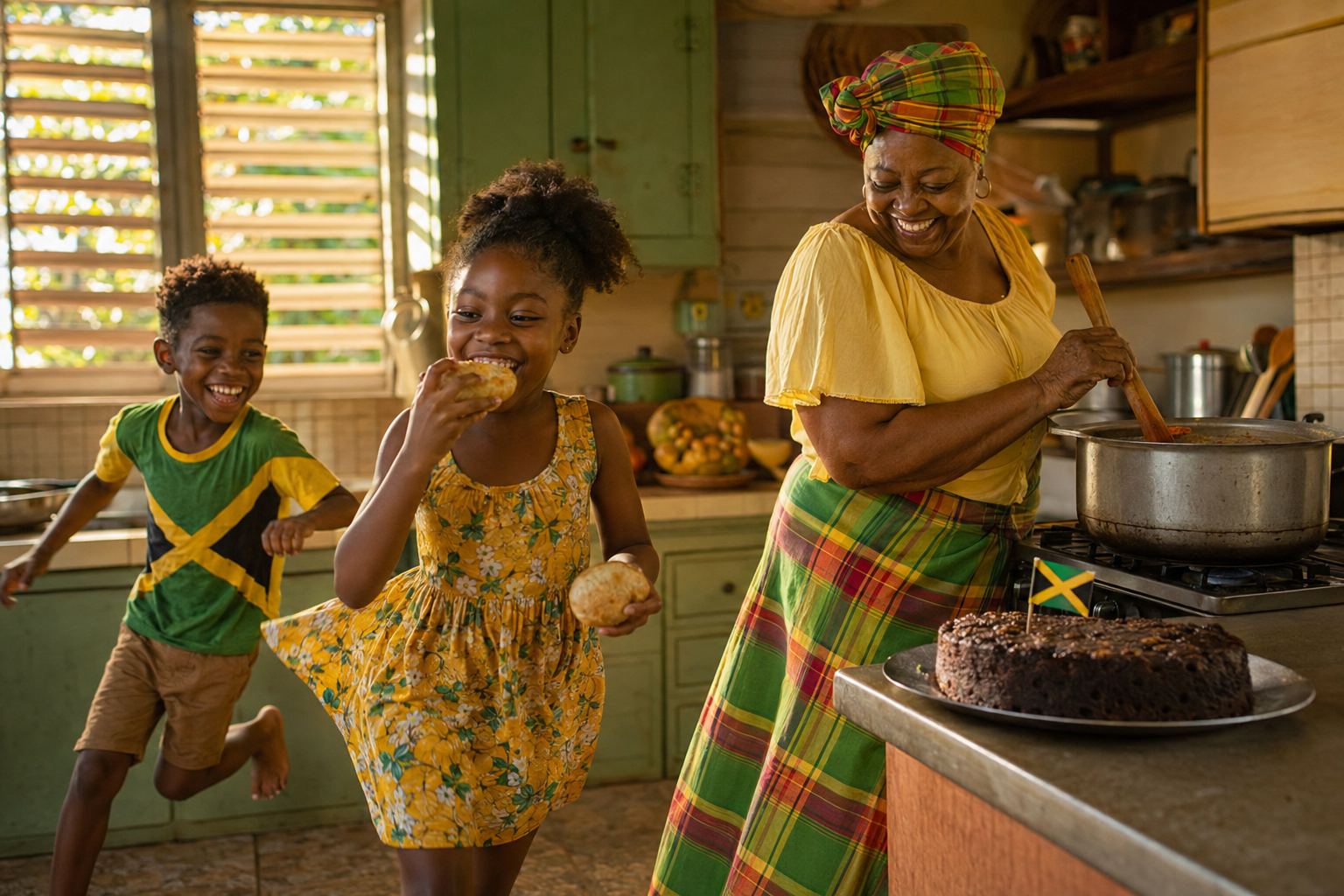
For generations, the Jamaican home was built incrementally: one course of blocks, one room and one payday at a time. It was centred on the grandmother or family matriarch, the grandfather in the yard, the shared meal, the church clothes prepared for Sunday and the pot that somehow stretched to feed whoever arrived.
It was not a flawless institution, and nostalgia should never conceal hardship. But it provided continuity, belonging and identity when very little else was guaranteed.
A new Jamaica is arriving
Jamaica in 2026 is not the Jamaica of the 1960s or 1970s.
Large numbers of Jamaicans left during the 1970s, 1980s, 1990s and early 2000s. Some built permanent lives overseas. Others returned decades later to find highways, apartment developments, smartphones, digital banking, new businesses and changing communities where familiar landmarks once stood.
Nothing stays still—not cities, families or nations.
Jamaica now stands on the threshold of another substantial transformation. Artificial intelligence, automation and digital services are changing how people work, learn, build, communicate and conduct business. Technology is making it possible to operate Jamaican enterprises from almost anywhere, market local properties internationally and connect the diaspora more closely to the island.
But progress carries its own danger: the temptation to treat everything inherited as obsolete.
“There is no future in pretending Jamaica should remain frozen in time, but there is also no wisdom in throwing away everything that brought us this far,” Jones says. “Technology should enlarge Jamaican life, not erase it. Keep the innovation, but keep the identity too—the food, family, community, craftsmanship, faith and responsibility to one another.”
The old foods should not become museum pieces while imported convenience becomes the national diet. Hard food, ackee and saltfish, yam, breadfruit and the family Sunday meal carry agricultural, cultural and familial meaning. There is room for KFC, of course, but the colonel should not be permitted to evict Grandma from her own kitchen.
Modernisation does not require cultural amnesia.
Faith across changing times
Faith has always been woven deeply into Jamaican life. It sustained many enslaved Jamaicans, even as Christianity was sometimes manipulated by those defending the plantation order. Black Jamaicans transformed faith into a language of resistance, dignity and liberation.
Samuel Sharpe was a Baptist deacon. Churches later helped establish Free Villages, schools and independent communities. Across generations, faith accompanied Jamaicans through slavery, emancipation, colonialism, independence, migration, hurricanes, economic hardship and social upheaval.
Not everyone will share the same beliefs, and faith should never be imposed. Yet for many Jamaicans it remains something dependable in an age in which technology can predict possibilities but cannot guarantee the future.
“Faith does not promise that every period will be easy,” Jones says. “It gives people something constant with which to walk through changing periods. As Jamaica enters an uncertain technological age, faith can remain an anchor—not an excuse to resist progress, but a source of courage, discipline and peace while moving through it.”
Holding on to faith should not mean closing the door to science, technology or different ideas. It means carrying a moral compass into places where the map has not yet been drawn.
Building the next stage carefully
Emancipation Day should be celebratory. African music, food, worship, storytelling and communal gathering are expressions of survival. But August 1 must not become merely another entertainment date before the Independence festivities begin.
It should also prompt serious questions.
How much do Jamaica’s children know about the difference between 1834 and 1838? Do they understand apprenticeship, the compensation of slave owners and the importance of the Free Villages? Can they connect emancipation to present questions of land, housing, inequality and constitutional identity?
Most importantly, can Jamaica embrace the future without becoming detached from itself?
Jamaicans at home and throughout the diaspora should invest in the country, including in businesses, communities, agriculture and real estate. But investment should be undertaken wisely, carefully and with qualified professional, legal and financial guidance. Patriotism is no substitute for due diligence, and enthusiasm should never be allowed to purchase a property before the title has been properly examined.
Emancipation was not the completion of Jamaica. It was permission to begin building on different terms.
That work continues, in Parliament, before the international community, within families and on every modest piece of land where someone is still laying blocks towards a home.
The future will bring different technologies, lifestyles and definitions of family. Jamaica should meet those changes confidently. But it should carry forward the faith, cultural memory, collective responsibility and extraordinary perseverance that brought the nation through its hardest chapters.
Freedom is not a finished monument. It is a house each generation must examine, repair and extend—careful not to weaken the foundations while making room for those still waiting to come inside.
Follow Jamaica Homes on Youtube @jamaicahomes and Instagram @jamaica_homes and on Facebook @jamaicahomesnews Send us a message or email us at onlinefeedback@jamaica-homes.com or editor@jamaica-homes.com

2 Comments
Couldn’t have said it any better.
Emancipation Day tends to get treated as a closed chapter — commemorated, then filed away. But “unfinished house” is the right metaphor precisely because reparatory justice and land ownership are still open, live arguments in 2026, not settled history.
Visit our YouTube Community ↗