

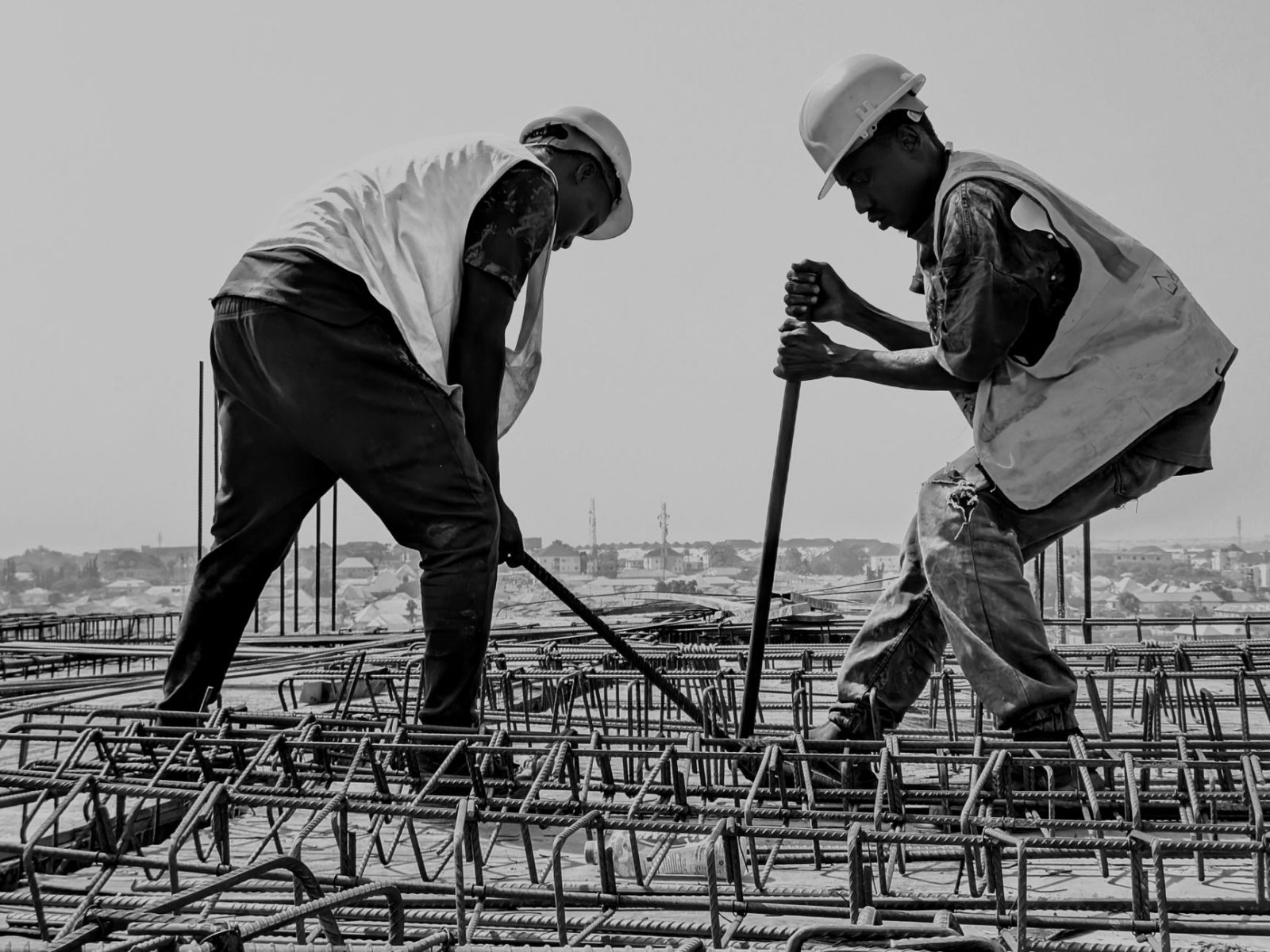
Jamaica’s construction industry is being challenged to abandon slow and increasingly expensive building methods as the Government moves ahead with a $11.62 billion housing development at Greater Bernard Lodge in St Catherine.
The project will deliver 700 homes across two phases of the wider Bernard Lodge development, comprising 280 one bedroom units and 420 two bedroom units. It is being undertaken through a partnership involving two public housing agencies and a private Jamaican contractor.
At the ground breaking ceremony on Friday, the Prime Minister said local builders and developers must invest in modern construction technology and equipment if they are to compete with overseas firms capable of completing large housing projects more quickly and at a lower cost.
The challenge goes beyond speed. Jamaica needs homes that are affordable, attractive, comfortable and able to withstand the pressures of a changing climate. Faster construction will mean little if it simply produces smaller concrete boxes that absorb heat, lack adequate ventilation or deteriorate prematurely.
The Prime Minister described some of the methods still being used locally as outdated and costly. He urged developers to produce modern, sustainable homes rather than what he characterised as “matchboxes” and “heat boxes”.
That criticism speaks to a larger problem within Jamaica’s housing market. The country needs more homes, but it also needs better homes. Families should not have to choose between affordability and buildings designed for the Jamaican climate.
The new development is expected to include paved roads, stormwater drains, perimeter walls, street signs and other supporting infrastructure. Completion is being targeted within 18 months, an ambitious timetable for a project of this scale.
The price of building slowly
Traditional block and steel construction remains deeply embedded in Jamaica. It is familiar to contractors, tradespeople, lenders and buyers, while concrete is widely regarded as a symbol of permanence.
However, conventional construction can become slow and expensive when projects are affected by labour shortages, material price increases, inefficient procurement and limited mechanisation. Delays also increase financing, security and site management costs, which may eventually be reflected in the selling price.
Modern construction does not necessarily mean abandoning concrete. It can include precast components, insulated concrete forms, modular systems, factory manufactured panels, digital project management, improved surveying technology and machinery that reduces repetitive manual work.
Some systems allow parts of a building to be manufactured in a controlled environment before being assembled on site. This can improve consistency, reduce waste and make construction less vulnerable to changing weather conditions.
But technology is not a magic hammer, however attractive the brochure may be. A system developed for another country must still satisfy Jamaica’s building standards, hurricane exposure, heat, humidity, rainfall patterns and maintenance realities.
“Building faster should not mean building more cheaply in the worst sense of the word,” Dean Jones, founder of Jamaica Homes, said. “The real test is whether a home remains safe, comfortable and affordable long after the keys have been handed over.”
Local contractors face a difficult choice
The Prime Minister said the Government continues to receive proposals from overseas contractors that can deliver homes rapidly and at competitive prices, often asking only that land be made available.
This creates a difficult policy balance. Overseas expertise and capital could help Jamaica increase housing supply, but an excessive dependence on foreign contractors may leave local firms, workers and suppliers outside one of the country’s most important development programmes.
Local contractors therefore face a strategic decision. They can continue operating largely as they have done, or invest in the machinery, training, design systems and supply relationships needed to deliver housing at greater scale.
For smaller firms, that investment may be difficult. Modern equipment carries substantial upfront costs, while large housing contracts can require financial capacity, specialist management and the ability to absorb delays in payment.
Joint ventures, equipment leasing, shared manufacturing facilities and partnerships with technical institutions could help close that gap. The objective should not simply be to import a foreign construction system, but to build permanent Jamaican capability around it.
That would allow more of the economic value generated by housing development to remain within the country through employment, training, manufacturing and professional services.
Seventy thousand homes remains the test
The Bernard Lodge project forms part of the Government’s wider commitment to facilitate the construction of 70,000 homes. The Prime Minister acknowledged that the target is ambitious and will require the housing sector to stretch its existing capacity.
The country’s main public housing trust was assigned responsibility for 42,000 of those homes. According to the Government, its completed projects, active contracts, procurement pipeline and planned developments now account for more than 40,000 units.
More than 2,000 homes have reportedly reached the ground breaking stage since the beginning of 2026, while over 8,000 are either under construction or recently completed.
Those figures indicate substantial activity, but the number of houses announced is not the same as the number of families able to purchase them. Affordability ultimately depends on selling prices, household incomes, deposit requirements, mortgage rates and the availability of suitable units where people need to live.
St Catherine has become central to that calculation because of its proximity to Kingston and the concentration of jobs, transport links and services within the wider metropolitan region. Greater Bernard Lodge offers room for development at a scale that is increasingly difficult to achieve within Kingston and St Andrew.
Yet large developments also require careful coordination. Roads, drainage, schools, healthcare, public transport, commercial space, water and wastewater systems must grow alongside the housing. Without that supporting framework, a housing solution can create a commuting and infrastructure problem elsewhere.
Technology must improve the home itself
The strongest case for modern construction is not merely that it can shorten a project programme. It is that better design and more precise manufacturing could produce homes that use less energy, remain cooler and require less maintenance.
Orientation, shading, cross ventilation, roof design, insulation and window placement can materially affect indoor comfort in Jamaica. These features may also reduce dependence on air conditioning and lower household electricity costs.
Stormwater management is equally important. Recent hurricanes and increasingly intense rainfall have demonstrated that resilience cannot be added as an afterthought. Drainage capacity, roof connections, material selection and the relationship between a building and the surrounding land must be considered from the beginning.
Quality control will remain essential, regardless of the construction system chosen. Faster assembly must be supported by proper inspections, certified materials and workers trained to use unfamiliar technology correctly.
Mortgage providers and insurers will also need confidence in newer systems. Buyers may hesitate if they are uncertain about durability, repairs, insurance coverage or resale value. Public education and transparent technical certification will therefore be as important as the machinery itself.
The 700 homes at Greater Bernard Lodge will provide an early measure of whether Jamaica can bring together speed, affordability, design quality and local participation within a single development.
If the project succeeds, its real value will extend beyond the number of keys handed over. It could demonstrate that modern methods are capable of producing homes suited to Jamaican families and the Jamaican climate while strengthening, rather than bypassing, the local construction industry.
The national housing shortage cannot be solved by repeating yesterday’s building practices at a slightly quicker pace. Jamaica must build more intelligently, but it must also ensure that the race for speed does not leave resilience, affordability or good design behind.
Follow Jamaica Homes on Youtube @jamaicahomes and Instagram @jamaica_homes and on Facebook @jamaicahomesnews Send us a message or email us at onlinefeedback@jamaica-homes.com or editor@jamaica-homes.com
Support independent Jamaican journalism.
- 1Our journalists cover housing, politics and community — stories that directly affect Jamaican lives.
- 2We have no billionaire owner and no advertisers calling the shots. Every story is decided by our editors.
- 3It costs less than a cup of coffee a week, and takes less time to subscribe than it took to read this article.
Support Jamaica Homes News today.
- Save 17% compared to monthly
- All articles unlocked
- Weekly newsletter
- Priority support
By subscribing you agree to our Privacy Policy and Terms.

Visit our YouTube Community ↗