


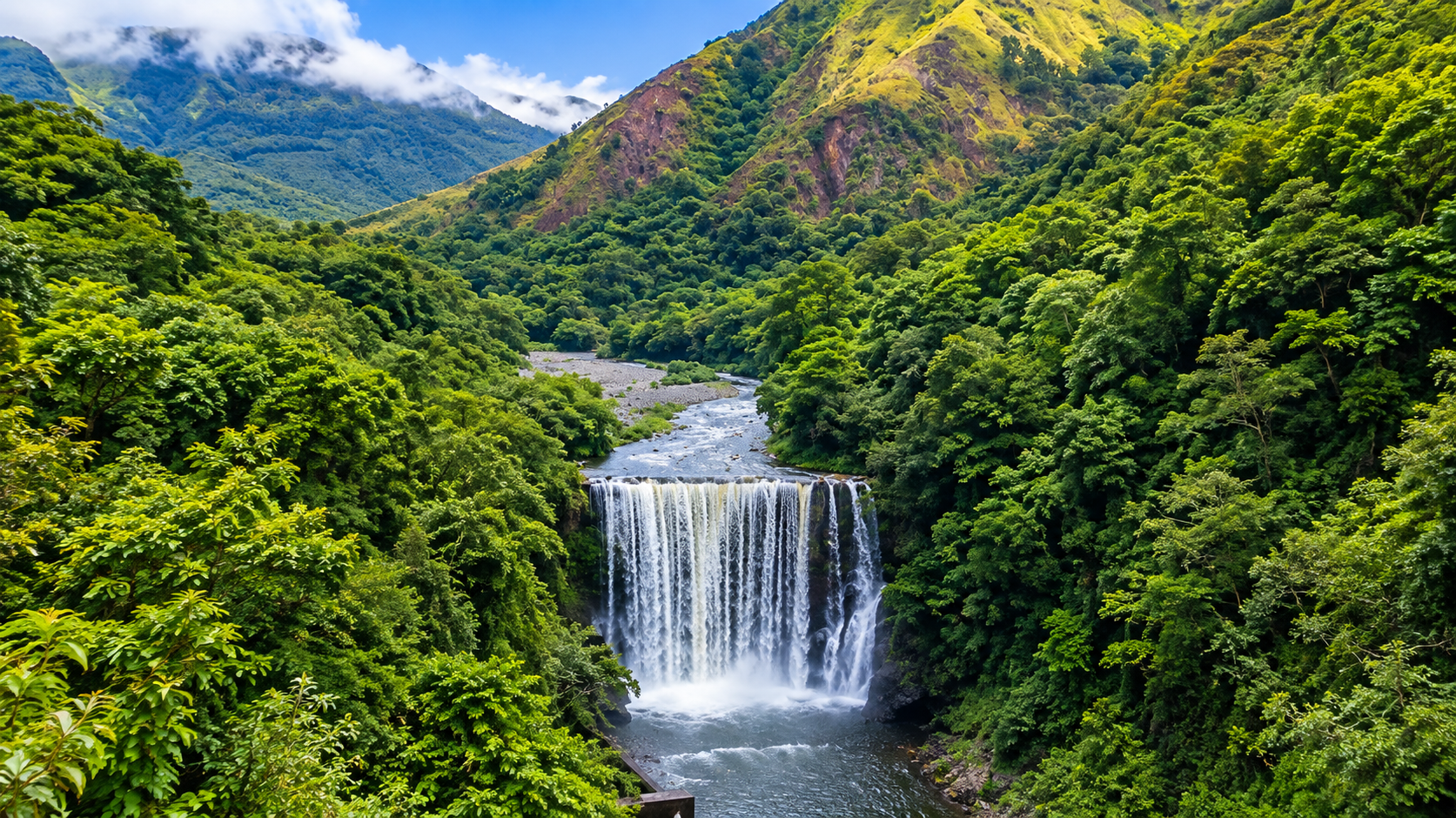
For centuries, St Thomas has occupied a distinctive place in Jamaica’s story. It is the parish of Paul Bogle, the Morant Bay Rebellion, the Blue Mountains, Bath Fountain and the Yallahs Salt Ponds. It is also a place where Taino settlements, Spanish influence, African traditions, plantation history and the struggle for social justice have left their mark on the landscape.
But in 2026, St Thomas is becoming important for another reason: the parish is increasingly at the centre of Jamaica’s next phase of development.
New housing, roads, public facilities, tourism projects and commercial developments are changing the economic landscape of the parish. At the same time, the destruction caused by Hurricane Melissa and the continuing challenge of protecting historic sites are forcing a difficult question: how does St Thomas modernise without losing the history and character that make it unique?
A history of the parish prepared by Dr Jenny Jemmott for the Jamaica National Foundation’s Parish History Project describes St Thomas as one of the most significant parishes in Jamaica’s wider story, combining a rich natural environment with tangible reminders of the island’s social, political and cultural history.
A parish shaped by change
St Thomas is not a newcomer to transformation.
The parish was among Jamaica’s original seven parishes created in 1664. Its boundaries changed repeatedly as Jamaica’s administrative system evolved, including the merger of St David with St Thomas in 1867. That merger helped create the St Thomas we recognise today, stretching from Bull Bay in the west to Morant Point in the east.
The parish covers roughly 300 square miles and includes sections of the Blue Mountains, major rivers such as the Yallahs, Morant and Plantain Garden rivers, as well as significant wetlands.
Its geography has always influenced its economy and settlement patterns.
Long before the modern highway, housing development or urban centres, rivers, ports and fertile valleys determined where communities grew.
The history project records extensive Taino settlement in St Thomas before European colonisation, including archaeological sites at Spanish Wood, Bowden, Belvedere, Orange Park, Rozelle, Hillside and elsewhere. At least 12 known Taino occupation sites and three burial caves have been identified in the parish.
That history remains relevant today because development is increasingly bringing attention to the value — and vulnerability — of the parish’s heritage.
From Morant Bay Rebellion to modern development
Perhaps nowhere is that tension more visible than Morant Bay.
The town has been at the centre of St Thomas for centuries. Its courthouse, fort, churches and public square developed alongside the town’s growth as an important administrative and commercial centre.
The courthouse was also at the heart of the events of 1865, when the Morant Bay Rebellion erupted. Nearly all the major public buildings were burned during the disturbances, including the courthouse.
Today, that history is being incorporated into plans for the parish’s future.
In 2026, the CHASE Fund moved the proposed Morant Bay museum into its design phase. The museum is planned for the site of the former courthouse and is intended to commemorate the 1865 rebellion and its continuing significance in Jamaica’s history.
Meanwhile, the Morant Bay Fort is also scheduled for upgrading, with completion targeted for March 2027. The project includes improvements to the surrounding space and repairs to the historic fort walls and cannons, with the Jamaica National Heritage Trust involved in the preservation work.
The approach is significant. Rather than treating heritage as something separate from economic development, current plans increasingly envisage history itself as part of St Thomas’s tourism product.
A new economic centre is taking shape
The transformation is not limited to tourism.
The Morant Bay Urban Centre is becoming an important part of the parish’s emerging commercial and administrative infrastructure.
In March, seven government entities signed leases to occupy space in the facility, including the Passport, Immigration and Citizenship Agency, Tax Administration Jamaica, the St Thomas Municipal Corporation, the Jamaica Information Service and other public agencies.
By April, the Factories Corporation of Jamaica said the centre was approximately 80 per cent occupied and suggested that population growth and surrounding housing developments would help drive demand for businesses operating there.
That is an important development for a parish that has historically seen many residents travel outside St Thomas for services, employment and commercial activity.
The growth is also being reflected in housing.
In May, the National Housing Trust broke ground on the $9.65-billion Rozelle Housing Development, approximately three kilometres west of Morant Bay. The project is expected to provide 895 housing solutions across roughly 187 acres.
Housing of that scale does more than provide homes. It has implications for roads, schools, businesses, utilities, transportation and the wider demand for services.
Roads are changing the equation
Perhaps the most visible sign of St Thomas’s changing economic importance is transportation infrastructure.
A section of the Southern Coastal Highway in St Thomas was officially named the Paul Bogle Highway in July 2026, linking modern infrastructure with the legacy of one of Jamaica’s most important national figures.
But the parish’s experience with infrastructure also illustrates the challenges Jamaica faces.
Hurricane Melissa damaged the Easington Bridge in October 2025, forcing its closure. A temporary crossing and bypass have since been used, while the bridge is slated for replacement under the government’s accelerated bridge programme.
Road rehabilitation has also been taking place along the Bath-Morant Bay and Easington-Yallahs corridors, with the National Works Agency specifically identifying damage and deterioration following the hurricane.
The lesson is clear: development in St Thomas cannot simply be about building new infrastructure. It must also be about creating infrastructure capable of surviving increasingly severe weather events.
Tourism beyond the traditional north coast
St Thomas may also offer Jamaica an opportunity to broaden its tourism model.
The parish does not have the traditional mass-tourism profile of Montego Bay or Ocho Rios. Its attractions are different: history, community, landscape, culture, wellness and heritage.
Bath is a good example.
The mineral springs have been associated with the community’s development since the seventeenth century, while the historic Bath Botanical Gardens are now undergoing a $29.5-million rehabilitation project intended to support sustainable heritage tourism.
The government has also been pursuing upgrades for the Bath Fountain Hotel, with architectural master-planning work undertaken and further upgrade procurement progressing in 2026.
Meanwhile, the parish’s cultural identity extends far beyond buildings.
The history project documents the deep roots of Kumina in St Thomas, linked to Central African communities that arrived in the post-Emancipation period. More than 1,000 Central African contract workers were landed at Morant Bay and Port Morant during the 1850s, helping shape communities and cultural traditions that remain part of St Thomas today.
The opportunity — and the responsibility
St Thomas is therefore entering an unusual moment.
It is simultaneously an historic parish, a developing residential market, an emerging tourism destination and an increasingly important economic corridor.
The reopening and rehabilitation of facilities such as the Yallahs Market, the redevelopment planned for Rudolph Elder Park in Morant Bay, the growth of the Morant Bay Urban Centre and the expansion of housing all point towards a parish becoming more economically connected.
There is also growing interest in a proposed mixed-use port at Yallahs, with the Port Authority of Jamaica moving into the design-study stage for the proposed facility in August 2026.
Yet the history of St Thomas offers a warning as much as an opportunity.
The parish has experienced earthquakes, hurricanes, flooding, landslides and other disasters throughout its history. The history project records how severe flooding in the Yallahs area in 1815 washed away roads and devastated agricultural lands.
Development that ignores those lessons could create new vulnerabilities.
Development that learns from them could produce something very different: a parish where modern housing, better roads, stronger infrastructure and new economic activity coexist with protected heritage, community identity and the natural environment.
That may ultimately be St Thomas’s greatest opportunity.
The parish does not need to become another Montego Bay or Ocho Rios. Its emerging tourism strategy already recognises that its strength lies in offering something different — a destination rooted in Jamaica’s history and culture.
For St Thomas, the future may therefore be less about leaving its history behind and more about building the future around it.
And that makes the story of St Thomas particularly relevant to Jamaica today: the same communities that helped shape the country’s history are now becoming part of one of its most closely watched areas of economic and infrastructural transformation.
Follow Jamaica Homes on Youtube @jamaicahomes and Instagram @jamaica_homes and on Facebook @jamaicahomesnews Send us a message or email us at onlinefeedback@jamaica-homes.com or editor@jamaica-homes.com

Visit our YouTube Community ↗