

- Damian Marley and Nas debut Distant Relatives at Billboard 200 number five
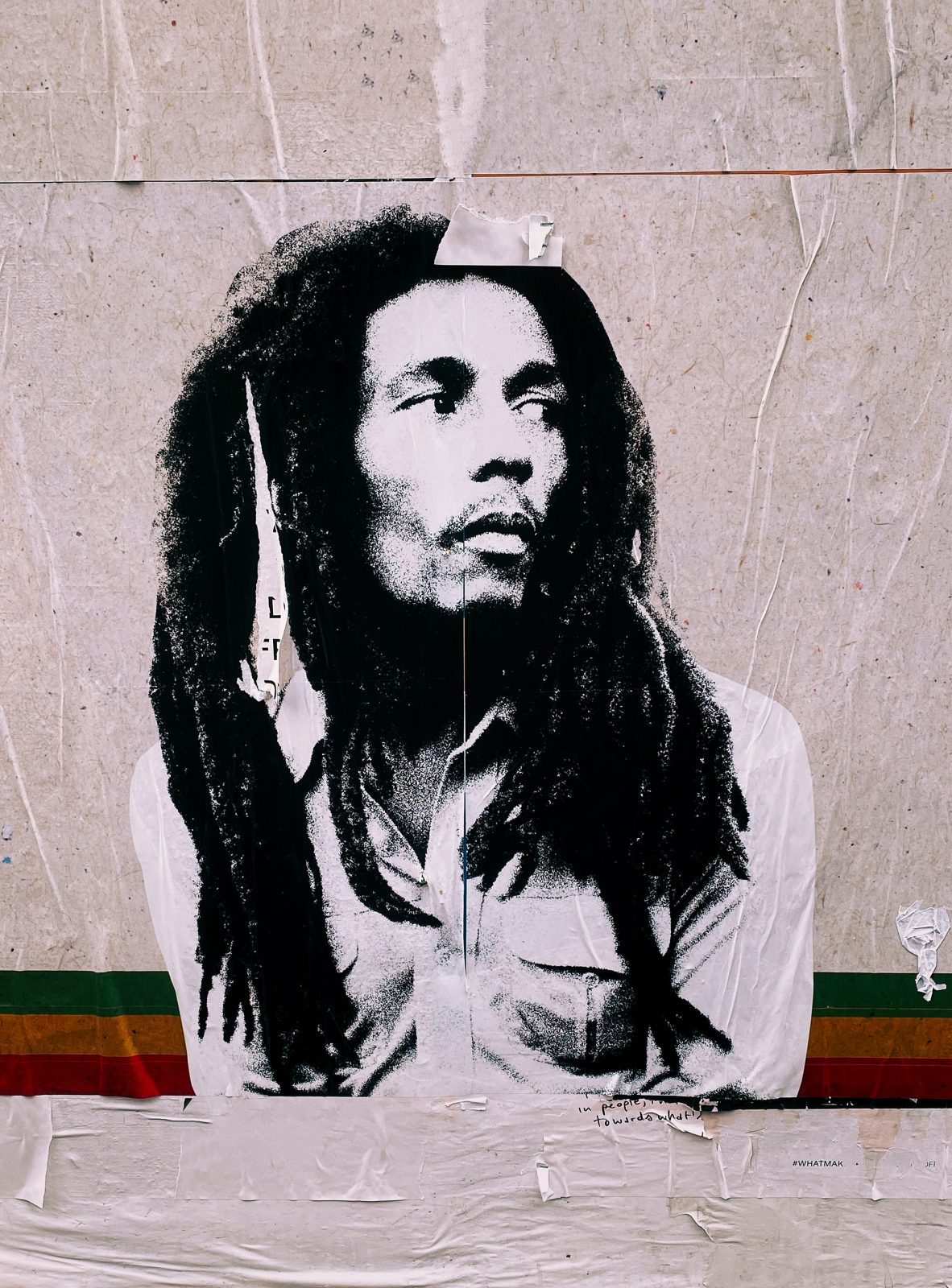
- Bob Marley’s 65th birthday commemorated across four continents in February
- Jamaica signs US $1.27 billion IMF emergency standby credit facility
- Tivoli Gardens security operation leaves approximately 73 civilians dead
- House of Marley eco-conscious brand enters mainstream consumer electronics retail
- Legend cumulative worldwide sales surpass 25 million copies
In 2010, Jamaica faced its fiercest peacetime reckoning — a debt crisis, a state of emergency, and a garrison siege broadcast to the world. Yet through every convulsion, the music endured: a new Marley generation cracked the American charts, a museum on Hope Road welcomed pilgrims from six continents, and a legacy brand built on one man’s convictions continued to shape how the world understood this small, extraordinary island.
The Sixty-Fifth Year: A Birthday Without Borders
On the sixth of February 2010, Bob Marley would have turned sixty-five. He had been dead for nearly twenty-nine years — killed by acral lentiginous melanoma, a cancer that spread from a neglected wound beneath his toenail — and yet the global scale of his birthday commemoration bore little resemblance to the observances one might expect for a man whose life ended in 1981. At the Bob Marley Museum on Hope Road in Kingston’s Cherry Gardens district, the day was marked with ceremony, music, and what had become the particular gravity of a secular pilgrimage. In Rastafarian communities across the Caribbean, the United Kingdom, and Africa, the anniversary was observed with spiritual reverence. In concert halls from New York to Tokyo, tribute shows drew crowds who had not yet been born when “Redemption Song” was recorded.
The sixty-fifth birthday served as a kind of annual calibration: a moment when the world paused to measure how thoroughly one man’s art had saturated global consciousness. For Jamaica, the calibration in February 2010 arrived against a backdrop of unusual severity. The country was in the midst of its most consequential fiscal intervention since independence, and the distance between the island’s global mythology and the pressures bearing down on ordinary Jamaicans had rarely felt so sharp or so morally uncomfortable.
The Weight of Numbers: Jamaica’s Year of Reckoning
In January 2010, the Golding administration launched the Jamaica Debt Exchange — a voluntary domestic debt swap that allowed the government to retire high-yielding bonds and replace them with instruments carrying sharply lower interest rates. The mechanism was elegant in its design and brutal in its consequences for bondholders who had parked savings in government paper at rates that now would not be renewed. As the IMF would summarise in its country assessment, the Jamaica Debt Exchange was a precondition for a US $1.27 billion Standby Arrangement approved in February 2010 — the most significant external credit facility Jamaica had accessed in a generation.
The arithmetic of the arrangement defined the year. Unemployment sat officially above eleven percent, though the informal economy absorbed enormous numbers the statistics could never fully capture. The poverty rate hovered above sixteen percent of the population. Fiscal consolidation targets demanded by the IMF constrained public expenditure, which meant that the arts, tourism infrastructure, and community programming — all channels through which the Marley legacy flowed into daily Jamaican life — were insulated only by their commercial weight rather than by public generosity. The government of Prime Minister Bruce Golding faced the grim arithmetic of structural adjustment with the knowledge that its policy options had narrowed to almost nothing.
What the numbers could not capture was the sustained cultural vitality that the Marley brand injected into the Jamaican economy through channels impervious to bond yields. The estate managed through Fifty-Six Hope Road Music Ltd — the holding entity for the Bob Marley catalogue and brand rights — generated licensing revenues, merchandise royalties, and tourism flows that operated in a register entirely separate from the government’s balance sheet. Universal Music Group, which controlled the Marley catalogue’s distribution rights, continued to press and license recordings across physical and the nascent digital formats proliferating through streaming platforms.
The Marley legacy functioned, in economic terms, as Jamaica’s most reliable form of cultural infrastructure: resilient not because it was protected by policy, but because it was sustained by global desire.
Bob Marley and The Wailers’ Legend: The Best of Bob Marley and the Wailers — released in 1984 and by 2010 carrying cumulative worldwide sales exceeding twenty-five million copies — remained the world’s best-selling reggae album. It was not merely a cultural artefact; it was a revenue-generating instrument whose longevity would have astonished the economists drawing up Jamaica’s fiscal adjustment programme.
Distant Relatives: When the Next Generation Hit the Charts
The most commercially significant Marley-family event of 2010 arrived in May, and it came from the youngest of Bob Marley’s sons. On the eighteenth of that month, Damian “Jr. Gong” Marley — born in 1978 to Bob Marley and Cindy Breakspeare, the Jamaican beauty queen who had won the Miss World title in 1976 — released Distant Relatives, a collaborative album conceived and produced alongside the Queensbridge rapper Nas. The pairing had been years in the making, forged through mutual artistic respect and a shared conviction that reggae and hip-hop, as expressions of Black Atlantic experience, drew from the same spiritual and historical reservoir.
The album debuted at number five on the Billboard 200, a chart that measures album consumption across all American music formats. It reached number one on Billboard’s Rap Albums chart and topped the R&B/Hip-Hop Albums chart simultaneously. For context: no Jamaican-produced artist had placed a reggae-rooted album so high on the Billboard 200 in the modern era. The achievement was structural as well as commercial — Damian Marley’s production, saturated in the Nyahbinghi rhythms and Old Testament cadences of Rastafarian music, had been threaded into the architecture of one of America’s most articulate hip-hop voices, creating something that belonged fully to neither genre and authentically to both.
Distant Relatives was not a commercial exercise draped in social language. Reviewed warmly by Rolling Stone, praised by Pitchfork, and analysed with seriousness by The New York Times, the album built its conceptual argument around the shared African heritage of the African-American and African-Caribbean experience. Nas contributed verses of considerable historical weight; Damian Marley provided a sonic world rooted in the pan-Africanist philosophy his father had championed from the early nineteen-seventies. Proceeds from the album were directed in part toward famine relief in Africa — an act of embedded philanthropy that gave the commercial success an ethical dimension Bob Marley himself would have recognised instantly.
The album’s ascent did several things at once. It brought the Marley surname back to the centre of American popular culture. It demonstrated that the reggae-hip-hop hybridisation that had been evolving since the late eighties was capable of producing genuinely cross-genre bestsellers at the highest level of the market. And it established Damian Marley — not merely as a son of Bob, but as an artist of independent stature — as one of the most consequential producers in contemporary Jamaican music. For those tracking the arc of this story through its earlier chapters, the 2010 breakthrough had deep roots in the preceding year’s family achievements documented in Edition 12: Bob Marley & The Soul of Jamaica — 2009.
Tivoli Gardens: When the Garrison Spoke to the World
Six days before Distant Relatives was released to largely celebratory coverage, a very different Jamaican story was breaking across international newswires. The Golding government, responding to a United States extradition request that had stretched across months of politically tortured delay, authorised a military-style security operation in Tivoli Gardens — the West Kingston garrison community whose political geography had been defined for decades by clientelist bonds between the Jamaica Labour Party and the community’s dominant figure, Christopher “Dudus” Coke.
The operation, launched in late May 2010, produced approximately seventy-three civilian deaths and prompted the declaration of a state of emergency in Kingston and St. Andrew. International media — the BBC, Reuters, and The New York Times — carried the story with the urgency reserved for significant civil violence. Photographs of burned vehicles, barricaded streets, and weeping families circulated globally, creating a counter-narrative to the island’s carefully cultivated tourism image. The political crisis that followed — including intense scrutiny of the Golding administration’s lengthy resistance to the extradition request — compounded the damage to Jamaica’s international standing at a moment when it could least afford it.
The political and social geography that produced Tivoli Gardens was, in many ways, the precise terrain Bob Marley’s music had addressed for a decade. West Kingston — its poverty, its garrison politics, its compressed and combustible humanity — was the environment out of which Marley had emerged in the early nineteen-sixties, and the subject, obliquely or directly, of songs from “Trench Town Rock” to “Concrete Jungle.” The violence of 2010 was a reminder that the social conditions Marley sang about in the nineteen-seventies had not been resolved by the passage of three decades or the soft power of a globally beloved cultural legacy.
What the Tivoli Gardens crisis exposed was not a Jamaica at odds with its Marley mythology, but a Jamaica in which the gap between that mythology and lived reality remained one of the most painful and unresolved distances in the Caribbean.
The incursion had real consequences for the tourism sector. Hotel bookings showed a temporary softening in June as international travel advisories were updated. But the Jamaica Tourist Board, which had been carefully managing a recovery from the 2008–2009 downturn driven by the global financial crisis, reported that the broader trajectory of stopover arrivals remained positive through the second half of the year. The Bob Marley Museum on Hope Road — located in the upscale Cherry Gardens neighbourhood, well removed from the geography of the crisis — continued to receive international visitors throughout the period.
The Estate That Endures: Tuff Gong, the Museum, and a Brand That Outlasts Crisis
While Kingston processed the aftermath of the Tivoli incursion and the government wrestled with the terms of its IMF programme, the institutional architecture of the Marley legacy continued its quiet, durable operations. At 56 Hope Road, the Bob Marley Museum occupied the converted house and former recording compound where Marley had lived in the nineteen-seventies, its walls hung with photographs, gold discs, and personal artefacts that drew tens of thousands of visitors annually. It was cited in international travel publications as an essential destination for cultural tourism in the Caribbean, functioning as the primary physical anchor for the entire music-tourism segment in Kingston.
Several miles west, at 220 Marcus Garvey Drive, Tuff Gong International continued to operate as a working recording studio and record label. Founded by Bob Marley in 1965 and expanded through the nineteen-seventies into one of the Caribbean’s most significant independent record companies, Tuff Gong remained in the hands of the Marley family estate. In 2010 it was pressing vinyl, managing back-catalogue licensing, and providing a recording environment with an institutional pedigree that no other Jamaican studio could claim. Its continued operation was not merely commercial — it was a form of cultural stewardship, maintaining the physical and professional infrastructure through which Jamaican music could aspire to global circulation.
From Hope Road to High Street: House of Marley Goes Global
Among the most consequential commercial developments of the 2009–2010 period was the formal launch of the House of Marley lifestyle brand, spearheaded by Rohan Marley — one of Bob Marley’s sons, born in 1972. The brand produced headphones, speakers, and consumer electronics accessories designed around an eco-conscious philosophy: sustainably sourced materials, recycled components, and packaging that minimised environmental impact. The aesthetic drew on the earthy, natural textures associated with Rastafarian sensibility, and the marketing positioned the Marley name not merely as a heritage brand but as an active ethical proposition for consumers attuned to sustainable consumption.
The move placed the Marley family squarely inside the mainstream consumer electronics retail sector — a territory that record sales and museum visits had never reached. House of Marley products appeared on shelves in major American and European retailers, bringing the Marley image to consumers who might never have bought a reggae album or visited Kingston. It represented a significant diversification of the estate’s revenue model and demonstrated a strategic sophistication that matched the ambitions of major contemporary lifestyle brands. The Marley name, which had spent three decades as a symbol of anti-commercial resistance, was being successfully translated into a vehicle for conscious capitalism — without, in this iteration, visibly losing its moral authority.
The Grammy and the Genre: Reggae Holds Its Mainstream Ground
The 52nd Grammy Awards, held in Los Angeles on the thirty-first of January 2010, kept reggae within the mainstream American awards conversation through the continued recognition of the Best Reggae Album category. The Marley family had been a consistent presence in this category across multiple years — Ziggy Marley had won for Family Time at the preceding year’s ceremony, and Stephen Marley had claimed the award at the 50th Grammy Awards in 2008 for Mind Control. By 2010 the category had become, in part, a chronicle of the family’s multi-generational creative output, with each award reinforcing the narrative that the musical legacy Bob Marley established was not a closed estate but an active, expanding tradition.
Reggae Sumfest in Montego Bay, held in July, continued to draw international performers and audiences sustained by specifically musical motivations. The annual festival was the most direct and visible expression of the music-tourism segment that Bob Marley had made possible through globalising the genre — a commercial structure that generated real economic activity in western Jamaica even as Kingston navigated the disruptions of the security crisis. For many diaspora Jamaicans returning from the United Kingdom, Canada, and the northeastern United States, Sumfest represented something beyond entertainment: a moment of repatriation, a week during which the island of origin became temporarily accessible again, layered with the music that had accompanied the diaspora experience across decades.
Diaspora, Remittances, and the Invisible Architecture of Jamaican Culture
Underpinning both the Marley brand’s global reach and Jamaica’s broader economic survival in 2010 was the extraordinary contribution of the Jamaican diaspora — estimated at over one million people in the United Kingdom, United States, and Canada combined. Annual remittances to the island were estimated at approximately US $1.9 to 2.0 billion, making diaspora transfers the island’s second-largest source of foreign exchange after tourism. The global financial crisis had compressed these flows in 2008 and 2009; by 2010 they were showing modest stabilisation, providing a critical cushion against the austerity measures the Jamaica Debt Exchange and IMF arrangement imposed on ordinary Jamaicans.
The Jamaican-British community carried a particular weight in this story. Many of its members were part of or descended from the Windrush generation — the post-war Caribbean migrants who had arrived in Britain from the late nineteen-forties onward, and whom Bob Marley had addressed directly when he toured the United Kingdom in the mid-nineteen-seventies. In London, Birmingham, and Bristol, these communities had been among reggae’s earliest and most committed European audiences. By 2010 their children and grandchildren were sustaining demand for Marley catalogue reissues, concert tributes, and brand merchandise in a way that required no promotional activation — the music was already embedded in the cultural inheritance of a second and third diaspora generation.
Many of these diaspora Jamaicans carried property aspirations as well as cultural ones. The upscale corridors of Montego Bay, the hillside communities above Kingston, and the increasingly desirable areas around Port Antonio attracted interest from diaspora buyers seeking holiday homes or retirement properties — a physical expression of the “return” that Rastafarian thought had made central to its eschatology and that Bob Marley had rendered into some of the most affecting music of the twentieth century. High interest rates and constrained mortgage availability in 2010 made the economics difficult for buyers dependent on Jamaican lenders, but the desire persisted, encoded in the songs that had told generations of Caribbean migrants that home was always worth returning to.
Cannabis, the Law, and the Irony Jamaica Lived With
One of the more pointed ironies of Jamaica’s global cultural position in 2010 was the legal status of cannabis. The plant — central to Rastafarian spiritual practice, woven into virtually every dimension of Bob Marley’s music and public identity, and iconographically inseparable from the global image of Jamaica — remained fully criminalised under Jamaican law. The Dangerous Drugs Act made no accommodation for religious use, personal possession, or small-scale cultivation. Enforcement was selective and often harsh, falling disproportionately on the poorest communities — the same communities from which Rastafarian culture had historically drawn its deepest roots.
That formal prohibition stood in sharp contrast to the momentum building in other jurisdictions. American states were engaged in an accelerating debate about decriminalisation and medical use that would gather pace throughout the decade. The Ganja Law Reform Coalition in Jamaica, alongside academic institutions including the Caribbean Policy Research Institute, was arguing publicly for policy reform — but legislative action remained elusive. The disconnect between Jamaica’s cannabis prohibition and its globally projected image — as the homeland of Rastafari, reggae, and Bob Marley — was a recurring observation in international media coverage of the island. Visitors arrived expecting a cultural environment in which the plant’s use was tacitly normalised and found instead a legal framework more restrictive than parts of Europe or the American West. The gap represented a significant economic opportunity foregone: the regulatory and commercial architecture that might have allowed Jamaica to derive formal benefit from its most globally associated cultural product remained entirely unbuilt in 2010.
The cannabis paradox was a microcosm of a broader Jamaican condition: a country whose global image was built on freedoms that its own law did not yet sanction, caught between the mythology others projected onto it and the institutional reality it was still labouring to reform.
The Legacy Lives On
From the vantage point of December 2010, what the year had revealed about Bob Marley’s continuing place in Jamaican and global life was a set of durable propositions. A Marley son had cracked the American charts by speaking directly to the African heritage and social justice themes his father had championed — proof that the legacy was not merely commemorative but generative, capable of producing new art of genuine ambition rooted in the same spiritual geography as the original. A lifestyle brand was placing the Marley name on consumer electronics shelves in mainstream retail across Europe and North America, demonstrating an entrepreneurial instinct that matched the global scale of the brand’s cultural recognition. A museum continued to draw pilgrims to Kingston’s Hope Road even as the country navigated its most severe fiscal crisis in a generation and its most internationally visible security emergency in decades.
Jamaica in 2010 was a country under pressure from multiple directions simultaneously — fiscal austerity imposed by the conditions of international rescue, intense international criticism over the conduct of the Tivoli incursion, stubbornly high poverty rates, and a global economic environment that offered little immediate relief to a small open economy with limited fiscal room. And yet the island’s most powerful instrument of soft power — the musical legacy of one man born in the parish of St. Ann in 1945 — continued to generate revenues, attract visitors, inspire artists, and shape how the world understood the Caribbean, without requiring a single line in the government’s budget.
What that suggested, to anyone watching from Kingston or London or Lagos at the close of 2010, was both an extraordinary inheritance and an incomplete promise. The Marley legacy had proven itself capable of surviving and even flourishing through economic depression and civil unrest. Its commercial architecture — the catalogue, the museum, Tuff Gong, the brand licensing, the growing portfolio of family artistic enterprises — had demonstrated a resilience that no amount of IMF conditionality or political crisis could erode. What remained unresolved — as it had remained unresolved since Marley first sang about Trench Town in the early nineteen-sixties — was whether the prosperity that legacy generated could reach far enough down into Jamaican life to touch the communities from which the music had originally risen. That question would not be answered in 2010. But the music, as ever, kept insisting that it be asked.
Follow Jamaica Homes on Youtube @jamaicahomes and Instagram @jamaica_homes and on Facebook @jamaicahomesnews Send us a message or email us at onlinefeedback@jamaica-homes.com or editor@jamaica-homes.com
Support independent Jamaican journalism.
- 1Our journalists cover housing, politics and community — stories that directly affect Jamaican lives.
- 2We have no billionaire owner and no advertisers calling the shots. Every story is decided by our editors.
- 3It costs less than a cup of coffee a week, and takes less time to subscribe than it took to read this article.
Support Jamaica Homes News today.
- Save 17% compared to monthly
- All articles unlocked
- Weekly newsletter
- Priority support
By subscribing you agree to our Privacy Policy and Terms.

Visit our YouTube Community ↗