


Negril, Westmoreland
Negril, Jamaica’s Capital of Casual, is on the cusp of its most ambitious expansion in a generation. Plans endorsed at the highest levels of government place close to 5,000 new hotel rooms in the pipeline, alongside a commitment to reshape how the resort town is governed and presented to the world. For anyone with a stake in western Jamaica’s property market, the implications are difficult to ignore.
A Resort at a Crossroads
The scale of what is being proposed is significant. Among the confirmed projects on the drawing board are a 1,000-room hotel at Rhodes Hall, a new property at Ocean Point, and expansions at several of the resort’s largest international brands. These are not speculative ventures. They represent confirmed appetite from major hospitality operators, underpinned by a recovery in tourism earnings that, by mid-2022, had already seen Negril contributing roughly one third of the more than US$3 billion earned by Jamaica’s tourism sector.
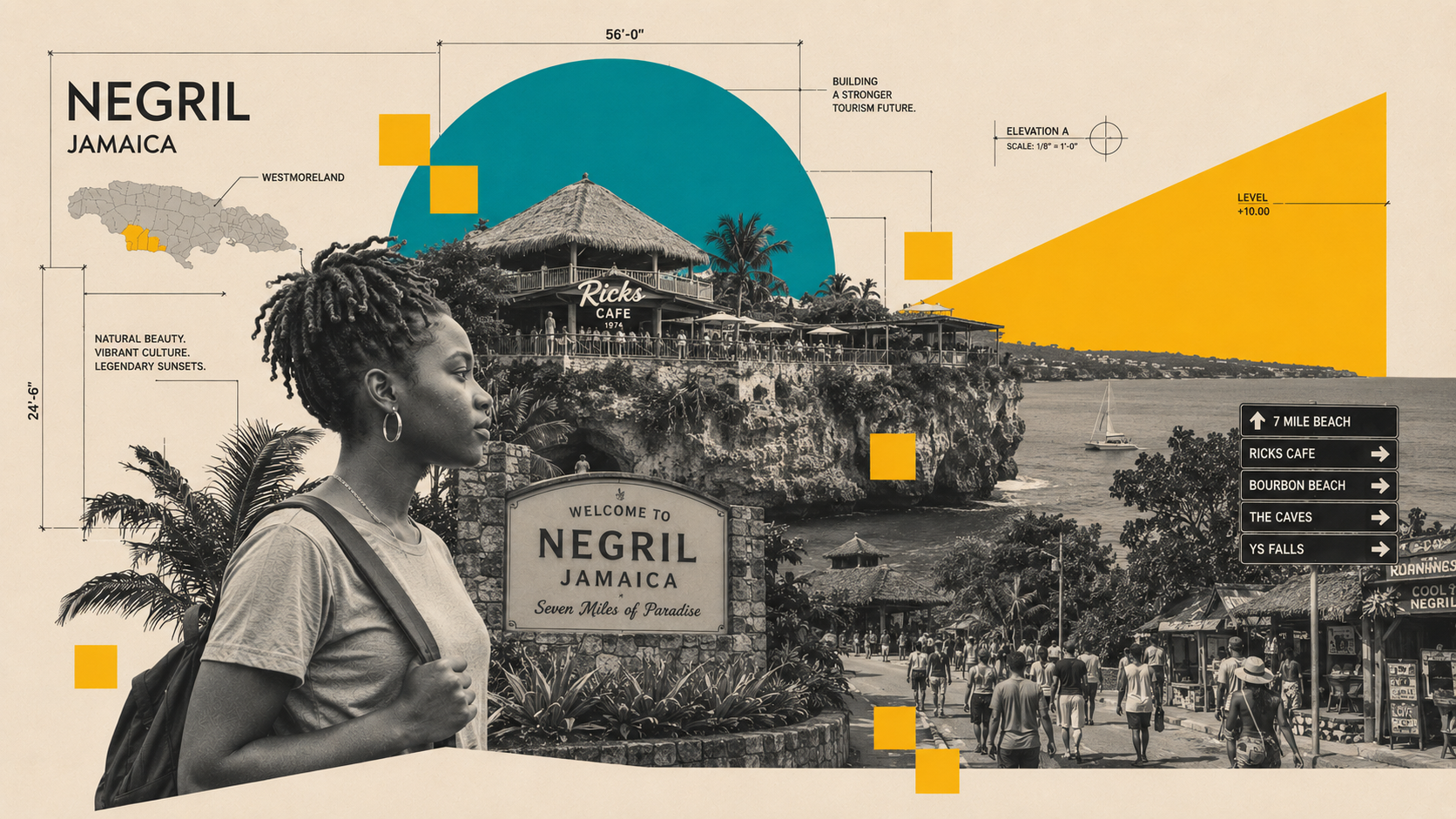
The unveiling of a $12-million welcome sign at the eastern entrance to the resort town, funded by the Tourism Product Development Company, provided a public anchor for these broader ambitions. Though modest in cost, the sign was positioned as the visible start of a larger programme to improve the aesthetics, infrastructure, and governance of Negril, with plans for a redesigned beach park modelled on Montego Bay’s Harmony Beach Park also under discussion.
Governance and Land Use
The expansion plans arrive alongside a longstanding debate about how Negril is actually managed. The resort straddles two parishes, Westmoreland and Hanover, a division that has long created confusion over local authority, planning decisions, and responsibility for infrastructure. At the time of the announcement, the Minister of Tourism hinted that a formal change to Negril’s governance status was under active consideration, one that would give the resort greater autonomy and clearer lines of accountability.
For the property market, governance clarity matters considerably. When planning authority is divided, approvals can stall, development orders become contested, and investors face uncertainty that affects both timelines and confidence. A resort with a single, coherent management structure is a more attractive environment for long-term capital.
What This Means for Property
The pipeline of 5,000 rooms does not exist in isolation. Hotel expansion drives demand for ancillary construction, supporting services, staff accommodation, and land. Westmoreland and Hanover, historically underserved compared to St James and St Ann in terms of formal residential development, stand to attract renewed attention from developers seeking to meet that secondary demand.
Negril’s land values have historically lagged behind Montego Bay, partly because of infrastructure constraints and partly because the resort’s relaxed identity has not always attracted the scale of institutional investment now being signalled. That dynamic may be shifting. The combination of government endorsement, confirmed hotel projects, and a clearer vision for public space creates conditions in which land near or adjacent to the resort corridor becomes significantly more relevant to investors than it was even a few years ago.
The Caution Worth Noting
Large-scale development announcements in Jamaica have not always translated quickly into physical reality. Infrastructure challenges, including persistent water shortages in Negril, unresolved governance questions, and the pace of planning approvals, have historically slowed delivery. The resort’s own chamber of commerce has been vocal about crime and public order as threats to sustained growth. These are not obstacles that hotel announcements alone resolve.
What the September 2022 moment represents is nonetheless meaningful: a formal, public alignment between government and the private sector around Negril’s future as a growth destination. For Jamaica’s property market, and for those considering where to place capital in the west of the island, that alignment is a signal worth taking seriously.

Visit our YouTube Community ↗