


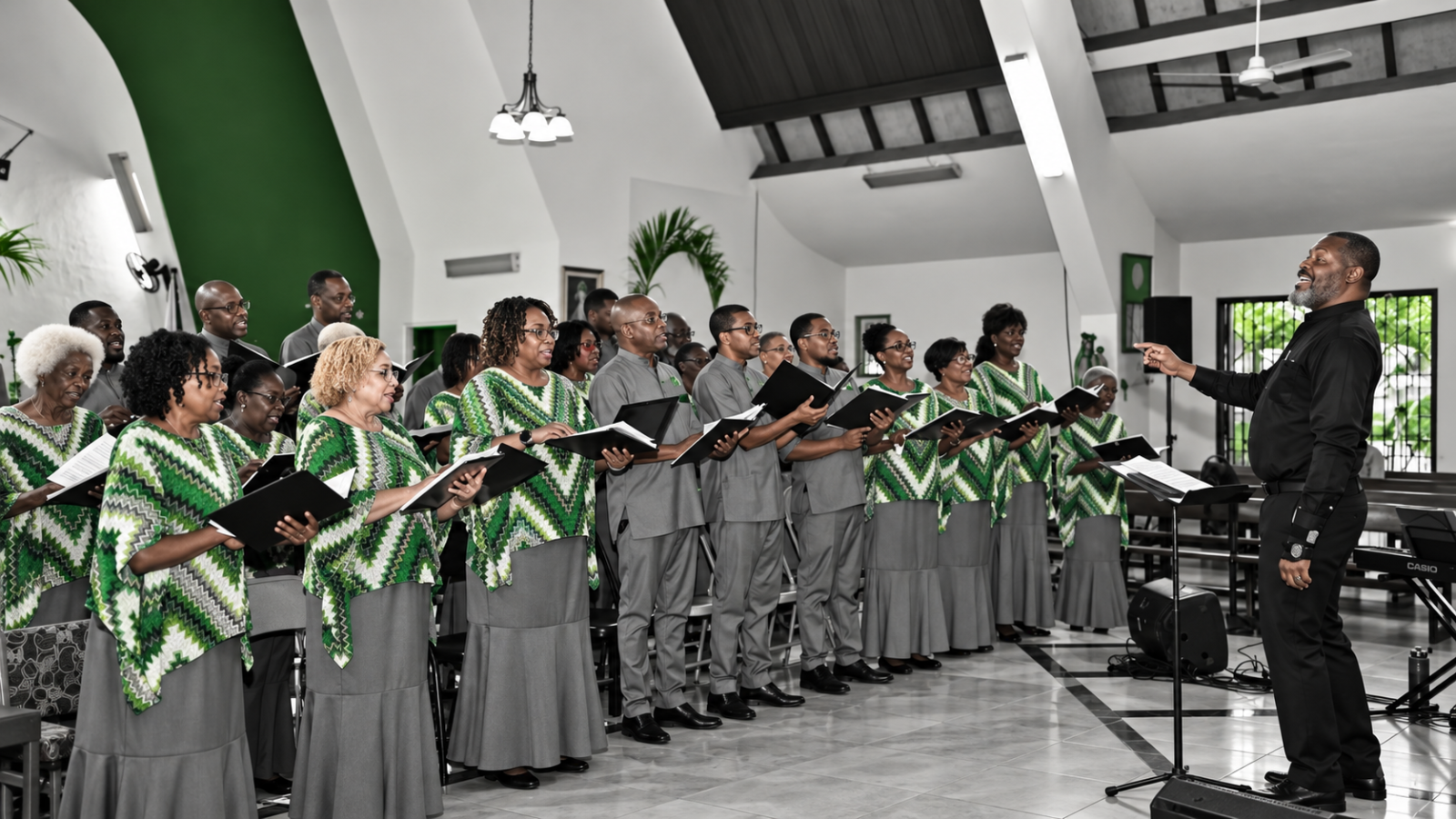
KINGSTON, Jamaica — A building that once formed part of Jamaica’s plantation economy will become the setting for a celebration of faith, resilience and freedom on Sunday, November 1, when the National Chorale of Jamaica performs Songs of Faith & Freedom at the historic University Chapel in Mona.
For Jamaica Homes, the occasion offers a reminder that buildings are more than bricks, mortar and land. They carry the memories of generations, sometimes preserving painful chapters of history while finding new purposes in the lives of the communities around them.
And few buildings in Jamaica tell that story quite like the University Chapel at The University of the West Indies.
From Sugar Estate to Sacred Space
Long before the Chapel became one of Jamaica’s most recognisable university landmarks, it stood on the Gale’s Valley sugar estate in Trelawny.
Built in 1799, the Georgian structure originally served the estate’s industrial operations as a distillery and rum store. More than 150 years later, in the 1950s, the building was carefully dismantled, its stones numbered and transported across Jamaica to the Mona campus.
There, it was reconstructed and transformed into a place of worship, reflection and gathering. Its first service was held in June 1959, and the Chapel was formally dedicated in February 1960.
Today, the building is recognised as a National Monument, having received that designation in 2001.
Its journey from a plantation building to a place of worship is an extraordinary example of architectural preservation and adaptive reuse. It also demonstrates how Jamaica’s built heritage can be given new meaning without erasing its past.
On November 1, that history will provide a particularly fitting backdrop for music rooted in the struggle against enslavement.
Songs Born Out of Hardship
The National Chorale of Jamaica will open its classical concert season at 6 p.m. with a programme celebrating the Negro spiritual, a musical tradition developed within enslaved African-American communities.
These songs combined African musical influences with Christian faith, expressing suffering, endurance, hope and the longing for liberation.
Under newly appointed musical director Michael Sutherland, the 54-year-old chorale will explore the emotional depth and historical significance of this tradition.
The performance will be Sutherland’s first full concert since succeeding Winston A.G. Ewart earlier this year.
The programme is expected to include well-known spirituals such as Give Me That Old Time Religion, Lord I Want to Be a Christian and Amen, with arrangements associated with Moses Hogan, Eban Hutton and Jester Hairston respectively.
The concert continues under the patronage of Sir Kenneth Hall and Lady Rheima Hall.
When Buildings and Music Tell the Same Story
There is something particularly meaningful about presenting songs of liberation within the walls of a building that originated on a sugar plantation.
Although the spirituals developed in the United States, the historical experiences behind them resonate deeply in Jamaica, where slavery and plantation agriculture helped shape the country’s landownership patterns, communities and architectural landscape.
The University Chapel represents one response to that difficult inheritance.
Rather than allowing an important historic structure to deteriorate or disappear, the building was preserved and adapted for a different purpose.
Today, it hosts weddings, services, concerts and community gatherings, demonstrating how a structure once associated with a plantation economy can become part of Jamaica’s cultural and spiritual life.
For a country where many historic estates, great houses and older buildings face questions about maintenance, preservation and reuse, the Chapel provides an important lesson.
The value of a building is not measured only by what it was originally built to do, but also by what it can become.
Preserving Jamaica’s Living Heritage
Christopher Samuda, chairman of the National Chorale of Jamaica, has emphasised the importance of preserving musical traditions that speak to resilience, faith and the strength of the human spirit.
The chorale is also extending its educational outreach by inviting selected high-school students to experience the performance.
The importance of that initiative reaches beyond music.
Younger Jamaicans are inheriting an island filled with buildings, monuments, communities and landscapes that tell stories about the country’s journey. Understanding those places is part of understanding national identity.
At Jamaica Homes, conversations about property frequently focus on house prices, construction costs, land values and development. But the country’s built environment also represents a cultural inheritance that deserves protection.
The University Chapel illustrates what is possible when historic architecture is preserved and allowed to remain relevant to contemporary life.
On November 1, as the National Chorale’s voices rise beneath its historic roof, two stories will meet: the story of a building that survived and found a new purpose, and the story of music that gave generations the courage to imagine freedom.
One is preserved in stone. The other lives through song. Both deserve to be remembered.
Songs of Faith & Freedom takes place at the University Chapel, The University of the West Indies, Mona, on Sunday, November 1, 2026, beginning at 6 p.m.

Visit our YouTube Community ↗