

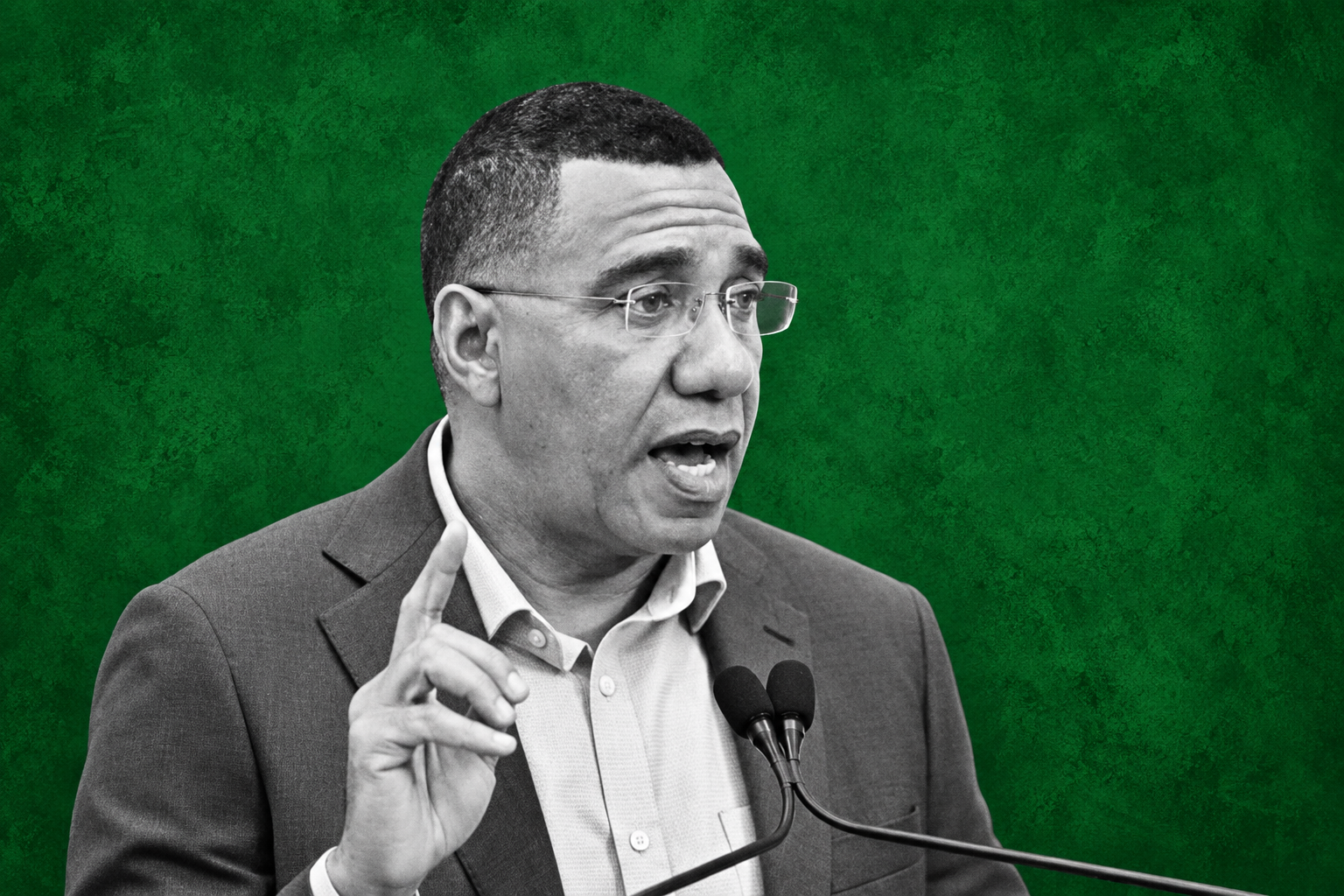
Prime Minister Andrew Holness has called on Jamaica’s municipal authorities to work more closely with housing developers, warning that delays in bringing affordable homes to market are helping to fuel the country’s long-running squatting crisis.
In a public statement, Holness argued that many working Jamaicans occupy land informally not because they reject lawful homeownership, but because the formal housing market has failed to produce enough homes at prices they can afford.
“When building houses that hard-working Jamaicans can afford takes too long, people squat just to put a roof over their heads,” the prime minister said.
Describing that as the “raw truth” of the situation, Holness acknowledged Jamaica’s history of land dispossession while insisting that the immediate problem is practical: people need secure, affordable places to live.
His comments place renewed pressure on parish councils, planning agencies, public housing bodies and private developers to reduce the time between proposing a housing development and delivering completed homes.
A call for development-first planning
Holness urged parish councils to adopt what he described as a supportive, development-first approach.
Rather than allowing applications to move slowly between departments, he wants municipal authorities to sit directly with developers, resolve planning concerns and help viable projects reach approval.
“We cannot complain about a lack of housing while holding back the projects that build them,” he said.
The statement is likely to resonate with developers who have repeatedly raised concerns about the time required to secure planning permission, environmental approvals, subdivision consent and connections to roads, water and sewerage infrastructure.
These controls remain important. Jamaica cannot afford poorly planned developments on unsuitable land, in flood-prone areas or without adequate infrastructure. Faster approval should not mean weaker scrutiny.
The larger question is whether the system can examine proposals thoroughly without leaving compliant developments stranded for years.
For ordinary buyers, those delays are not merely administrative. Every additional month can increase financing, construction, professional and material costs. Those increases are eventually reflected in the selling price of the finished home.
A development intended for lower- or middle-income households can therefore become less affordable before its first resident receives a key.
Squatting as a housing-market warning
Squatting in Jamaica is often discussed primarily as a matter of law enforcement, land ownership or public order. Holness’s intervention presents it equally as evidence of a housing market that is not meeting demand.
When legal land is expensive, starter homes are scarce and formal developments take years to complete, informal settlement becomes the route of last resort for some families.
That does not make the occupation of land lawful. It does, however, suggest that enforcement alone cannot resolve the underlying problem.
In an August statement concerning the Cooper’s Pen situation in Trelawny, the Office of the Prime Minister maintained that squatting could not be encouraged or normalised. The latest remarks add another side to that position: preventing new informal settlements also requires a credible supply of lawful and affordable alternatives.
A country cannot simply tell people where they must not live. It must also create realistic pathways to places where they can.
Public and private sectors told to work together
Holness specifically identified the National Housing Trust, the Housing Agency of Jamaica and private developers as the principal partners needed to expand supply.
The NHT possesses financing capacity and a large contributor base. The HAJ has a mandate that includes land development, housing construction and the regularisation of informal communities. Private developers contribute capital, technical knowledge and the ability to deliver projects at scale.
Yet cooperation must extend beyond ceremonial partnerships and groundbreaking events. It requires serviced land, predictable approvals, infrastructure coordination, transparent eligibility rules and housing designs that reflect what Jamaican households can actually pay.
Affordable housing is not created simply by attaching the word “affordable” to a development. The monthly mortgage, deposit requirement, maintenance charge, transportation cost and household income must all work together.
A property may carry a relatively modest selling price but remain out of reach if the buyer cannot accumulate the deposit or qualify for sufficient financing. Equally, a cheaper home built far from employment, schools and reliable transport can transfer the supposed saving into the household’s monthly travel bill.
The parish councils’ difficult balance
Municipal authorities occupy an uncomfortable position. They are expected to encourage investment while protecting communities from congestion, unsafe construction, environmental damage and developments that place excessive pressure on already limited infrastructure.
A development-first policy will therefore require more than instructions to approve applications quickly.
Councils will need sufficient planners, engineers, building officers and digital systems to process applications properly. Developers will also have to submit complete, technically sound proposals rather than treating speedier government service as permission to bypass requirements.
Accountability must work in both directions. Authorities should provide clear timelines and explain delays, while developers should be expected to meet planning conditions, deliver promised infrastructure and build what was approved.
Housing supply cannot remain a slogan
Holness’s message is politically direct, but its success will be measured in completed homes rather than faster speeches or additional announcements.
Jamaica needs more entry-level homes, serviced residential lots, rental housing and practical routes through which families can move from informal occupation into secure tenure. It also needs a planning system capable of distinguishing quickly between developments that are viable, those that require revision and those that should not proceed.
The prime minister has placed the responsibility across the entire housing chain: central government, municipal authorities, public agencies and private developers.
The challenge now is to convert that shared responsibility into measurable action.
For Jamaicans waiting for an affordable home, the most meaningful approval is not the one announced at a meeting. It is the one that eventually becomes a front door, a registered title and a place where a family can live without fear of removal.
Follow Jamaica Homes on Youtube @jamaicahomes and Instagram @jamaica_homes and on Facebook @jamaicahomesnews Send us a message or email us at onlinefeedback@jamaica-homes.com or editor@jamaica-homes.com
Support independent Jamaican journalism.
- 1Our journalists cover housing, politics and community — stories that directly affect Jamaican lives.
- 2We have no billionaire owner and no advertisers calling the shots. Every story is decided by our editors.
- 3It costs less than a cup of coffee a week, and takes less time to subscribe than it took to read this article.
Support Jamaica Homes News today.
- Save 17% compared to monthly
- All articles unlocked
- Weekly newsletter
- Priority support
By subscribing you agree to our Privacy Policy and Terms.

Visit our YouTube Community ↗