


The land meant to rehouse the families of Cooper’s Pen has finally been measured out. Roads and water are still being procured, the lots will have to be paid for, and the last residents must be gone by 30 November.
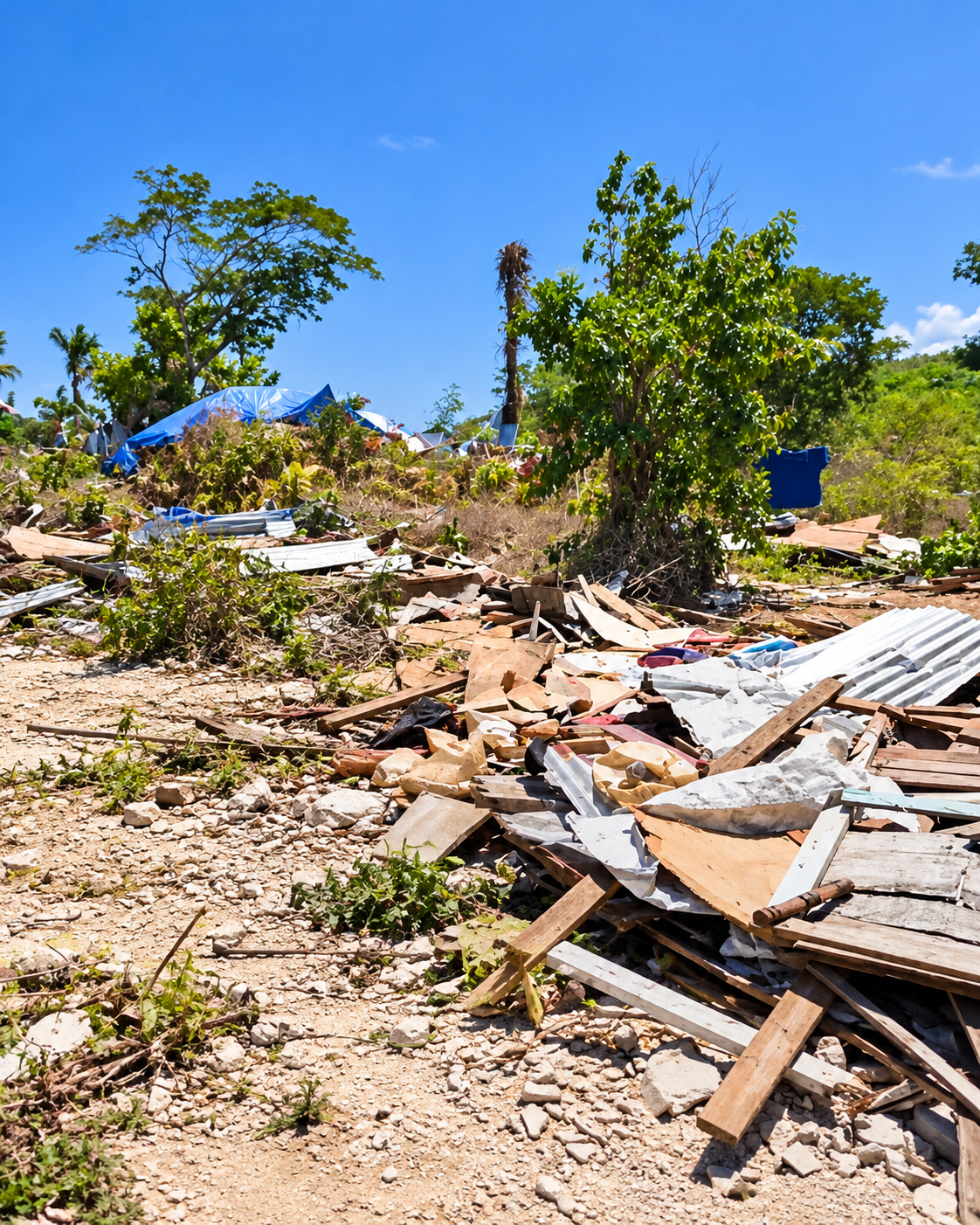
KINGSTON, Jamaica, 21 October 2026: Ten weeks after about 20 homes at Cooper’s Pen in Trelawny were pulled down in a predawn operation, the land meant to replace them has been surveyed and divided into lots. The Prime Minister gave the update on Wednesday at the opening of the Kingston 2 development downtown, telling his audience that procurement had begun for the roads, water and other basic services the new lots will need, the Jamaica Observer reported.
None of it will be free. The Prime Minister repeated that families will pay for their lots, whether by outright purchase, a lease or some other contract, and that the relocation grants already handed out are assistance rather than compensation, because public money will not be used to compensate anyone for an unlawful act. He said he understood how distressing it is to be uprooted, and asked residents to ignore misinformation and take their guidance from government agencies.
The harder problem is time. Under a deadline set by the property owners’ attorney, the residents still on the land must be off it by 30 November, the Jamaica Information Service reported in September. That is less than six weeks away. Services for the new site have only just gone out to procurement, and in August the Prime Minister himself cautioned that infrastructure work, contracting and the weather could push back his target of starting relocation by December, according to the Gleaner.
A cheque for some, a lot for others
About 100 households are affected, the Prime Minister told IRIE FM this week. Nineteen of them, families whose houses were demolished in August and who then spent weeks living in tents, received relocation grants in September at a total cost of about J$10 million. For anyone who cannot find somewhere to go by the deadline, the Government says it has prepared a temporary decanting site for the most vulnerable.
The split has not sat easily with everyone. In September one displaced resident, Moesha Richardson, told the Observer that families whose houses were still standing were being considered for land, while those like her who had already lost their homes were being offered money, and she wanted to know why. A grant buys a family a few months of rent. A serviced lot with a route to title is a different order of security, and it is the thing most of these households had hoped for all along.
A fight that began in 2007
Some of those households go back a long way. Gladstone Palmer, a long-time resident, told the Gleaner in August that when he arrived much of the area was undeveloped. He kept pigs first, then put up a one-room house, and the family’s holding grew from there. Residents had hoped, he said, to buy the lots they lived on one day.
The legal fight is almost as old. The landowner, New Falmouth Resorts Limited, bought the property of more than 260 acres in 2006 and went to court against its occupants the following year. In 2009 the Supreme Court ordered 99 squatters to leave. A housing minister declared the property an improvement area in 2012, which halted evictions, but the courts treated that move as an abuse of process, and in 2016 the Court of Appeal ruled that the Housing Act could not be used to get around eviction orders or to take private land for squatters, the Gleaner reported.
The same newspaper found something else in August. Tax Administration Jamaica records showed that the company had paid no property tax on the land since 2020, leaving a bill the Gleaner put at J$26.3 million on land valued at J$390 million. The company was listed at the Companies Office as being in removal, a status linked to outstanding annual returns, and its sole director died in 2021. An attorney told the paper that the law allows forfeiture proceedings to be started when property tax has gone unpaid for five consecutive years.
Set side by side, the two halves of the story are uncomfortable. The families who occupied the land without title are being told, correctly in law, that they must pay for whatever comes next. The owner whose title the courts upheld had, at last report, left six years of tax unpaid on the very land in dispute.
A lot is not a home until the pipe arrives
In August the Prime Minister asked the minister responsible for land titling to review national policy on informal settlements, and Cooper’s Pen is the case that review will be judged against. It holds most of Jamaica’s land problem in one place: a private title enforced after nearly two decades in court, families who built across generations without one, and a State that owns none of the land but is now supplying grants, a subdivision and services while insisting that it is not rewarding occupation.
A surveyed lot is a line on a plan until water and a road reach it. If those services are not in place by the time the last residents must leave, the decanting site will become, for some families, another place to wait. The price and terms of the lots, which the Government has said will reflect each family’s circumstances, will decide whether the people of Cooper’s Pen move from squatting to owning, or simply from one kind of insecurity to another.

Visit our YouTube Community ↗